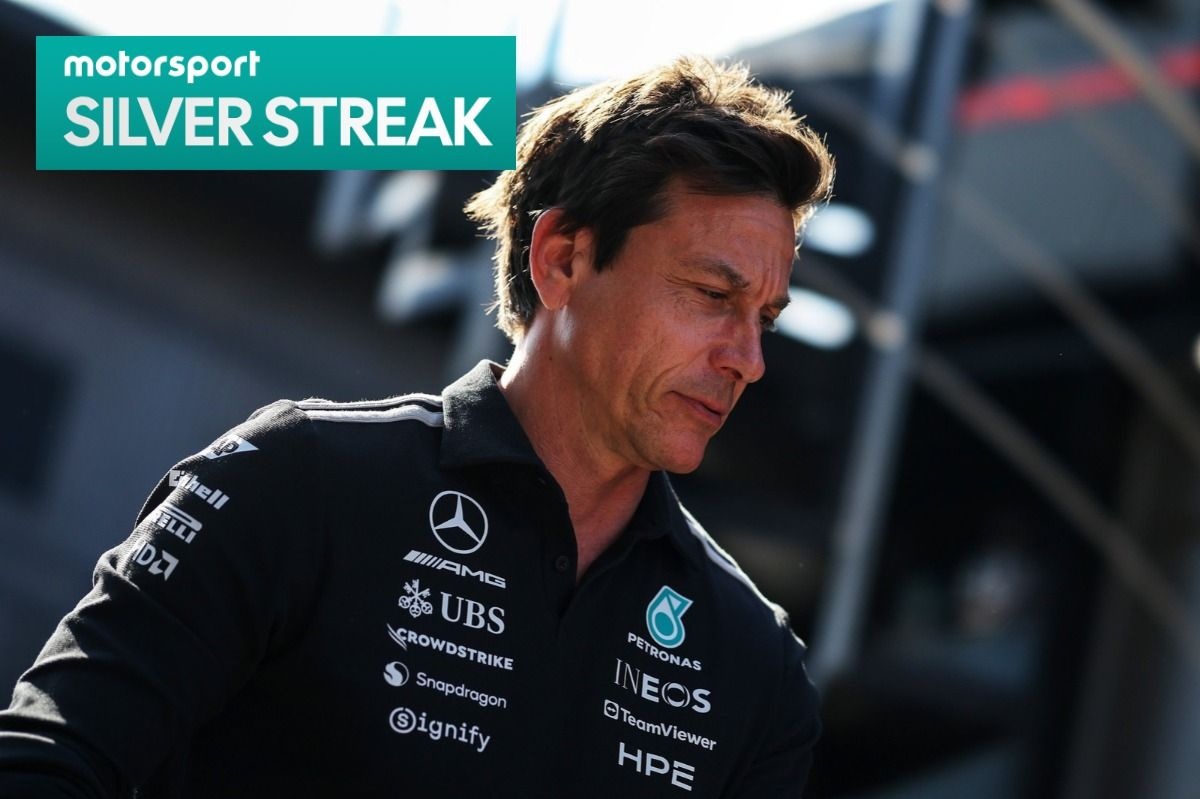
Toto Wolff reveals how Mercedes evaluates young F1 talent
Mercedes Formula 1 boss Toto Wolff revealed on the Cheeky Pint podcast that evaluating young drivers requires examining personal conduct, technical feedback, and wet-weather car control rather than relying solely on raw stopwatch data. Speaking as driver Andrea Kimi Antonelli approaches a potential 2026 World Championship title at the United States Grand Prix, Wolff explained why many heavily funded junior prospects fail to advance.
When podcast host John Collison asked how to identify elite talent, Wolff pointed out that basic car control is visible immediately. You can see when someone is comfortable in the kart, you know, going at 100 kilometre an hour in the rain, and that kid does his first lap and comes across the corner, you know, sideways, you know, OK, there are the ingredients for being good at it,
Wolff stated, according to motorsport.com. Tracking performance across age brackets provides an early indicator. Wolff looks for eight-year-old drivers who consistently defeat ten-year-old peers in karting fields, separating innate balance and risk assessment from simple physical growth.
Character Traits and Technical Communication Required for Formula 1
Speed on a dry time sheet represents only the starting point. Wolff emphasized that junior drivers often wash out of the pipeline due to behavioral shortcomings or intellectual limitations. Underneath the stopwatch, there needs to be technical ability to set your car up in the right way, interact with the engineers, have some kind of social competence of making sure you have sponsors, treat them well,
Wolff explained on the podcast. He noted that multiple exceptionally fast prospects failed to progress because they lacked emotional stability, intelligence, or professional courtesy toward mechanics and corporate backers.

Unlike endurance racing sports where scouts evaluate clear quantitative metrics like VO2 max and threshold wattage, motorsport hinges on sensory perception and verbal feedback that instruments cannot record. Drivers must translate high-speed physical feedback into actionable data for dozens of factory engineers.
Hamilton Feels Chassis Flex Through His Spine
To illustrate the unteachable genetic trait required to win a World Championship, Wolff shared an anecdote about Lewis Hamilton. During a car setup debrief, Hamilton provided feedback that initially confused the engineering team. Lewis once said something when talking about the car, ‘The car understeers from the front axle to where I sit,’
Wolff recalled.
While standard telemetry registers grip balance across the front tires, Hamilton used his spine to feel chassis flex and grip levels across a specific three-foot span of carbon fiber. Well, that’s the middle of the car; how can that understeer? And the engineers couldn’t really identify what he meant, but that is what his body told him,
Wolff said. This neurosensory connection allows elite drivers to extract the final fractions of a second from a racing machine at high speeds.
Disclaimer: The insights provided in this article are for informational and entertainment purposes only and do not constitute medical advice or sports betting recommendations.