
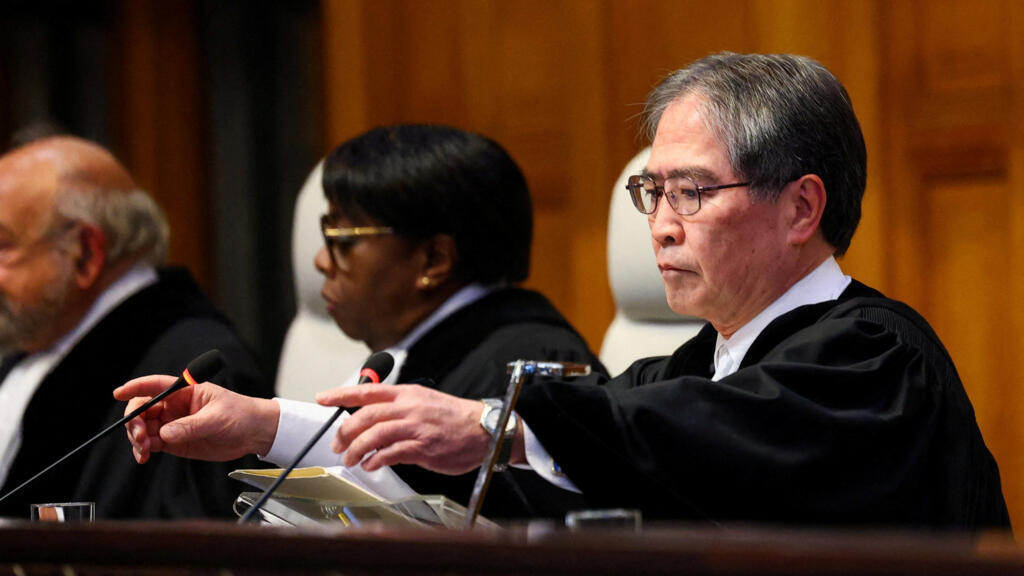
myanmar Genocide Case: A Landmark Hearing and its Implications
the International Court of justice (ICJ) began three weeks of hearings on Monday, delving into allegations that Myanmar committed genocide against the Rohingya Muslim population.The case, initially filed by The Gambia in 2019, centers around a brutal military crackdown in Myanmar’s Rakhine State in 2017. This legal battle isn’t just about accountability for past atrocities; it’s setting a crucial precedent that could significantly influence how the ICJ addresses the ongoing case brought by South Africa against Israel concerning the conflict in Gaza.
The rohingya Crisis: A History of Persecution
The roots of the rohingya crisis are deeply embedded in decades of systemic discrimination and violence against the Rohingya people in Myanmar. Rohingya Muslims, a minority ethnic group primarily residing in rakhine State, have long been denied citizenship, rights, and recognition by the Myanmar government. Human Rights Watch details a long history of abuses,including restrictions on movement,marriage,and access to education and healthcare.
The 2017 crackdown proved to be a turning point. Following attacks by the arakan Rohingya Salvation Army (ARSA) on security forces, Myanmar’s military launched a widespread campaign of violence. This campaign involved mass killings, sexual violence, torture, and the burning of villages, forcing over 740,000 Rohingya to flee to neighboring Bangladesh. The United nations has documented widespread evidence of these atrocities, characterizing them as bearing the hallmarks of genocide.
The Gambia’s Case and the genocide Allegations
The Gambia, acting on behalf of the association of Islamic Cooperation (OIC), filed a case against Myanmar at the ICJ in November 2019, arguing that Myanmar had violated the 1948 Genocide Convention. The Gambia contends that the systematic attacks against the Rohingya were intentionally designed to destroy the group,in whole or in part,thus meeting the legal definition of genocide.
The Gambia’s legal team, led by prominent international lawyer Paul Reichler, presented compelling evidence during initial hearings, including eyewitness testimonies, internal military documents, and reports from UN investigators.They argued that the scale and brutality of the attacks, coupled with the clear intent to displace and eliminate the Rohingya population, constituted genocide. The ICJ website provides access to case documents and proceedings.
In 2020, the ICJ issued a provisional order, directing Myanmar to take all measures within its power to prevent acts of genocide and to report back to the court every six months. However, critics argue that Myanmar has largely ignored these orders.
The Implications for the South Africa vs. Israel Case
Legal experts believe the outcome of the Myanmar case could have notable ramifications for South Africa’s case against Israel, which alleges that Israel is committing genocide in gaza. South Africa brought the case to the ICJ in January 2024, arguing that Israel’s military actions in Gaza, following the October 7th Hamas attacks, are intended to destroy the Palestinian people.
The key connection lies in the submission of the Genocide Convention. Both cases hinge on proving intent – demonstrating that the actions taken by Myanmar and Israel were deliberately aimed at destroying a protected group. The arguments and evidence presented in the Myanmar case will likely be closely scrutinized by the ICJ when considering the South africa vs. Israel case.
“The Myanmar case is a test case for the ICJ’s willingness to hold states accountable for genocide,” explains Dr. Leila Sadat, a professor of international criminal law at Washington University in St. Louis. “A strong ruling against Myanmar would embolden the court to take a firmer stance in the Gaza case, and vice versa.”
Challenges and Obstacles
Despite the compelling evidence, securing a definitive genocide ruling is not guaranteed. Myanmar continues to deny the allegations and argues that its actions were legitimate responses to security threats.The country’s political instability, following the 2021 military coup, also complicates the legal process.
Furthermore, the ICJ lacks a direct enforcement mechanism. While the court can issue binding orders, it relies on the cooperation of states to implement them. Myanmar’s non-compliance with previous orders raises concerns about the effectiveness of the court’s rulings.
Key Takeaways
- The ICJ hearings on the Myanmar genocide case are a critical step towards accountability for the atrocities committed against the Rohingya people.
- The Gambia’s case is based on strong evidence of systematic violence and intent to destroy the Rohingya population.
- The outcome of this case will likely influence the ICJ’s handling of the South Africa vs. Israel case concerning the Gaza conflict.
- Enforcement of the ICJ’s rulings remains a significant challenge.
Looking Ahead
The coming weeks will be crucial as the ICJ continues to hear arguments and examine evidence. A final ruling could take months or even years. Regardless of the outcome, this case has already brought much-needed attention to the plight of the Rohingya and the importance of holding states accountable for genocide. The world is watching, and the decisions made by the ICJ will have far-reaching consequences for international law and the pursuit of justice.
