
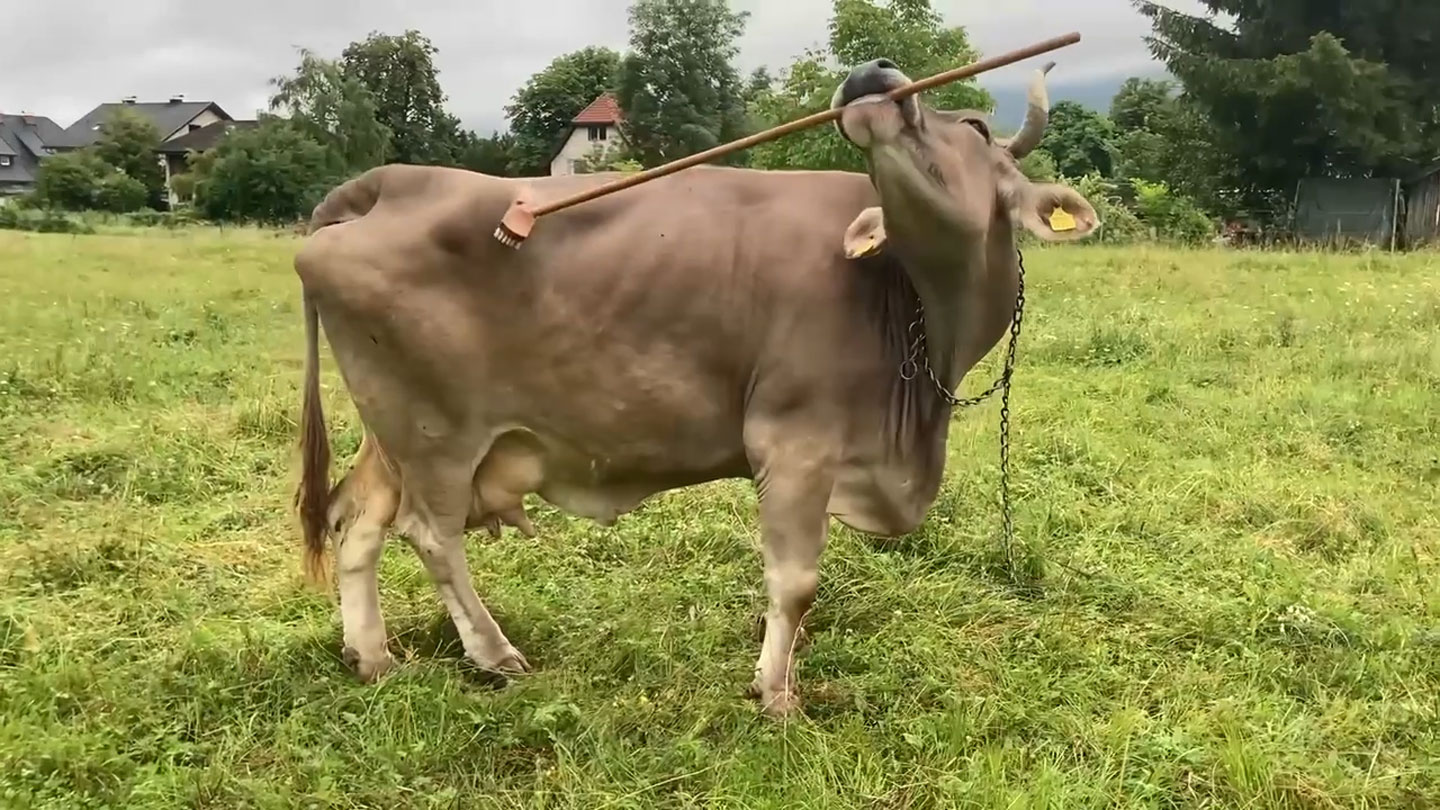
Cow Demonstrates Rare Tool Use, Challenging Animal Cognition
A cow named Veronika has surprised researchers by exhibiting tool use – specifically, intentionally using a brush to scratch herself. This behavior, documented at a farm in Austria, is remarkable because tool use is considered a relatively rare skill in large mammals, and even more uncommon in bovines. The observation expands our understanding of problem-solving abilities and cognitive complexity in animals.
Veronika’s Ingenious Scratching Solution
The story of veronika began when her keepers noticed she was repeatedly approaching a grooming brush left in her enclosure.Instead of simply investigating it, Veronika actively manipulated the brush, rubbing it against areas she couldn’t reach with her tongue or tail. This wasn’t accidental; she demonstrated a clear understanding of the brush’s function as an extension of her own body to alleviate an itch. The behavior was first observed in late 2023 and has continued consistently since then.
“It’s not just that she’s near the brush,” explains Dr. Martina Schitter, a behavioral biologist at the University of Vienna who has been studying Veronika. “She actively directs the brush to specific areas of her body, showing intentionality. This is a key component of tool use.” The Guardian
Why is This Significant?
Tool use is often considered an indicator of higher cognitive abilities.While commonly observed in primates, birds (like crows), and some marine mammals, it’s far less frequent in ungulates – hoofed mammals like cows, deer, and horses. This is partly as ungulates lack the manipulative dexterity of primates or the specialized beaks of birds.
Veronika’s behavior challenges this assumption. It suggests that the cognitive capacity for tool use may be more widespread than previously thought, and that physical limitations don’t necessarily preclude the development of such skills. Researchers believe Veronika’s actions demonstrate a level of problem-solving and self-awareness not typically associated with cattle.
The revelation also raises questions about the potential for othre forms of unrecognized intelligence in farm animals. For years, animal cognition research has focused primarily on species considered “intelligent” by human standards. Veronika’s case highlights the importance of broadening our scope and investigating the cognitive abilities of a wider range of animals, including those commonly found in agricultural settings.
What Does This Mean for animal Cognition Research?
This observation isn’t just a charming anecdote; it has implications for the field of animal cognition. Scientists are now investigating whether Veronika’s behavior is unique or if other cows might exhibit similar capabilities under the right circumstances. Further research will focus on:
- Observing other cattle: Researchers are monitoring other cows in the same herd, as well as those in different environments, to see if they also demonstrate tool use.
- Cognitive testing: Developing and implementing cognitive tests designed to assess problem-solving skills and self-awareness in cattle.
- Neurological studies: Investigating the brain structures and neural pathways involved in Veronika’s tool use to understand the underlying cognitive mechanisms.
Key Takeaways
- Veronika the cow has demonstrated intentional tool use by using a brush to scratch herself.
- This behavior is rare in large mammals, particularly ungulates like cattle.
- The observation challenges existing assumptions about animal cognition and the distribution of intelligence in the animal kingdom.
- It highlights the importance of further research into the cognitive abilities of farm animals.
The case of Veronika serves as a compelling reminder that intelligence and problem-solving skills can manifest in unexpected ways. As research continues, we may uncover a far richer and more complex understanding of the cognitive lives of animals than we previously imagined. Future studies will undoubtedly build upon veronika’s story, perhaps revolutionizing our outlook on animal intelligence and welfare.
