
From Maastricht to the World: The Vitrobot Revolutionizing Disease Research
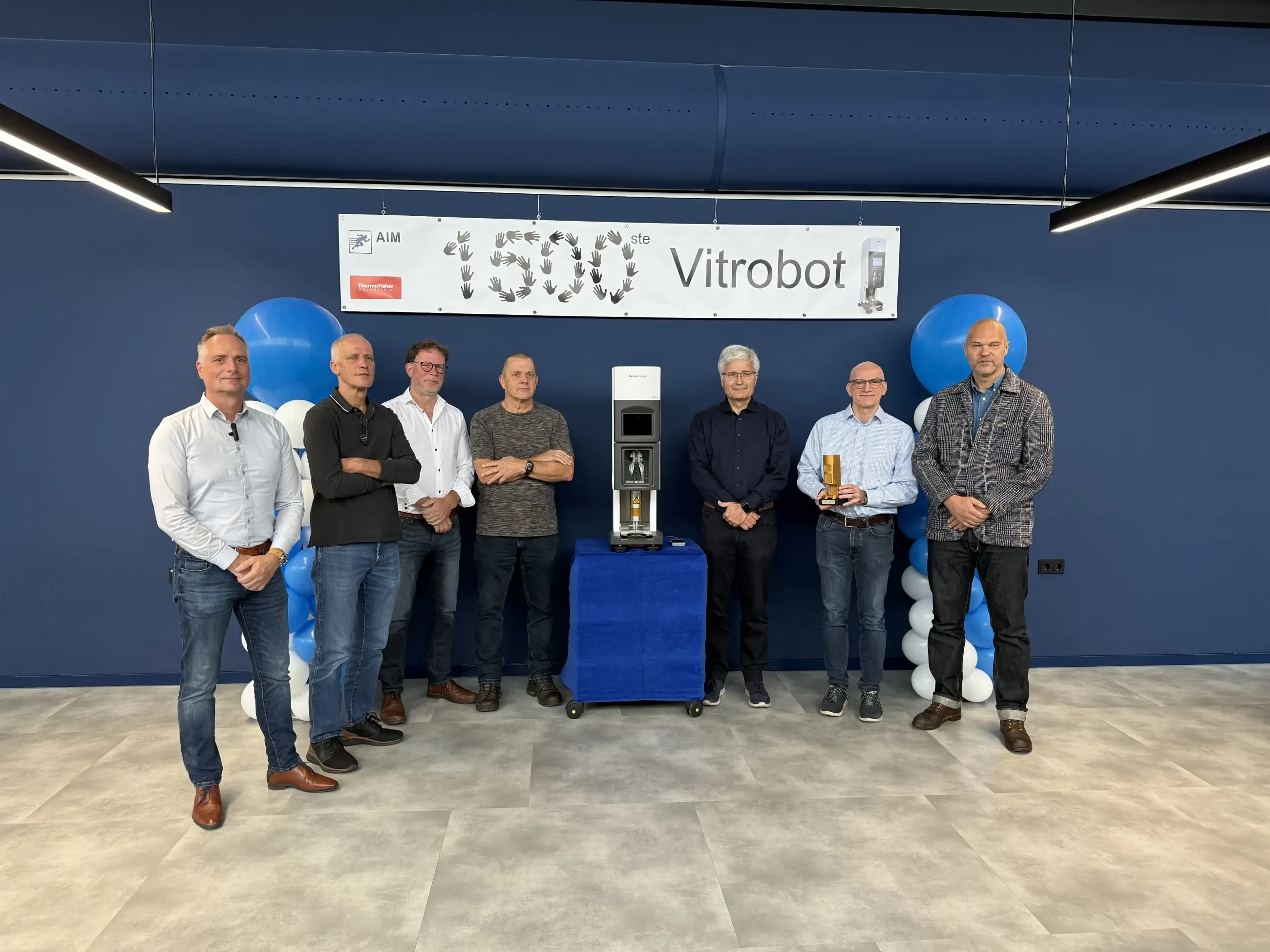
A groundbreaking invention originating from the Brightlands Maastricht Health Campus has reached a significant milestone: the 1500th Vitrobot has recently been delivered to researchers worldwide. This complex device is proving instrumental in accelerating scientific understanding of complex diseases like Alzheimer’s and COVID-19.
Before the vitrobot, visualizing the intricate structures of proteins, cells, and viruses relied on cryo-electron microscopy (cryo-EM). However, preparing samples for this process - freezing them – was a laborious and inconsistent task done entirely by hand until the mid-1990s. Scientists recognized the need for a more reliable and efficient solution.
That solution emerged in 1996, thanks to the collaborative efforts of Maastricht researchers Peter Frederik and Paul Bomans, alongside engineer Paul Laeven. They developed the P3, the precursor to the Vitrobot, a device that freezes biological samples under a remarkably thin layer of glass ice. This innovative technique preserves the sample’s natural state, enabling the capture of exceptionally clear, high-resolution images.
Maastricht instruments (MI) took on the challenge of refining the invention. Recognizing their limitations in large-scale production, MI partnered with AIM BV in Brunssum to further develop and manufacture the Vitrobot. The device quickly gained traction in universities and research centers globally, attracting the attention of Thermo Fisher Scientific. in 2002, Thermo Fisher Scientific secured exclusive worldwide marketing rights for the Vitrobot.
A Timeline of Innovation:
* 1996: The first prototype (P3) is developed at Maastricht UMC+.
* 2000: Maastricht Instruments makes its first sale of the Vitrobot.
* 2002: An exclusive license agreement is established with Thermo Fisher Scientific, alongside continued collaboration with AIM BV.
* 2007: The 100th Vitrobot rolls off the production line.
* 2020: The Vitrobot is deployed in critical research during the COVID-19 pandemic.
* 2025: Production reaches a landmark achievement with the completion of the 1500th Vitrobot in Brunssum.
Over the years, MI and AIM have continued to improve the Vitrobot. Early models utilized compressed air,creating a noisy laboratory environment. Subsequent iterations boast a quieter operation and a more streamlined, user-friendly design. despite these advancements, Emile Arnoldussen of AIM notes that many researchers remain loyal to their original Vitrobot versions.
Today, assembling a single Vitrobot requires 28 hours of work from a dedicated team of three technicians. More than half of AIM’s fifty employees contribute to the device’s lifecycle, encompassing roles in procurement, assembly, service, and repairs.
The Vitrobot’s impact extends far beyond the laboratory. A sample prepared using the device even graced the cover of the prestigious journal Nature, further solidifying its reputation and attracting increased involvement from Thermo Fisher Scientific in its ongoing development and global distribution.
During the recent coronavirus pandemic, the Vitrobot played a crucial role in deciphering the virus’s structure and accelerating research.Similarly, investigations into the causes of Alzheimer’s disease have been significantly expedited. Consequently of this technology, vaccine development is faster and our understanding of disease mechanisms is dramatically improved – a testament to the power of an invention born in Maastricht that now conquers the world.
