
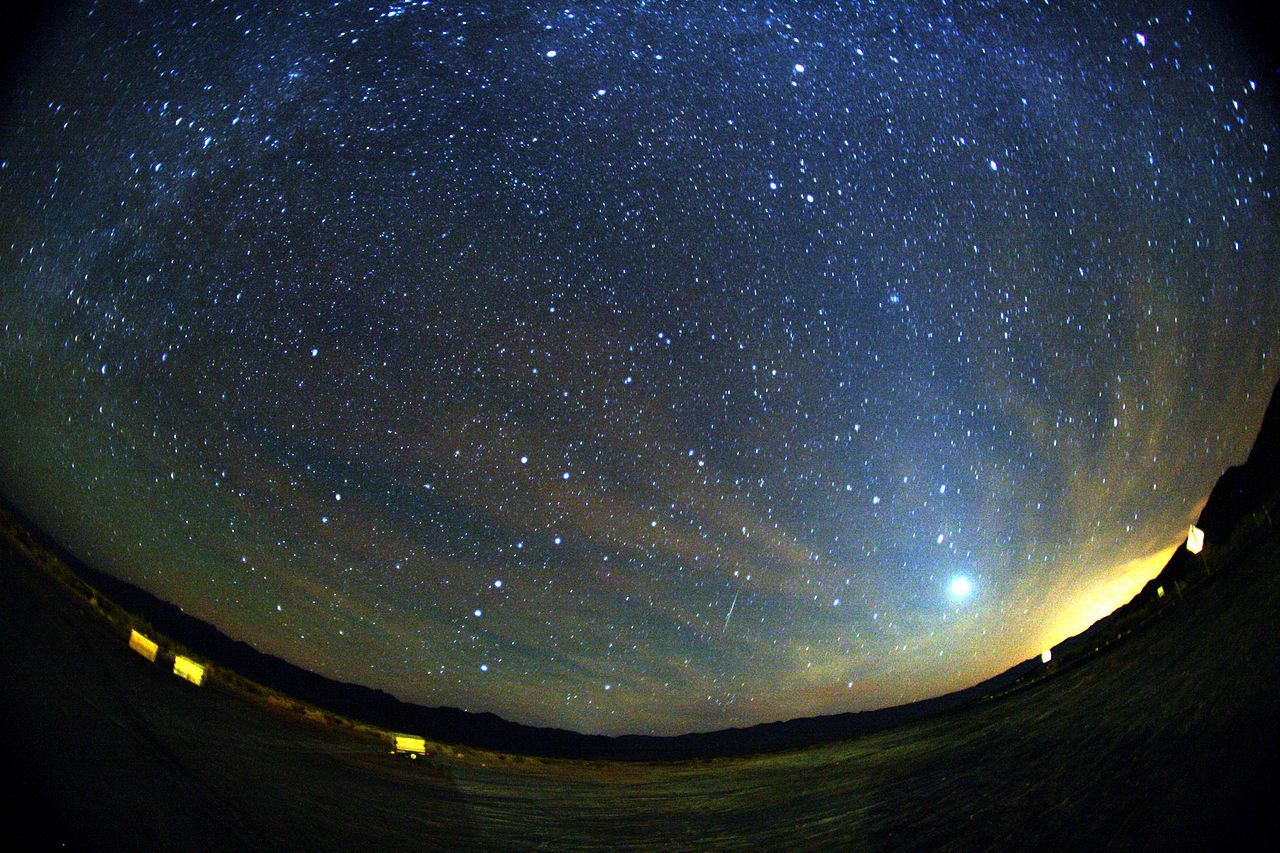
Orionid meteor Shower Peaks Tonight: Dark Skies Promise a Dazzling Display
October 20, 2024 – Skywatchers are in for a treat as the Orionid meteor shower reaches its peak tonight, October 20-21. Favorable conditions – a new moon and promising weather forecasts – suggest excellent viewing opportunities for those venturing away from city lights.
The orionids are a well-known and reliable meteor shower originating from debris left behind by Halley’s Comet, which orbits the Sun approximately every 76 years. As earth passes through this trail of dust and small particles, they enter our atmosphere at roughly 66 kilometers per second.
“They are small pebbles with a diameter of a few millimeters,” explains Pavol Habuda, of the Society for Interplanetary Matter of the Czech Astronomical Society. “They enter the atmosphere at a speed of about 66 kilometers per second,” adding that they are among the fastest meteors observed.
This high velocity often results in shining meteors leaving glowing trails, known as afterglows, caused by the cooling atmosphere behind the meteor. ”It’s light from the cooling atmosphere behind the meteor.The brighter the meteor, the stronger the trail,” Habuda explains. The Orionids are known for producing a higher proportion of bright meteors, rewarding patient observers.
With the peak occurring during a new moon, minimal lunar interference will allow even faint meteors to be visible. Observers can expect to see up to twenty meteors per hour after midnight. While peak activity is expected tonight, some activity may continue for a week afterward.
No special equipment is needed to view the Orionids, only your eyes. However, allowing 10-30 minutes for dark adaptation is crucial. “Don’t look at your cell phone, it disrupts your adaptation to the dark. Use red light, which is less distracting than other colors,” advises Habuda.
The Orionids rank as the fifth most powerful meteor shower of the year and appear to radiate from the constellation Orion. Notably, Halley’s Comet provides two meteor showers annually: the Orionids in the fall and the Éta-Aquarids in May.
