
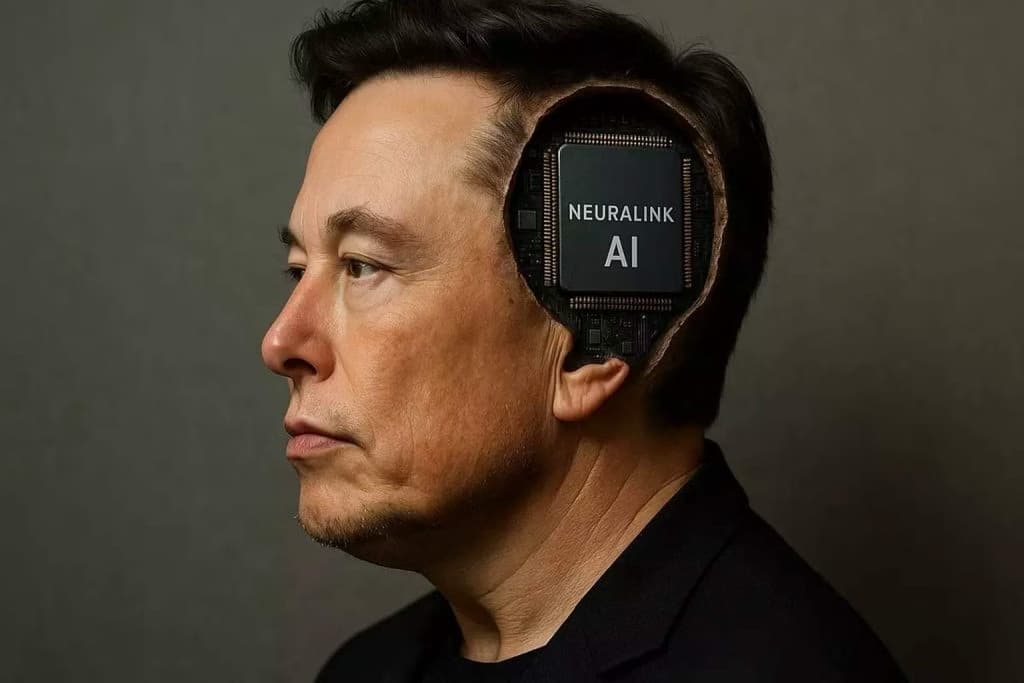
Paralyzed Man Regains Life Through Revolutionary Brain-Computer Interface
Table of Contents
Phoenix, AZ – Eighteen months ago, Noland Arbaugh made history as the first human recipient of Neuralink‘s brain-computer interface. Today, his story isn’t just about groundbreaking technology – it’s a testament to the resilience of the human spirit. Arbaugh, paralyzed from the shoulders down since a 2016 swimming accident, is now playing video games, pursuing a degree in neuroscience, and controlling devices with his mind. This remarkable conversion is no longer the realm of science fiction, but a tangible reality offering hope to millions.
A Chip That Rewrote His Daily Life
Before the implant, noland Arbaugh’s life had become defined by limitations. The inability to move or interact with the world independently cast a long shadow. That changed in January 2024 with a two-hour robotic surgery at the Barrow Neurological Institute in Phoenix. Surgeons meticulously implanted thousands of ultra-fine threads into his motor cortex – the area of the brain responsible for movement – allowing Neuralink’s chip to translate his neural signals into digital commands.
The result? Arbaugh can now navigate the internet, enjoy games like Mario Kart, delve into the complexities of the brain itself, and manage his smart home - all through the power of thought.While the wireless chip requires charging several times a day, Arbaugh considers it a small price to pay for the newfound independence it provides. He previously described his life as “a blur of meaningless time,” a sentiment now replaced with purpose and engagement.
Rediscovering Purpose and Momentum
the impact extends far beyond simply regaining lost functionality. Before the Neuralink implant,Arbaugh’s days were characterized by quiet stagnation. now, he’s a dedicated student of neuroscience – the very field driving the technology that has transformed his life. he dedicates up to ten hours a day to studying, connecting with others, and planning for the future.
Arbaugh is also leveraging his experience to inspire others.He’s embarked on a career in public speaking,sharing his story with audiences worldwide and emphasizing the profound emotional and psychological benefits of restored autonomy. “It feels like I’ve been given a second shot,” he says. “I always had potential – now I have a way to express it.”
His message is powerful: technology is not the sole solution, but rather a catalyst when combined with the indomitable human spirit.
the Pressure and the Price of Being First
Being the first human to test such enterprising technology hasn’t been without its challenges.The intense media scrutiny attracted unwanted attention, including online harassment and a frightening incident involving a false report that triggered a SWAT team raid at his home.
Despite these difficulties, Arbaugh remains a staunch advocate for the project. He isn’t financially compensated by Neuralink, supporting himself through speaking engagements, including a memorable livestreamed greeting earlier this year: “Hello, humans.”
For Arbaugh,the implant represents more than just a device; it’s freedom - a tool to reclaim his dignity and shape his future on his own terms. His story serves as a poignant reminder that even the most cutting-edge technological advancements are ultimately experienced on a deeply personal and human level.
A Vision That Extends Far Beyond One Patient
[Further data about Neuralink and its founder, Elon Musk, will be added as the article develops.]
SEO Keywords: Neuralink, brain-computer interface, paralysis, neuroscience, brain implant, technology, Elon Musk, Noland Arbaugh, motor cortex, assistive technology, neurotechnology, spinal cord injury, brain chip, future technology.
