
Major Funding Boost for Brazil’s Climate Fund with Over R$10.6 Billion Investment
Bethlehem – Brazil’s Climate Fund, a key government mechanism for financing decarbonization and climate change adaptation projects, has received a significant injection of R$10.6 billion in funding from european and Inter-American development banks. The fund is administered by Brazil’s National Bank for Economic and Social Development (BNDES) and coordinated by the Ministry of the Environment.
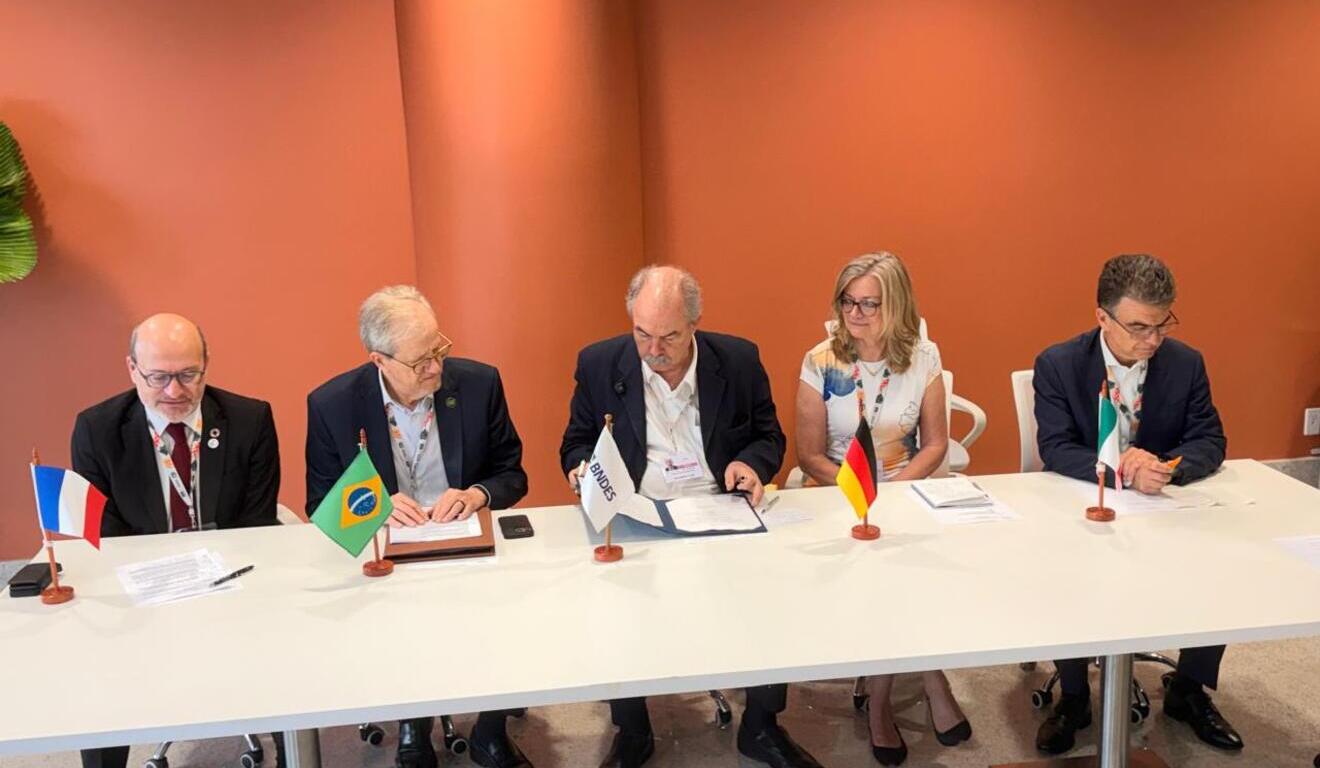
Leading the investment are three European financial institutions: Germany’s KfW, Italy’s CDP, and France’s development agency, AFD, contributing a combined R$7.89 billion towards climate transition projects. The Inter-American Development Bank (IDB) has also signaled its commitment, signing a letter of intent to facilitate a loan of R$2.67 billion (US$500 million), pending technical review.
The declaration,made during the COP30 climate conference,was hailed by BNDES president Aloizio Mercadante as a positive step towards a low-carbon economy. “The captures signal that we are on the right path towards a low-carbon economy,” Mercadante stated, emphasizing the strengthened cooperation between Brazil and the European Union.
This influx of funding represents a 29% increase to the Climate Fund’s budget over the past five years. Between 2020 and 2025, the fund will have access to R$36.3 billion in authorized and disbursed financing, according to data from Brazil’s Integrated Planning and Budget System (Siop) compiled by the Talanoa Institute.
BNDES planning director, Nelson Barbosa, clarified that the Treasury will assume the exchange rate risk associated with the foreign investments, making the fund more attractive to international lenders. “The Treasury takes international resources and passes them on to the BNDES in reais. In other words, the borrower will have a lower fixed interest rate in reais,” he explained.
The Climate Fund is a primary financier of BNDES Florestas, a program focused on developing Brazil’s forest restoration and bioeconomy sectors. Recent examples of its impact include R$80 million disbursements to startups Mombak and Re.green, backed by guarantees from santander and Bradesco respectively.
BNDES has also secured direct agreements with KfW, totaling R$1.7 billion (280 million euros), to support projects in urban mobility and renewable energy. Christiane Laibach, an executive on KfW’s board responsible for international investments, highlighted Brazil’s dual commitment to both environmental sustainability and economic development.
AFD and CDP have a proven track record of collaboration in areas such as urban mobility, sanitation, and enduring infrastructure.
Rémy Rioux, executive director of AFD, noted a shift in the global landscape, stating, “Today, Europe remains steadfast in its approach to achieving sustainable development. And I think this shared vision is what drives us towards a world that, let’s say, is no longer governed by multilateralism.”
