
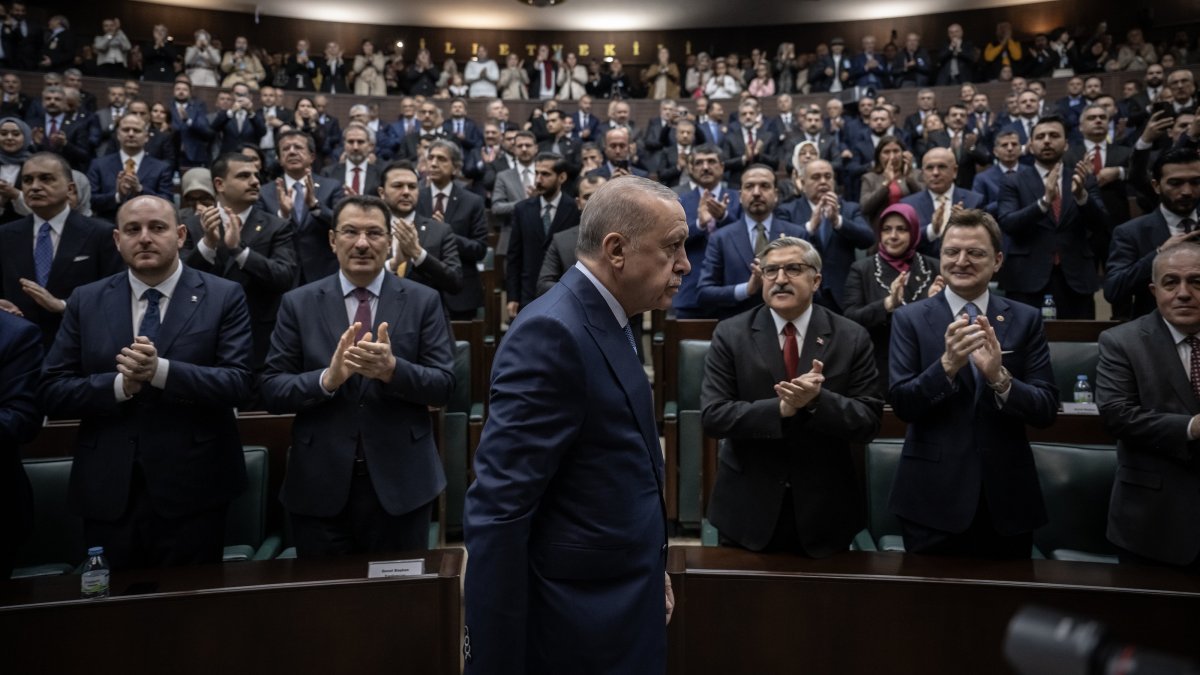
Türkiye Elevates Self-Confidence to state Policy Amidst Regional Power Shift
Table of Contents
Ankara – Türkiye is actively cultivating a national ethos of self-confidence as a cornerstone of its evolving foreign policy, signaling a departure from past reliance on external influence and a bold assertion of regional leadership. This strategic emphasis, championed by President Recep Tayyip Erdoğan, comes as Türkiye strengthens its position while the influence of surrounding nations and Western powers comparatively wanes.
The move represents a meaningful recalibration of Türkiye’s approach to international relations, moving beyond negotiation and accommodation towards proactive intervention and autonomous decision-making. This shift is rooted in a belief that Türkiye has reached a level of strength allowing it to pursue its interests according to its own plans and capabilities, a contrast to previous periods like the 2009 Oslo talks and the 2013-2015 Reconciliation Process where external actors held greater sway. The current strategy aims to overcome historical perceptions of subjugation and fully realize Türkiye’s global standing.
Historical Context and the Pursuit of Regional Influence
Türkiye’s current trajectory builds upon previous efforts to address internal security challenges, notably the terror-free Türkiye
initiative. Though, officials now assert that past negotiations were hampered by the ability of foreign states to exert undue influence. As of December 5, 2025, Türkiye is actively engaged in diplomatic disputes and conflict-resolution efforts across the region, demonstrating its growing role as a key player. This proactive stance is underpinned by a narrative of historical strength and a reclaiming of national pride.
Erdoğan’s rhetoric consistently emphasizes Türkiye’s historical geography, mission, and inherent strength, resonating with a public eager to see the nation regain its former prominence. This emphasis is not merely about geopolitical ambition; it’s about fostering a collective belief in Türkiye’s capacity to shape its own destiny. Only self-confidence befits us,
Erdoğan has stated, encapsulating the core message of this policy shift.
The Legacy of Colonialism and the Rebuilding of Empires
The current emphasis on self-confidence is framed as a direct response to the historical impact of Western colonialism, which, according to the prevailing narrative, not only established empires but also actively suppressed previous civilizations and cultures. The argument posits that nations with imperial histories have the capacity to rebuild and reclaim their former strength. This perspective suggests that Türkiye’s pursuit of regional power is not an act of aggression, but a natural progression for a nation reasserting its historical identity.
Did You Know? …
Türkiye’s historical roots extend back to the ottoman Empire, which at its peak controlled vast territories across Southeast Europe, North Africa, and the Middle East.
| Timeline | Event |
|---|---|
| 2009 | Oslo Talks initiated to address Kurdish issues. |
| 2013-2015 | Reconciliation Process undertaken with the PKK. |
| 2025 (Present) | Increased emphasis on self-confidence as state policy. |
Erdoğan’s pronouncements are intended to remind the Turkish public of their nation’s standing and strength, reinforcing the idea that they are the descendants of a people who once built a vast empire. This narrative serves to legitimize Türkiye’s growing assertiveness on the international stage and to galvanize domestic support for its foreign policy objectives.
Pro Tip: … Understanding Türkiye’s historical narrative is crucial for interpreting its current foreign policy decisions.
“A state or society may reach a new stage of development, yet the deep imprint of prolonged subjugation can keep its people from fully grasping their global place.”
This shift in policy has implications for regional stability, the relationship between Türkiye and Western allies, and the broader geopolitical landscape. As Türkiye continues to assert its independence and expand its influence, it is likely to encounter both opportunities and challenges in navigating a complex and evolving world order.
What impact will Türkiye’s self-confidence-driven foreign policy have on its relationships with neighboring countries? and how will Western powers respond to Türkiye’s growing assertiveness in the region?
Background: Türkiye’s Evolving Role in the Region
Türkiye has long been a strategically important contry, bridging Europe and Asia. Its membership in NATO, its large military, and its growing economy have made it a significant regional player. However, for decades, Türkiye’s foreign policy was largely focused on maintaining good relations with the West and seeking integration into European institutions. In recent years, however, there has been a growing sense of frustration with western policies and a desire to forge a more independent path. This has led to a more assertive foreign policy, particularly in the Eastern Mediterranean, Syria, and libya.
Frequently Asked Questions
- What is Türkiye’s self-confidence policy? It’s a strategic approach emphasizing national strength, independent decision-making, and proactive intervention in regional affairs.
- How does Türkiye’s history influence its current policy? The narrative of historical empires and colonial subjugation fuels a desire to reclaim national pride and global standing.
- What are the implications of this policy for regional stability? The policy could lead to increased tensions with neighboring countries, but also opportunities for conflict resolution under Türkiye’s leadership.
- How is Türkiye’s regional power different today? Türkiye has strengthened its economy and military, while the influence of some surrounding nations and Western powers has diminished.
- What role does President Erdoğan play in this policy? Erdoğan is the primary champion of the self-confidence policy, consistently emphasizing Türkiye’s historical strength and future potential.
We’d love to hear your thoughts on Türkiye’s evolving role in the region! Share your perspective in the comments below, and don’t forget to share this article with your network. Consider subscribing to our newsletter for more in-depth analysis of global affairs.
