
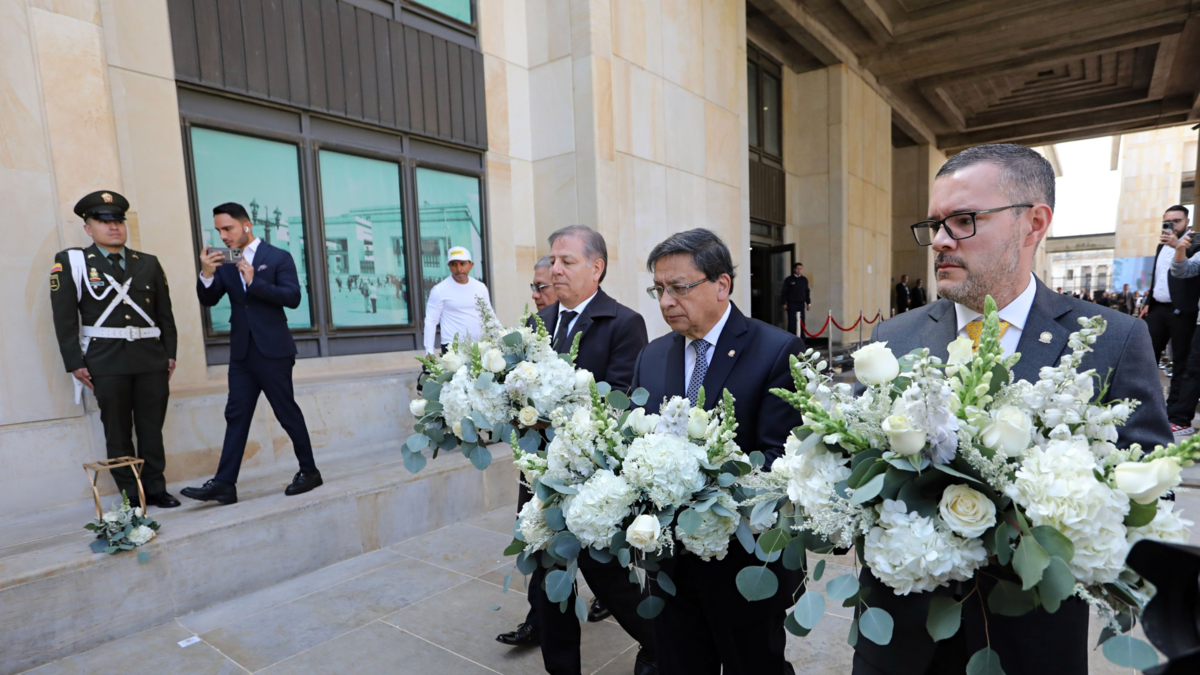
Constitutional Court President calls for De-escalation of Rhetoric Surrounding Palace of Justice Siege
Bogotá – Jorge Enrique Ibáñez, president of the Constitutional Court, urged a shift in language regarding the 1985 Palace of Justice siege, stating that de-escalating rhetoric is a crucial frist step toward a more prosperous and peaceful Colombia. His comments came during commemorations marking the tragic event, where differing perspectives on its significance were sharply highlighted.
The siege, which unfolded November 6 and 7, 1985, remains a deeply sensitive topic in Colombia, particularly following a recent court ruling acknowledging the Nation’s financial responsibility for the death of Jorge Alberto Echeverry Correa, assistant magistrate of the Labor Chamber of the Court, during the assault. Ibáñez’s call for calmer discourse aims to foster national healing and coexistence, but faces resistance from those who believe the event’s gravity is being diminished.
Luis Álvarez, president of the Council of State, vehemently opposed any attempt to downplay the siege, asserting that “it is unacceptable that the heroism of this painful event is exalted, because this offends the victims and humiliates the memory of our dead.” This sentiment underscores the ongoing pain and demand for accountability felt by families and those affected by the tragedy.
Mauricio Tamayo, president of the National Judicial Discipline Commission, emphasized the importance of remembering the event to prevent future atrocities, stating it “should be in the historical memory of our country, which also must and must respond to the truth.” Similarly,Jorge Enrique Vallejo,president of the Superior Council of the Judiciary,controversially characterized the siege as “nothing more than a minor terrorist act,” a statement that drew immediate criticism.
Attorney Gregorio Eljach lauded the courage of Colombian judges, highlighting their role as a vital safeguard against abuse of power, while Ombudsman Iris Marín stressed that “It is not possible to build peace in the country, a political dialog, a serious and lasting coexistence over oblivion and denialism.”
