
China Navy Task Force Replenishes in Philippine Sea, Satellite Images Show
New satellite imagery reveals a Chinese naval task force conducting underway replenishment operations in the Philippine Sea, according to analysis from naval platforms expert Mike Plunkett. The images, captured recently, depict a cruiser, a replenishment ship, and a frigate engaged in the transfer of fuel, supplies, and ammunition. This presentation of logistical capability underscores China’s growing naval power and its ability to sustain operations far from its home ports.
The ability to resupply at sea is a hallmark of a modern, blue-water navy, extending operational range and endurance. This latest activity comes amid heightened regional tensions,particularly concerning China’s claims in the South China Sea and its increasing military presence in the broader Indo-Pacific region. The Philippine Sea is international waters, but its proximity to key regional flashpoints makes such deployments significant.
According to Plunkett, a senior naval platforms analyst at intelligence firm Janes, the images clearly show the cruiser Yan’an and the replenishment ship Luoma Hu connected by a line, indicating a transfer operation. he also noted a jiangkai II-class frigate appeared to be preparing to join the replenishment effort.
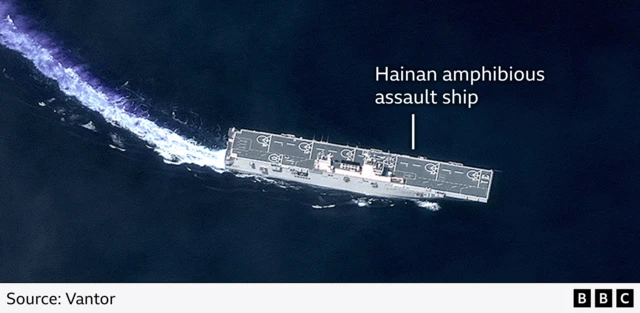
Plunkett suggests the amphibious assault ship Hainan, observed moving away from the group, had likely just completed its own resupply. “All of the above are standard operations for any first-rate navy and the Chinese have been doing it successfully for many years,” he stated.
Replenishment at sea allows navies to operate independently of land-based support for extended periods,projecting power and influence across vast distances.”The ability to replenish ships at sea means that navies are not tied to bases and can stay at sea for longer and further away than would otherwise be the case,” Plunkett explained.
