
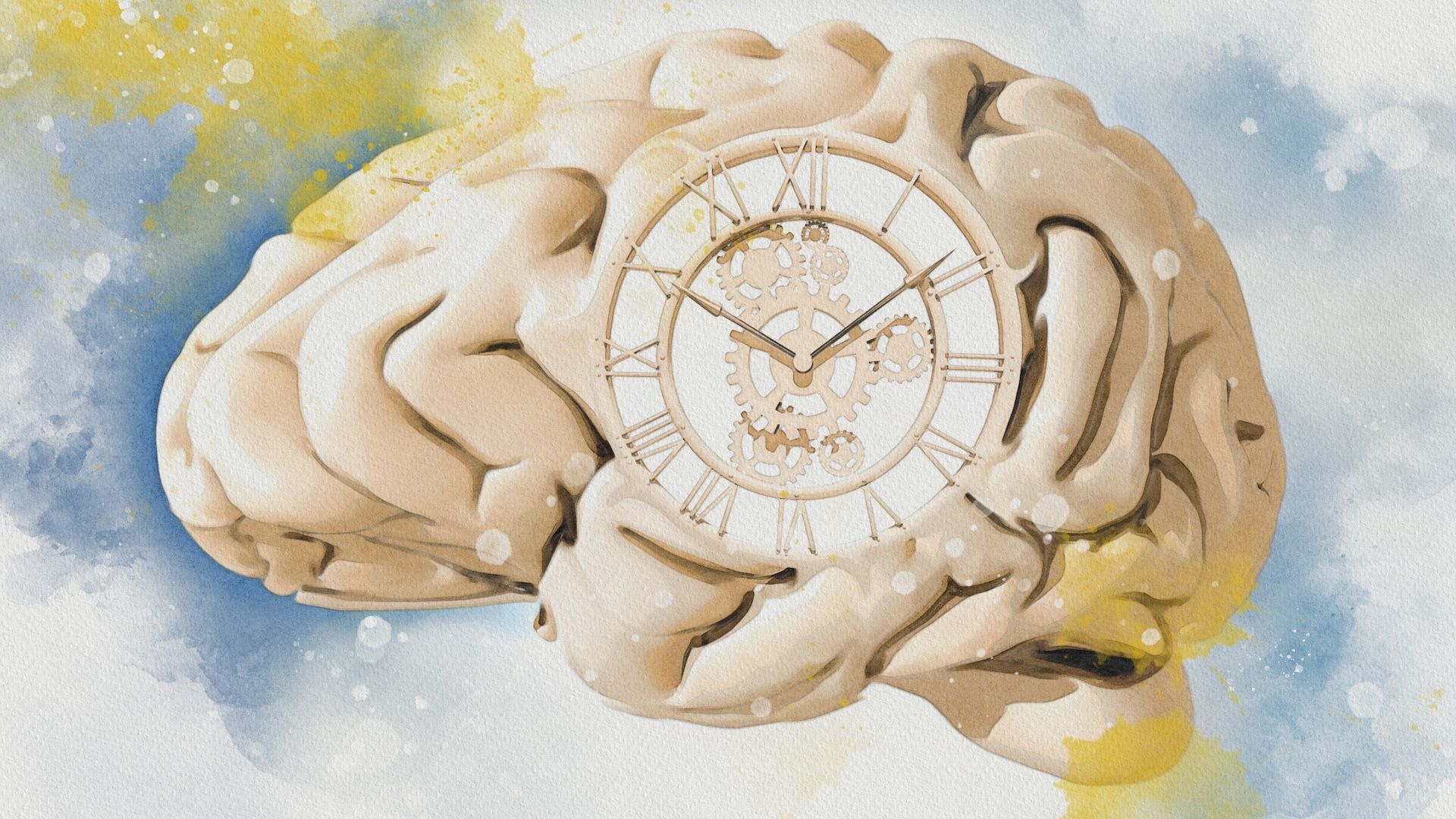
Time Flies as We Age: Brain Changes and Internal Clocks May Explain Why
New York, NY – A recent study suggests a potential neurological basis for the common experience of time seeming to accelerate with age.Researchers propose that as we get older, our brains become less adept at forming distinct memories, leading to a perceived compression of time. This neurological shift,combined with how we internally measure time,may explain why years seem to slip by faster as we grow older.
The study, published recently, builds on the idea that our perception of time is constructed from a series of neural “events.” As neurons become less differentiated with age – meaning they loose some of their specialized functions and become more similar to one another – the brain may record fewer of these distinct events. This reduction in neural detail could make it harder to differentiate between past experiences, ultimately making time feel like it’s passing more quickly. “The idea that time perception is linked to the novelty and detail of neural representations – neurons rather than individual neurons – may be true for the brain as a whole and may make it harder to recognize where one event ends and another begins,” the study authors proposed.
Though, neural dedifferentiation isn’t the sole description.Linguist Joanna Szadura of Maria Curie-Skłodowska University in Poland,who studies how language shapes our perception of time,points to the existence of two time scales: a linear societal measure of hours,days,and years,and an internal,logarithmic scale. A year represents 20% of a 5-year-old’s life but only 2% of a 50-year-old’s,influencing how we perceive its passage. Therefore, time perception is influenced by both the number of neural events and our internal, nonlinear measurement of time.
Despite the potential for time to feel compressed, researchers note older adults can still cultivate a sense of fullness in their lives. “Learning new things, traveling, and engaging in novel activities may help make time feel more expansive in retrospect,” explained Linda Geerligs, a researcher at Radboud University in the Netherlands. “Maybe even more notable though, are meaningful social interactions and activities that bring joy, which can also contribute to a fuller sense of time.”
