
Rising Numbers: more young Adults Opt for Facelifts, Fueled by Social Media and Accessibility
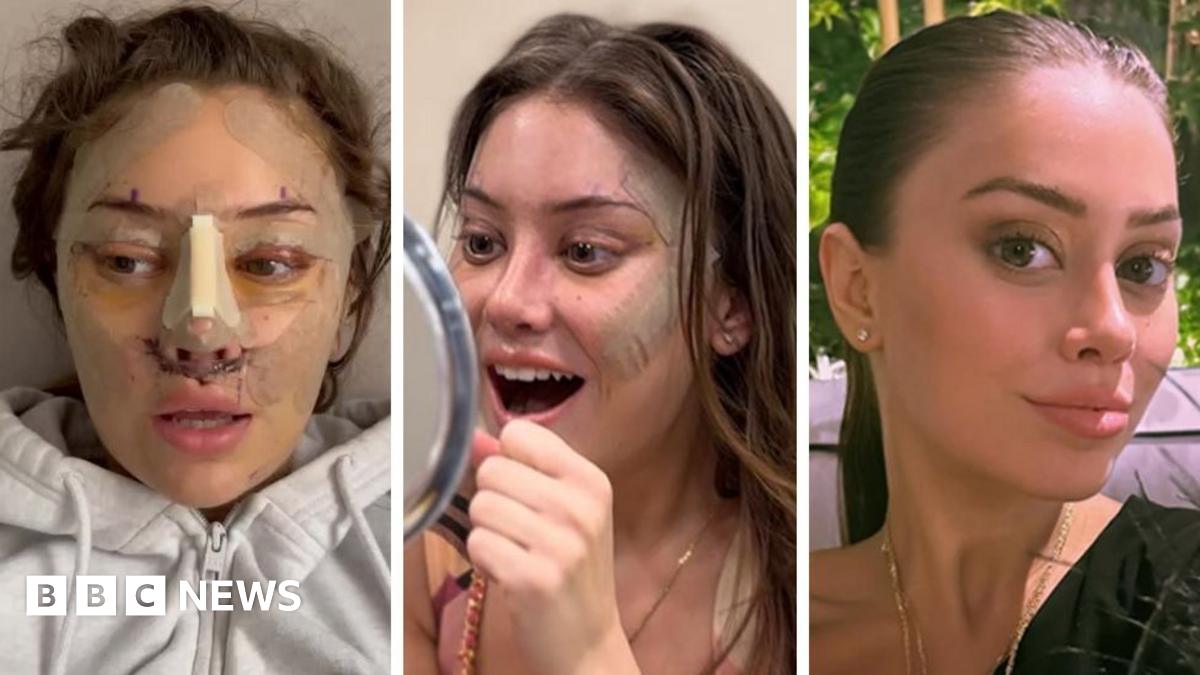
LONDON – A growing number of young adults are seeking facelifts and other cosmetic procedures, driven by a desire to address perceived imperfections amplified by social media and increasingly accessible options for surgery abroad. Julia Gilando, 34, recently underwent a facelift in Turkey after feeling self-conscious about facial asymmetry stemming from a previous jaw alignment issue. Her experience reflects a broader trend of individuals in their 20s and 30s turning to cosmetic surgery, despite potential risks.
Gilando, a healthcare professional, spent $8,000 (£6,000) on the procedure, deciding to “trust her gut” despite friends assuring her no visible correction was needed. While acknowledging the dangers associated with medical tourism – especially in countries like Turkey where procedures are significantly cheaper – she felt compelled to proceed. “At first I thought this whole idea was crazy,but I did my research and I decided to go for it,” Gilando said. “I was scared, I was in a foreign country, I was alone, and I didn’t speak the language.” Her recovery involved two days in hospital followed by a period of self-care while severely swollen. “There were some dark times, it was a whole mental rollercoaster of emotions, you go through these highs and lows.”
The surge in demand for cosmetic procedures among younger demographics is raising concerns among experts about unrealistic beauty standards and the potential impact on self-esteem. Dr.Kirsty Garbett, a body image expert from the Centre of Appearance Research at the University of the West of england, points to the constant self-scrutiny fueled by video calls and social media platforms. “I think there’s an unprecedented pressure,” she explains. “Especially when it comes to the face – we see ourselves on video calls, social media platforms, we compare ourselves to others so easily.”
Dr. Garbett emphasizes that the images presented online are often far from reality. “AI, filters – all play a part in creating a fake online world,” she says. The increasing openness of celebrities regarding their own cosmetic interventions, while potentially positive in some respects, contributes to the normalization of these procedures. “Celebrities being more outspoken about having these operations is, in some ways, a good thing, but it also normalises them – making them appear ‘just a part of life and that is really worrying’.”
Researchers are questioning whether cosmetic surgery truly delivers the promised boost in self-esteem and confidence, as advertised by the industry. The accessibility of affordable procedures abroad, coupled with the pervasive influence of curated online images, is creating a complex landscape for young people navigating body image and self-perception.
