
Astronomers Detect Most Massive Binary Black Hole System Ever Observed
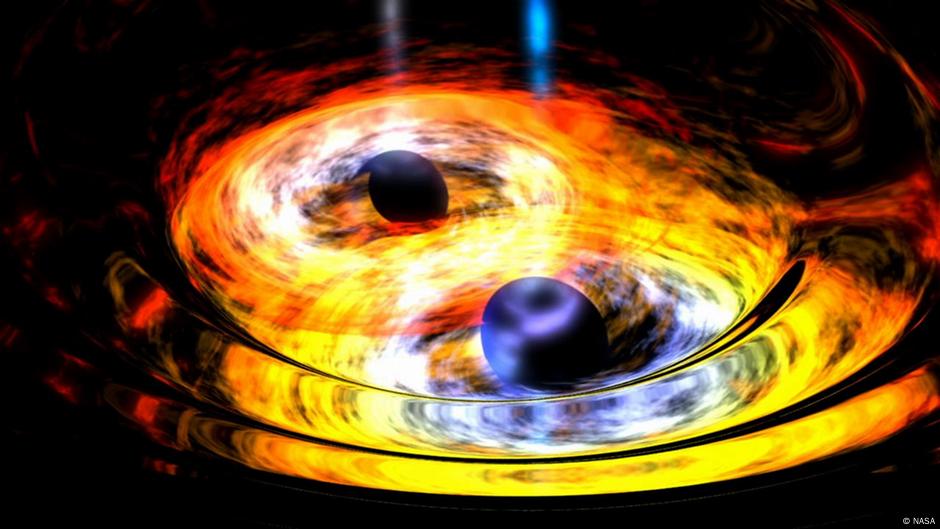
Astronomers have discovered the most massive binary black hole system ever detected through gravitational waves, a finding that challenges current understanding of black hole formation. The system, designated GW231123, is located 10 billion light-years from Earth and consists of two black holes with a combined mass equivalent to 225 solar masses.”This is the most massive binary black hole we have observed through gravitational waves, and it is a real challenge for our understanding of the formation of black holes,” stated Mark Hannam of the University of Cardiff and a member of the LVK collaboration.
The immense mass and rapid spin of GW231123 present difficulties for existing technological capabilities and theoretical models. “these amounts of mass are strange, as they are just in the range of masses where, due to all types of strange phenomena that occur, we do not expect black holes to form,” Hannam explained.
Charlie Hoy, also a member of the LVK and an expert at the University of Portsmouth, noted that the black holes appear to spin vrey rapidly, “near the limit allowed by the theory of Einstein’s general relativity.” this characteristic makes the signal challenging to model and interpret, serving as a valuable case study for advancing theoretical tools.
sophie Bini, a co-author of the study, highlighted the significance of the discovery: “It is a powerful example of how much we can learn from gravitational wave astronomy and how much we have to discover.”
Details of the GW231123 finding were presented this week at the 24th International Conference on General Relativity and Gravitation (GR24) and the 16th Edoardo Amaldi Conference on gravitational waves in Glasgow, Scotland.
