The Reproducibility Crisis in Biomedical Research: Challenges and Solutions
Biomedical researchers face a reproducibility crisis, with independent replication challenges affecting up to 90 percent of published biomedical research papers, according to the book Unreliable by Csaba Szabo. This structural vulnerability spans honest experimental mistakes, questionable statistical techniques, and deliberate data manipulation driven by hypercompetition for grant funding and publication bias toward positive results. Addressing these systemic failures requires coordinated institutional oversight, transparent data sharing, and updated methodological standards across the global research ecosystem.
- Systemic drivers include intense grant competition, publication bias toward positive outcomes, and the proliferation of fabricated data from paper mills.
- Comprehensive reforms proposed by researchers focus on retraining scientific personnel, overhauling grant evaluation systems, and enforcing open data mandates.
The Scope of Replication Failures in Preclinical and Clinical Studies
The integrity of the scientific method rests on the premise that an independent team should be able to repeat a published experiment and obtain identical results. Yet, studies investigating preclinical cancer biology and psychological science reveal persistent gaps between initial findings and subsequent replication efforts. The National Institutes of Health has outlined implementation strategies, including the 2024 NIH Public Access Policy and unified strategic updates, designed to reinforce gold-standard science and improve transparency across funded projects.
Institutional Incentives and the Rise of Misconduct
Flaws in the real-world incentives of academic publishing contribute directly to the persistence of unreliable data. Academic career advancement structures heavily favor high-impact positive results, often discouraging null findings and discouraging the rigorous secondary replication studies necessary to validate a biomarker or therapeutic target. The commercial output of unauthorized data mills has also introduced fabricated findings into mainstream literature. Publishing houses and academic institutions frequently operate within a culture of impunity that delays retractions and obscures methodological errors.

Pathways Toward Methodological Reform
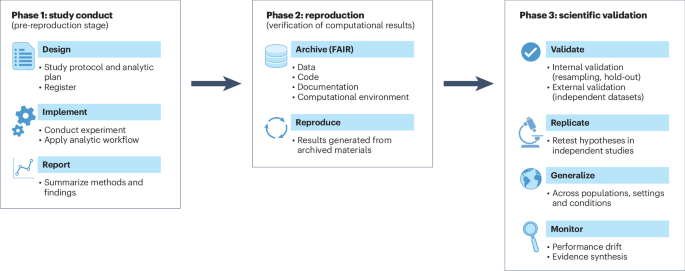
Mitigating the reproducibility crisis requires targeted interventions across the entire research lifecycle, from initial experimental design to peer review. Open science initiatives, such as those monitored through global data sharing assessments like The State of Open Data, emphasize the necessity of raw data availability and pre-registration of study protocols. By adopting standardized reporting metrics and leveraging independent science sleuths to identify anomalies early, the biomedical community aims to restore foundational reliability to translational medicine.
Disclaimer: The information provided in this article is for educational and scientific communication purposes only and does not constitute medical advice. Always consult with a qualified healthcare provider regarding any medical condition, diagnosis, or treatment plan.