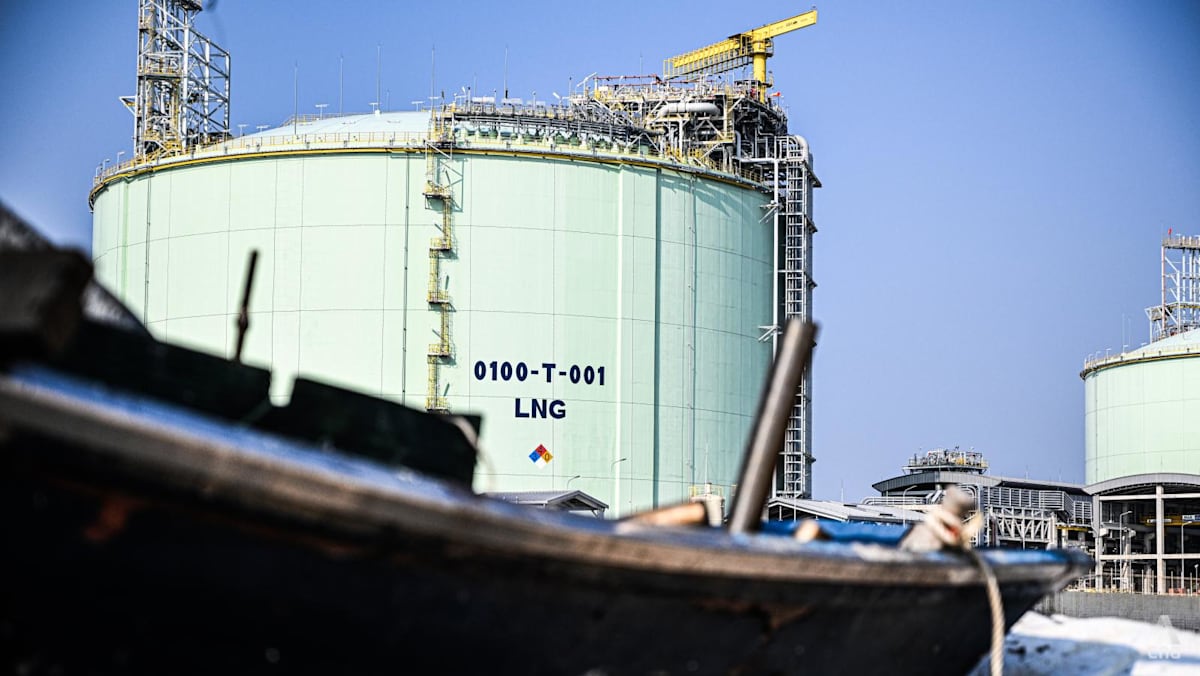
Thailand Energy Crisis: Impact on Costs, Pollution, and Operations
Thailand is facing a critical energy crisis following the effective closure of the Strait of Hormuz due to the conflict between Iran, the US, and Israel. With 66% of its power output dependent on gas, surging LNG prices and currency depreciation are forcing the government to mandate emergency energy-saving measures.
The vulnerability of the Thai economy was laid bare this week. For years, the nation leaned heavily into a gas-reliant energy strategy, a “bet” that assumed a stable flow of commodities from the Persian Gulf. That stability vanished in late February when the Strait of Hormuz—the artery through which 20% of the world’s oil and 21% of its liquefied natural gas (LNG) flows—became a war zone. Now, the macroeconomic fallout is no longer a theoretical risk; it is a daily reality for millions of Thai citizens and businesses.
The math is brutal.
Thailand spends more than 7% of its gross domestic product (GDP) on oil and gas imports. As the conflict intensified, Asian spot prices for LNG jumped by 51% as of March 9, 2026. For Thailand, the cost of replacement cargoes has soared from USD 11 per million British thermal units (MMBtu) to upwards of USD 23 per MMBtu. This price shock was compounded by a 5.3% depreciation of the Thai Baht in March, which the Institute for Energy Economics and Financial Analysis (IEEFA) estimates has increased the cost of purchasing LNG cargoes by a staggering 125% in local currency terms.
The Chokepoint Effect and Infrastructure Collapse
The crisis is not merely a result of temporary shipping delays. The physical infrastructure of global energy production has taken direct hits. On March 18, attacks targeted the world’s largest gas field in Iran and the primary gas liquefaction plant in Qatar. QatarEnergy has confirmed that two of its liquefaction trains sustained extensive damage. These facilities are responsible for over 3% of the global LNG supply, and the timeline for repair is grim: three to five years.

This long-term loss of capacity means the “bidding wars” for limited replacement supplies are likely to persist. Thailand, which relies on LNG for 27% of its total gas requirements, finds itself in a precarious position. Because 28% of its deliveries must traverse the Persian Gulf, the closure of the Strait of Hormuz has essentially severed a primary lifeline.
Businesses are now scrambling to survive. Procurement risks have escalated rapidly, forcing firms to abandon “just-in-time” logistics in favor of aggressive alternative sourcing. Many are now engaging supply chain management firms to diversify their energy inputs and mitigate the risk of total operational shutdowns.
“Although Thailand has high oil reserves compared to other countries, we remain vulnerable as a country that imports a large volume of oil. We cannot remain complacent and manage our oil resources as we have done in the past.”
— Prime Minister Anutin Charnvirakul
Domestic Hardship: From Diesel Spikes to WFH Mandates
The energy crisis has moved from the balance sheets of utility companies to the gas pumps. Diesel prices in Thailand have surged from approximately 30 baht a litre in late February to over 50 baht a litre as of early April. This spike is hitting the logistics sector and the working class the hardest, mirroring the “national energy emergency” declared in the Philippines.
To prevent a total collapse of reserves, Prime Minister Anutin Charnvirakul has urged the public and the private sector to adopt drastic conservation measures. These include:
- Perform-from-Home (WFH) and Work-from-Anywhere (WFA): Reducing the daily commute to lower fuel consumption.
- Transport Shifts: A strong push toward carpooling and the use of public transportation.
- Operational Restrictions: Preparation for shorter operating hours at petrol stations to conserve fuel.
- Electricity Responsibility: A general call for the private sector to reduce non-essential power usage.
These are not mere suggestions; they are survival tactics. Across Asia, the trend is systemic. From Sri Lanka and the Philippines introducing four-day work weeks to Vietnam calling for widespread WFH, the region is attempting to engineer its way out of a supply deficit.
For the corporate sector, these mandates are creating a secondary crisis of productivity and overhead. Companies are increasingly hiring energy efficiency consultants to audit their facilities and find ways to maintain operations with significantly reduced power loads.
The Long-Term Economic Bleed
The immediate fear is the price of diesel, but the long-term fear is the erosion of Thailand’s competitive edge. The combination of high energy costs and a weakening currency creates a pincer movement that squeezes profit margins across every industry, from manufacturing to tourism.
The volatility of the Thai Baht during this crisis has turned energy procurement into a gambling exercise. To shield themselves from further currency swings, many larger enterprises are consulting corporate financial advisors to implement complex hedging strategies, attempting to lock in prices before the next wave of volatility hits.
The reality is that Thailand’s energy security was built on a foundation of geopolitical stability that no longer exists. The reliance on the Persian Gulf for nearly a third of its LNG deliveries has transformed a distant war into a local economic depression.
As the world waits to see if the Strait of Hormuz will reopen, Thailand is learning a costly lesson about the dangers of energy over-dependence. The transition to a more diversified energy mix is no longer an environmental goal—it is a national security imperative. For those navigating the current chaos, the only way forward is through professional expertise and a complete overhaul of how the nation consumes and sources its power. Finding verified, expert guidance via the World Today News Directory is the first step in securing a business’s future in an era of permanent volatility.