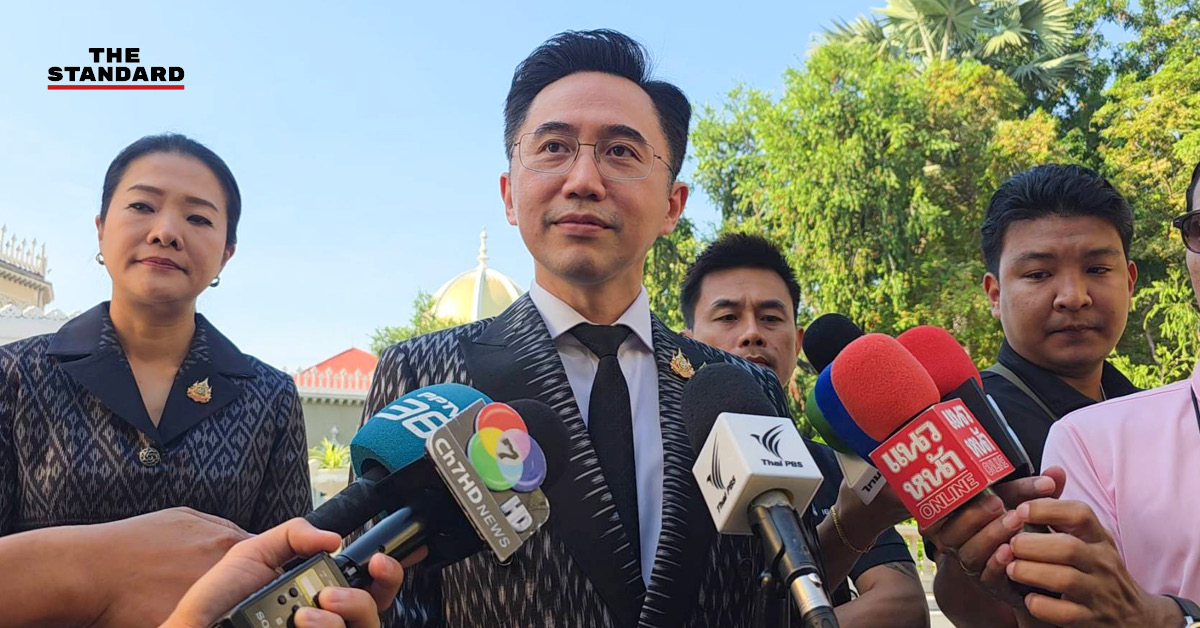
Thai DPM Leads Tripartite Talks on Transboundary Mining Pollution, Seeks Sensor Installation
Deputy Prime Minister Yotsachanan Wongsawat is leading a tripartite discussion this afternoon to address transboundary toxic pollution originating from mining operations in Myanmar.
The government is pushing for the disclosure of mine ownership and the installation of water sensors to monitor heavy metal levels in shared river systems.
The government is focusing on a 60,000-rai agricultural area in Mae Sai, where researchers have deployed intelligent sediment traps to filter arsenic, according to THE BETTER.
The government is currently scanning agricultural and environmental data to create an online map of affected areas, a project expected to be completed within the week, THE STANDARD reported. Yotsachanan emphasized that while the government can provide technical knowledge, Thailand must have the authority to install sensors to monitor water quality independently.
He stated, “Knowledge we can provide, but we request to install water sensors because we need to monitor.”
The administration is pursuing a two-tiered approach to mitigate the crisis. First, it is demanding that Myanmar disclose the identity of mine operators and improve water management. If the Myanmar government maintains only partial control, Yotsachanan intends to request that China act as a mediator to facilitate inspections, THE STANDARD reported.
Concerns regarding the safety of irrigation water have prompted the Ministry of Agriculture to issue specific guidance for farmers. While “green zone” areas have been cleared for rice cultivation, officials are providing recommendations on which crops are suitable for planting in areas adjacent to contaminated water, THE STANDARD reported.
Data from ListenField Thailand indicates that arsenic levels in the Sai River surged from 0.023 to 0.284 milligrams per liter in under two months during the recent flood season, according to ThaiPublica.
This contamination has impacted approximately 119,000 rai of rice fields across the Kok, Sai, and Ruak river basins. Matichon Online reported that the Department of Fisheries has advised against consuming bottom-dwelling species such as certain types of river shrimp and mussels, while noting that fish from the middle and upper water layers remain safe if internal organs are removed.
Opposition MP Phatthapong Leelaphat has criticized the government’s current eight-point directive for lacking a clear timeline and failing to address the root causes of the pollution, ThaiTabloid reported. He has urged the government to expand its coordination to include China and Laos, rather than focusing solely on Myanmar.
Public sentiment remains cautious, with a recent Suan Dusit Poll finding that 89.19% of respondents are concerned about toxic contamination in water and food, while 85.92% expressed low confidence in the government’s ability to resolve the crisis, according to Thaitv5hd.
The government plans to continue its verification of water quality and agricultural output throughout the week, with Yotsachanan promising that there is “nothing to hide.” The next phase of the response includes a scheduled meeting on November 25 to evaluate the results of the sediment filtration systems, THE BETTER reported.