Human Rights Watch: Modi Government Hollowing Out India’s Democratic Institutions
The Election Commission of India began a nationwide Special Intensive Revision (SIR) of electoral rolls in June 2025, ostensibly to remove any dead, duplicate, or ineligible voters.
Critics described the process as deeply flawed and opaque, and Human Rights Watch reported that it disproportionately excluded women, people living in poverty, and religious minorities, particularly Muslims.
The government’s actions reflect a decade-long pattern of institutional erosion, according to a report released by Human Rights Watch. “The current regime is trying to subjugate every institution,” said SY Quraishi, a former Chief Election Commissioner of India, in November 2025.
In West Bengal, the removal of nine million voters—representing 12 percent of the state’s electorate—preceded April 2026 elections. The Supreme Court declined to intervene, suggesting that those excluded could wait for future cycles to prove their eligibility, Human Rights Watch noted.
The administration of Prime Minister Narendra Modi has also bypassed standard parliamentary oversight. PRS Legislative Research found that the government referred only 16 percent of bills to parliamentary committees between 2019 and 2024, down from 28 percent in its previous term.
By comparison, previous administrations referred 60 to 71 percent of bills to committees between 2004 and 2014.
Federal investigative agencies have increasingly targeted political opponents and rights activists. The Enforcement Directorate filed cases against 193 politicians between April 2015 and February 2025, a 600 percent increase compared to the decade before the Modi government took office.
Human Rights Watch documented the use of the Unlawful Activities (Prevention) Act to detain activists, including the case of GN Saibaba, who died in October 2024 months after being acquitted.
Other detainees, such as 84-year-old Jesuit priest Stan Swamy and 33-year-old Pandu Narote, died in custody between 2021 and 2022.
“Over the past decade, the Modi government has been hollowing out India’s independent institutions that are critical to checking executive power and protecting civil liberties,” said Elaine Pearson, Asia director at Human Rights Watch.
| Administration Period | Bills Referred to Committees |
|---|---|
| 2004–2009 | 60% |
| 2009–2014 | 71% |
| 2014–2019 | 28% |
| 2019–2024 | 16% |
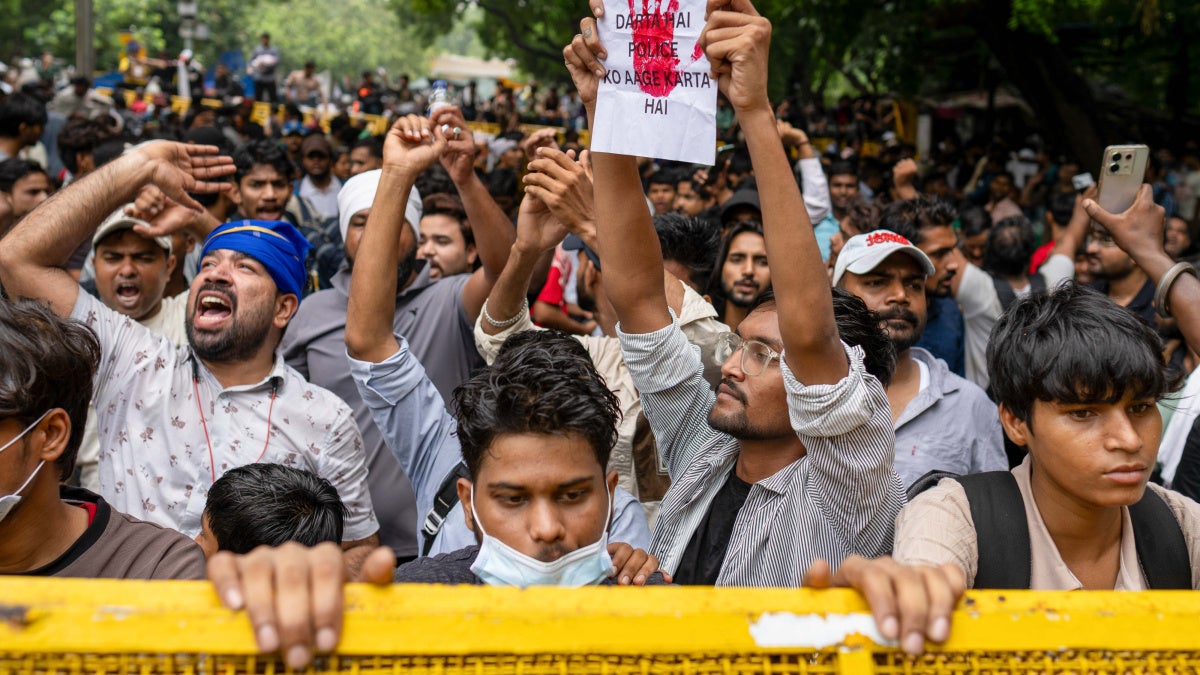
The government has framed recent public protests against these policies as “anti-national” while deploying over 40,000 security personnel to New Delhi to manage demonstrations, Human Rights Watch stated. “Checking India’s democratic decline means ending the use of state institutions as weapons against government critics and rebuilding them as safeguards for everyone’s rights,” Pearson said.
The Election Commission of India is a constitutional body empowered to manage free and fair elections, with its structure and independence defined by the Constitution. To execute its mandate, the commission prepares electoral rolls and appoints electoral registration officers at the constituency level to oversee voter registration.
Following the enactment of the Chief Election Commissioner and Other Election Commissioners (Appointment, Conditions of Service and Term of Office) Act, 2023, the selection committee for these officials now includes a union cabinet minister nominated by the prime minister. Critics argue this legislative change has compromised the commission’s institutional autonomy, potentially influencing the implementation of the Special Intensive Revision that led to widespread voter exclusions.