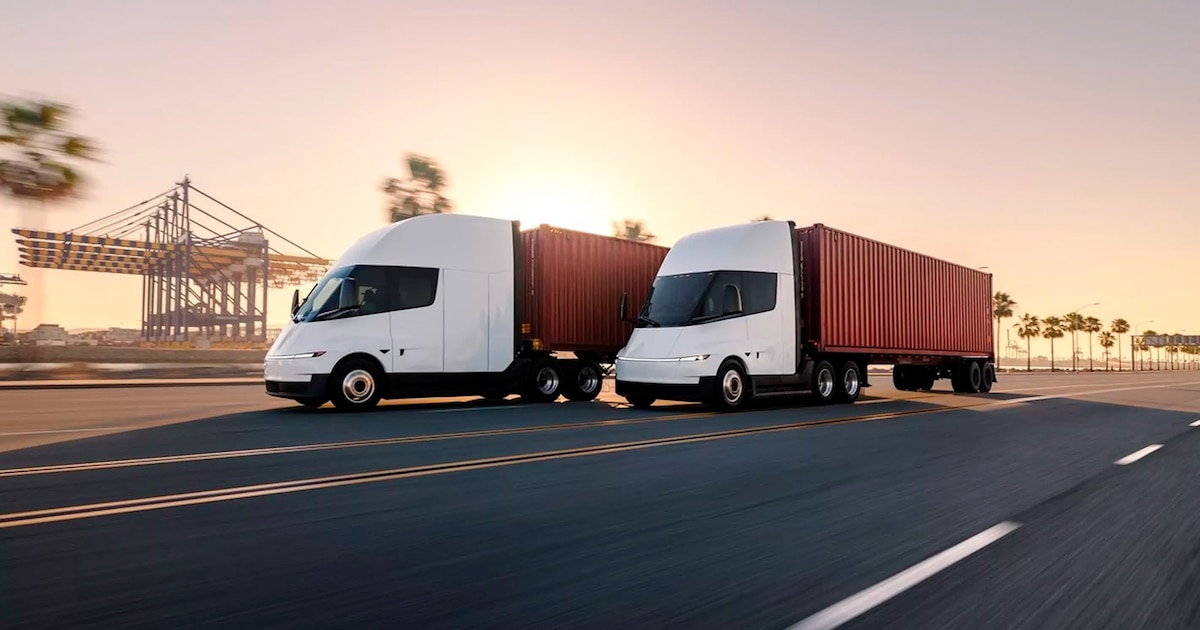
Tesla Begins Mass Production of the Semi Electric Truck in Nevada
Tesla officially launched large-scale production of the Tesla Semi at a newly inaugurated manufacturing facility in Sparks, Nevada, targeting a capacity of 50,000 electric trucks annually. The mass-production milestone follows seven years of limited pilot deployments with fleet operators like PepsiCo, marking a significant escalation in the heavy-duty commercial EV sector.
Scaling Production and Industrial Capacity in Nevada
The new production plant occupies approximately 167,000 square metres adjacent to Gigafactory Nevada. Dan Priestley, director of engineering for the Semi program at Tesla, stated during the facility’s opening that the ramp-up will create more than 3,000 jobs in the region. The factory is designed to output roughly 1,000 units per week once fully operational.
The facility integrates internal manufacturing lines for batteries, drive axles, cooling modules, high-voltage distribution systems, and seats to compress production costs.
Vehicle Architecture, Battery Tech, and Fleet Performance
Tesla redesigned the heavy-duty truck over a four-year engineering cycle to prepare for high-volume output. The updated models incorporate the company’s proprietary 4680 battery cells, replacing the 2170 cells used in early test builds. The vehicle also features an advanced electric steering system that eliminates traditional hydraulic pumps and fluid lines, establishing a foundation for future automated driving integration.
The Standard version delivers an estimated range of 523 kilometres, while the Long Range variant reaches up to 805 kilometres on a single charge with a combined gross weight of 37,195 kilograms. Tesla reports that the vehicle consumes approximately 1.06 kWh per kilometre and recovers 60% of its battery capacity in 30 minutes using dedicated Megachangers.
Reliability metrics released by the manufacturer indicate a fleet uptime exceeding 98% throughout the year, with maintenance requirements keeping vehicles off-road less than 2% of the time. Chief Executive Officer Elon Musk noted in a video presentation that the Semi is engineered specifically to transform heavy transport logistics, with company roadmaps pointing toward the eventual integration of Full Self-Driving capabilities.
Commercial Adoption and Pricing Dynamics
Commercial demand is expanding alongside the manufacturing ramp-up. The ZET SCALE coalition selected Tesla as a primary supplier for an initial order of 2,500 units as part of a broader initiative to deploy over 10,000 electric trucks. Transport firm Einride recently committed to acquiring 500 units, while brands such as DHL, US Foods, ABF, IMC Logistics, and WattEV maintain active fleet allocations.

Tesla has not published an official sticker price for the production models. Industry estimates from the International Council on Clean Transportation place the long-range variant at approximately USD 290,000, while trade publications project a base price near USD 260,000 for the Standard configuration.