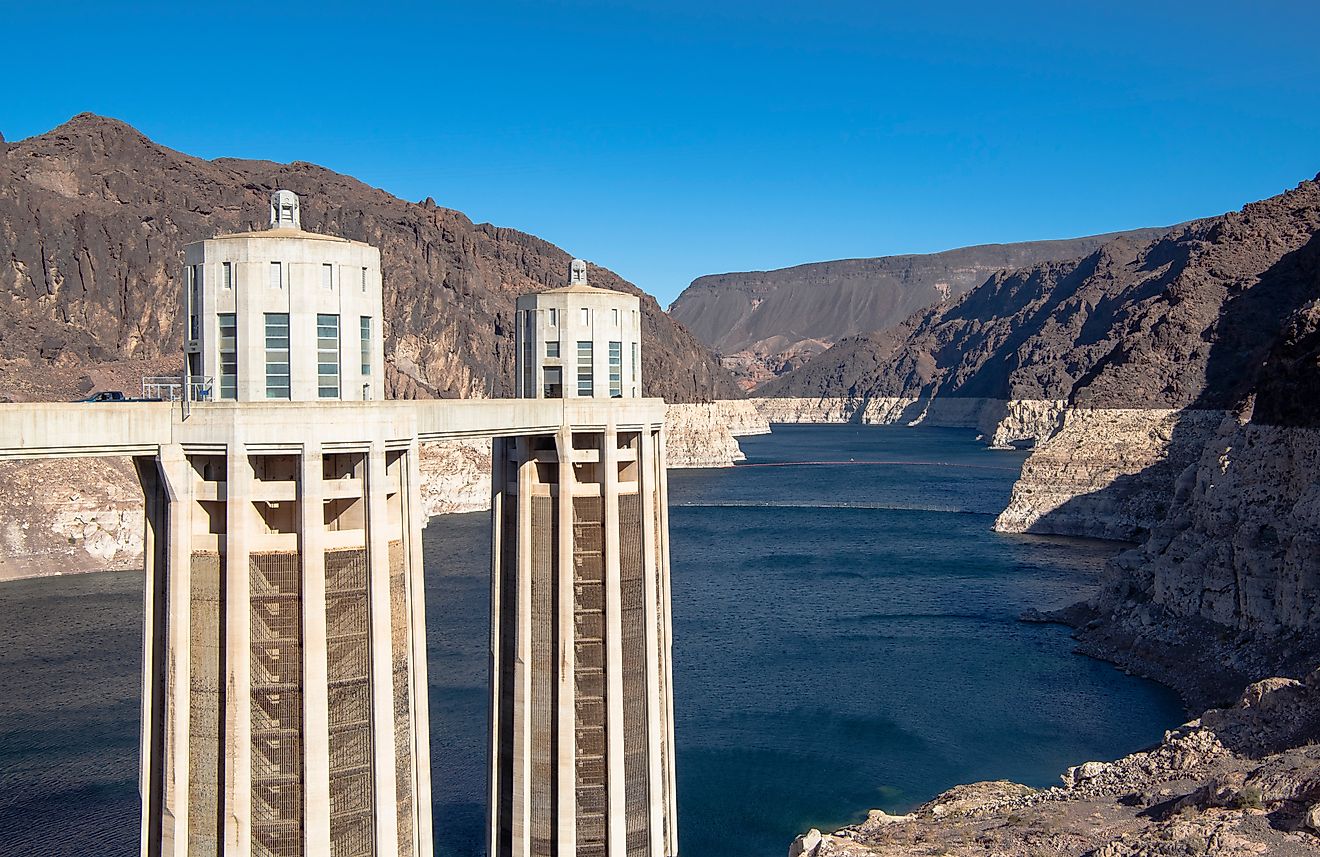
Hoover Dam Power Capacity: Why the 950-Foot Threshold is Misleading
When Lake Mead drops below 1,035 feet, Hoover Dam faces severe cavitation damage to its older turbines long before reaching the 950-foot minimum power pool.
The 1,035-Foot Threshold Versus the 950-Foot Minimum
Market observers frequently quote 950 feet as the point of operational failure for Hoover Dam. That figure marks the minimum power pool where hydraulic head is insufficient to spin turbines. Bureau of Reclamation technical assessments establish a different operational reality. Cavitation damage forces older machines offline at 1,035 feet, an elevation 85 feet higher than the minimum threshold.
Capacity at 1,035 feet drops to roughly 382 megawatts according to updated federal projections. Earlier estimates assumed 1,302 megawatts at that elevation. The dam runs on a fraction of its original configuration when water levels approach these lower marks.
Hydraulic Head and Output Decay
Hydroelectric output relies on the vertical distance of water stacked above turbines, known as head. Hoover Dam maintains a maximum hydraulic head of approximately 590 feet under full reservoir conditions. Declining water levels reduce pressure and lower power yields for every gallon passing through the penstocks.
Generation metrics demonstrate a steady downward slope across two decades. Output in 2023 reached roughly half of the generation recorded in 2000. Power allocations follow long-standing contracts rather than open-market spot pricing, shielding regional utility customers from sudden market shocks during gradual volume declines.
Wide-Head Turbine Upgrades and Funding
Engineering modifications altered the operational floor over the past decade. Five wide-head turbines installed between 2011 and 2016 operate efficiently at lower head pressures and resist cavitation damage. These replacements lowered the generating floor by 100 vertical feet.
Capital deployment continues to address low-water vulnerabilities. Federal funding released 52 million dollars to replace three additional older turbines with wide-head units. One existing wide-head turbine remains offline without a confirmed return date, constraining low-water capacity deliverability.
Physical Capacity at Minimum Pool
Physical capacity at the absolute 950-foot minimum power pool drops to an estimated 117 megawatts. Nameplate capacity sits at 2,080 megawatts, comparable to a large coal or nuclear station. A plant operating at 117 megawatts delivers approximately 5.6 percent of its nameplate rating.
The transition does not involve an abrupt shutdown. Output winds down gradually over years of declining elevation. Regional power grids have absorbed a fifty percent reduction in Hoover Dam output over the last twenty years without experiencing emergency rationing or widespread blackouts.