Teclistamab Shows Higher Complete Response Rates in High-Risk Smoldering Multiple Myeloma
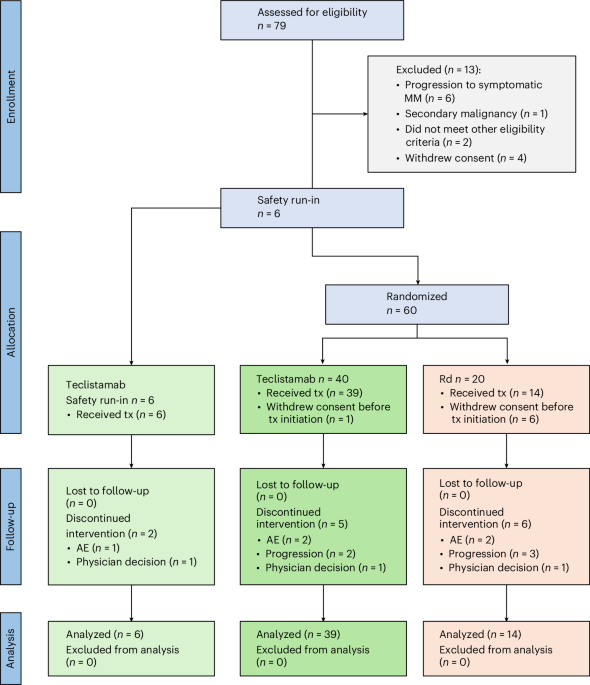
Patients with high-risk smoldering multiple myeloma achieved significantly higher complete response rates when treated with teclistamab compared to the standard lenalidomide-dexamethasone regimen, according to findings from a randomized phase 2 trial published in Nature Medicine on September 11, 2026. Led by researchers evaluating the multi-arm Immuno-PRISM platform study, the trial underscores an aggressive early-intervention approach for a plasma cell disorder typically managed through watchful waiting.
Teclistamab outperforms standard regimen in phase 2 trial
- Among 45 patients treated with teclistamab in the Immuno-PRISM trial, 75.6% achieved a complete response or better, contrasted with standard therapeutic outcomes.
- Minimal residual disease negativity at a sensitivity threshold of 10-5 was observed in 82% of patients receiving the investigational immunotherapy.
- Cytokine release syndrome occurred in 71.1% of teclistamab-treated patients without any grade 3 or higher events, while no patients experienced immune effector cell-associated neurotoxicity syndrome.
Shifting from watchful waiting to early therapeutic intervention
Smoldering multiple myeloma is clinically defined by the presence of clonal plasma cells and a monoclonal protein in the blood or urine, lacking the classic end-organ damage seen in active myeloma, such as anemia, renal injury, bone lesions, or hypercalcemia. While standard care often dictates observation through routine monitoring until disease progression occurs, high-risk variants carry a substantial probability of transforming into symptomatic disease. The multi-arm, randomized, phase 2 platform trial—designated Immuno-PRISM (NCT05469893)—was structured to test whether early intervention using bispecific antibodies like teclistamab can alter this trajectory by targeting a smaller, less mutated tumor burden.
Evaluating deep responses and progression-free survival
According to safety and efficacy data presented by Nadeem et al., the study enrolled patients fulfilling high-risk criteria defined by the International Myeloma Working Group or specific scoring thresholds involving serum M-spike values, free light chain ratios, and bone marrow plasma cell percentages. Across the evaluation cohorts, patients receiving the immunotherapy demonstrated deep responses, featuring a two-year estimated progression-free survival rate of 92%. The trial design compares these outcomes against a control arm consisting of lenalidomide combined with dexamethasone, establishing a direct clinical contrast between traditional oral regimens and emerging immunotherapeutic strategies.
Regulatory boundaries and ongoing clinical debates
As detailed by Johnson & Johnson Innovative Medicine in medical information summaries hosted on J&J Medical Connect, teclistamab is not approved by regulatory agencies for treating high-risk smoldering multiple myeloma outside of clinical trials. The development underscores a broader medical debate: while early treatment deepens initial responses, longer follow-up remains necessary to prove whether moving therapy upstream genuinely extends overall survival or merely shifts the timing of recorded disease progression.

Precision diagnostics and specialized care coordination
Balancing therapeutic depth against cumulative toxicity
Researchers emphasize that longer follow-up is vital to confirm whether high complete response rates translate into durable, long-term prevention of progression to symptomatic multiple myeloma.
Disclaimer: The information provided in this article is for educational and scientific communication purposes only and does not constitute medical advice. Always consult with a qualified healthcare provider regarding any medical condition, diagnosis, or treatment plan.