
Tech Giants Chase Shrinking Devices
Innovation Accelerates in Foldables and Wearables
Leading technology firms are investing heavily in miniaturizing devices, signaling a significant shift in consumer electronics. This pursuit of smaller, more powerful gadgets is poised to redefine personal technology in the coming years.
Foldable Phones Reach New Slimness
Samsung has unveiled its Galaxy Z Fold 7, boasting an impressive 4.2mm thickness when open, setting a new benchmark for slim foldable phones. Honor is set to follow with its Magic V5, claiming the title of the world’s slimmest foldable at just 4.1mm when unfolded. Analysts predict Apple will enter the foldable market in the latter half of next year.
Hope Cao, a product expert at Honor, attributed the Magic V5’s advancements to their silicon carbon battery technology, which offers superior energy density. Honor also leveraged its proprietary AI model for design optimization, ensuring both slimness and durability.
Augmented Reality Glasses Enter the Scene
Beyond foldables, the drive for miniaturization is evident in the augmented reality (AR) sector. Xreal is a pioneer in bringing viable AR glasses to consumers, aiming to integrate powerful AR technology into a familiar sunglass form factor.
Ralph Jodice of Xreal stated, “one of our biggest engineering challenges is shrinking powerful augmented reality technology into a form factor that looks and feels like everyday sunglasses.”
These glasses can project visuals onto the lenses, creating an immersive experience akin to an IMAX screen by connecting to various USB-C devices.
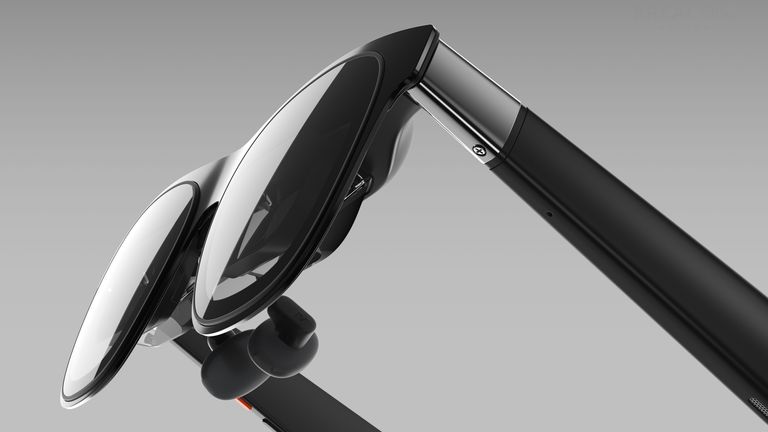
The Metaverse Society suggests that reducing the computational load on AR headsets by offloading processing to external devices like phones or computers could lower costs. Despite engineering hurdles, companies like Meta are actively investing in this space. Meta’s Ray-Ban smart glasses, which capture photos, video, and audio, can also leverage smartphone 5G connections to utilize AI for real-time object identification and information retrieval.
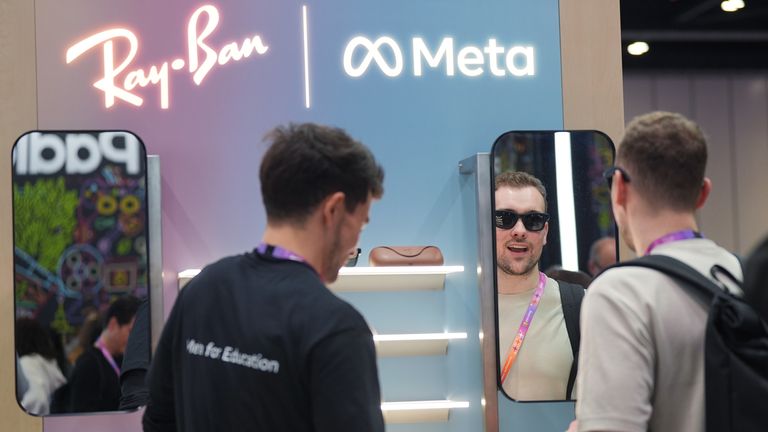
Gareth Sutcliffe, a tech and media analyst at Enders Analysis, views wearables as a significant growth area for companies like Meta and Google, potentially reaching hundreds of millions of users. “Meta’s R&D spend on wearables looks extraordinary in the context of limited sales now, but should the category explode in popularity, it will be seen as a great strategic bet,”
he commented, highlighting the long-term vision behind the substantial investment.
Mark Zuckerberg’s ultimate goal involves merging the capabilities of Xreal’s display technology with Meta’s existing hardware, creating smartglasses that can both capture content and project graphics. While a prototype has been shown, a consumer-ready version is still some way off.
This ongoing development in miniaturization is a long-term endeavor, but it could ultimately lead to the next dominant personal computing device, potentially succeeding the smartphone. According to Statista, the global market for smart glasses is projected to reach approximately 47.4 million units by 2027 (Statista, 2023).
