
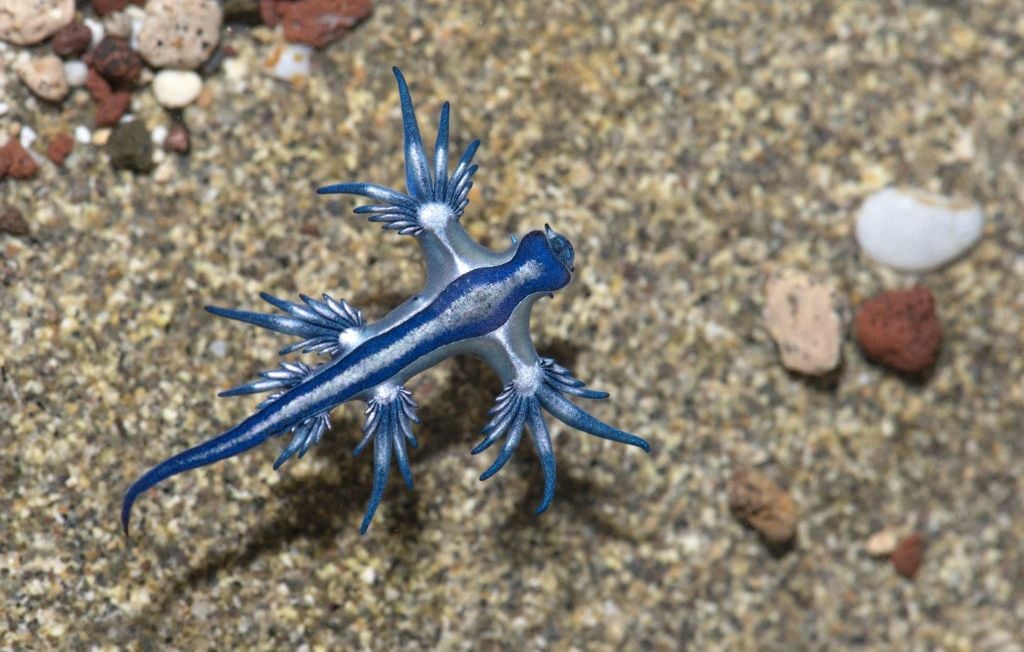
Spanish Authorities Warn of Dangerous “Blue Dragon” Closures of Beaches
Spain – Several beaches across Spain have been temporarily closed due to a surge in sightings of the Glaucus atlanticus, commonly known as the “Blue Dragon,” a small but perhaps dangerous marine creature. Spanish police issued warnings via social media after reports from sources including actu.fr highlighted the issue. Closures have already impacted popular destinations in Mallorca, the Canary Islands, andalusia, and Lanzarote.
The Blue Dragon, measuring up to 4 centimeters in length, is a pelagic sea slug that drifts on the ocean surface, carried by currents. While visually striking,the creature poses a significant threat due to it’s unique defense mechanism. It consumes Portuguese man-of-war and stores the stinging nematocysts (venomous cells) within its own tissues, deploying them when threatened.
“Contact with this marine animal can be dangerous and cause painful burns on the skin,” authorities stated in their public advisory.
A bite from a Blue Dragon can result in severe burns,nausea,vomiting,and potentially life-threatening allergic reactions. According to the Doris database,cited by Actu.fr, the intense pain induced by the venom can even lead to syncope and, in rare cases, drowning.
Understanding the Blue Dragon & Recent Surge
the Glaucus atlanticus is native to the oceans of the world, and sightings, while not unheard of, have become increasingly frequent in recent years. Experts believe this is likely linked to a combination of factors including warming ocean temperatures, changes in currents, and an increase in the population of Portuguese man-of-war – the Blue Dragon’s primary food source. The recent closures are not isolated to Spain; similar warnings have been issued in other parts of the Mediterranean and Atlantic coasts.The debate reports that this is not the first time Spanish beaches have faced closures due to the Blue Dragon, indicating a growing pattern.
If You Encounter a blue Dragon:
Authorities strongly advise the public to maintain a safe distance if they spot a Blue Dragon and promptly notify local emergency services. Direct contact should be avoided under all circumstances.
If accidental contact occurs:
wash the affected area with salt water. Do not use fresh water, as it can cause the nematocysts to fire, worsening the sting.
Apply cold compress. Use ice wrapped in a cloth to alleviate inflammation and pain. Seek medical attention if symptoms are severe, including difficulty breathing, widespread rash, or signs of an allergic reaction.
Resources:
Actu.fr: https://doris.ffessm.fr/Especes/Glaucus-atlanticus-Dragon-bleu-pelagique-4985
El Debate:
