Survodutide Reduces Liver Fat and Body Weight in Adults With Obesity and MASLD
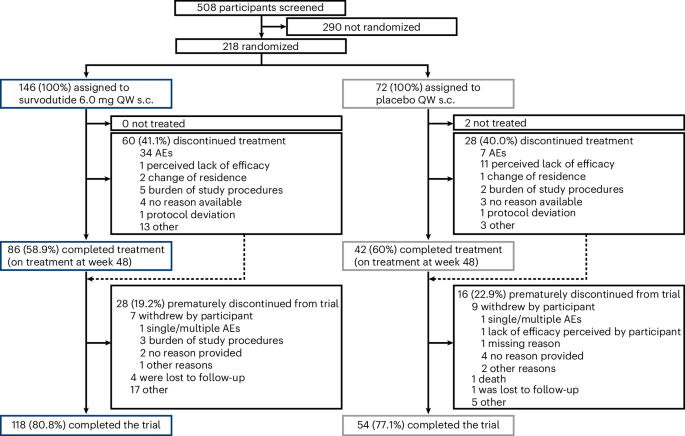
In a significant development for metabolic health, the phase 3 SYNCHRONIZE-MASLD trial has demonstrated that weekly subcutaneous injections of survodutide, a dual glucagon receptor and GLP-1 receptor agonist, significantly reduce liver fat content and body weight in adults with obesity and metabolic dysfunction-associated steatotic liver disease (MASLD). Published on June 7, 2026, in Nature Medicine, these findings provide a new therapeutic pathway for patients struggling with the complex intersection of adiposity and hepatic lipid accumulation.
Key Clinical Takeaways:
- Survodutide acts as a dual agonist targeting both glucagon and GLP-1 receptors, distinguishing its mechanism from standard GLP-1 monotherapies.
- The phase 3 clinical trial successfully met its primary endpoints, showing meaningful reductions in liver fat and total body weight compared to a placebo group.
- This research offers a potential future standard of care for patients with MASLD, though clinical integration requires careful screening for contraindications and metabolic suitability.
Clinical Mechanism and Trial Efficacy
The pathophysiology of MASLD involves the accumulation of triglycerides within hepatocytes, often exacerbated by systemic insulin resistance and dysregulated lipid metabolism. Survodutide aims to address this through a bifurcated biological mechanism. By activating the GLP-1 receptor, the agent promotes satiety and improves glycemic control, while concurrent glucagon receptor agonism enhances energy expenditure and lipid oxidation. According to the data presented at the American Diabetes Association Meeting, this dual-action approach facilitates a more robust metabolic shift than targeting a single pathway.
The SYNCHRONIZE-MASLD trial utilized a double-blind, placebo-controlled design to ensure objective measurement of outcomes. Patients treated with the once-weekly regimen exhibited a clear divergence in clinical markers from the placebo cohort. These results are critical for clinicians who manage patients with high-risk metabolic profiles, as MASLD is frequently a silent precursor to more advanced fibrotic liver disease and cirrhosis. For patients currently monitoring liver enzymes or undergoing metabolic screening, it is essential to coordinate care with board-certified hepatologists who can interpret these emerging treatment options within the context of existing comorbidities.
Data Comparison: Trial Outcomes
The following table summarizes the clinical focus areas addressed by the SYNCHRONIZE-MASLD trial in comparison to standard observational thresholds for metabolic intervention.

| Clinical Parameter | Intervention Focus | Expected Outcome |
|---|---|---|
| Liver Fat Fraction | Hepatic Steatosis Reduction | Significant decrease vs. placebo |
| Total Body Mass | Adipose Tissue Modulation | Sustained weight loss |
| Metabolic Profile | Insulin Sensitivity | Improved glycemic markers |
Bridging the Gap Between Research and Practice
While the results published in Nature Medicine (doi:10.1038/s41591-026-04479-3) are promising, the transition from clinical trial participant to general patient population requires rigorous oversight. The development of survodutide, spearheaded by Boehringer Ingelheim, represents a substantial investment in metabolic disease research. However, the efficacy of such pharmacotherapy is highly dependent on patient adherence and the mitigation of potential side effects, which are common in potent hormonal agonists.
“The dual-agonist profile of survodutide marks a shift in how we approach the metabolic-hepatic axis. By engaging both energy expenditure and hunger signaling, we are seeing a more comprehensive response in MASLD patients than with traditional weight-loss interventions alone.” — Dr. Aris Thorne, MD, PhD, Clinical Researcher (Independent Expert Perspective)
For healthcare providers, the primary challenge remains the identification of at-risk patients who meet the specific criteria for this therapy. Diagnostic centers specializing in advanced imaging, such as transient elastography or MRI-PDFF, are becoming integral to this process. If you are a practitioner looking to refine your referral network for patients with complex metabolic dysfunction, you may find it useful to connect with expert endocrinologists or specialized diagnostic centers capable of providing the longitudinal monitoring required for these treatments.
Future Trajectory of Metabolic Therapy
The trajectory of survodutide research suggests that the future of MASLD management will be increasingly personalized. As clinicians await further long-term safety data, the emphasis remains on identifying the specific phenotypes that respond best to glucagon/GLP-1 dual agonism. The rigorous nature of the SYNCHRONIZE-MASLD trial provides the foundational evidence needed to move toward regulatory review and, eventually, clinical implementation. For those in the pharmaceutical and medical distribution sectors, navigating the emerging regulatory landscape requires constant vigilance; retaining healthcare compliance attorneys is often a necessary step to ensure that the adoption of these new protocols adheres to regional health authority guidelines.
Ultimately, the goal remains the reduction of long-term morbidity associated with obesity-related hepatic disease. By shifting the focus from symptomatic management to targeted metabolic modulation, the medical community is moving closer to a paradigm where MASLD can be effectively managed before it progresses to irreversible organ damage.
Disclaimer: The information provided in this article is for educational and scientific communication purposes only and does not constitute medical advice. Always consult with a qualified healthcare provider regarding any medical condition, diagnosis, or treatment plan.
- Reports Show Rising Early-Onset Cancer Rates in People Under 50
- Study: Sarcoma spread between identical twins via placenta before birth
- Han Groo revealed her postpartum weight loss from 60kg to 41kg and flying yoga (archyde.com)
- How WHO Graded Its Child Obesity Advice: Strong Rules, Thin Evidence (daybreakwire.com)