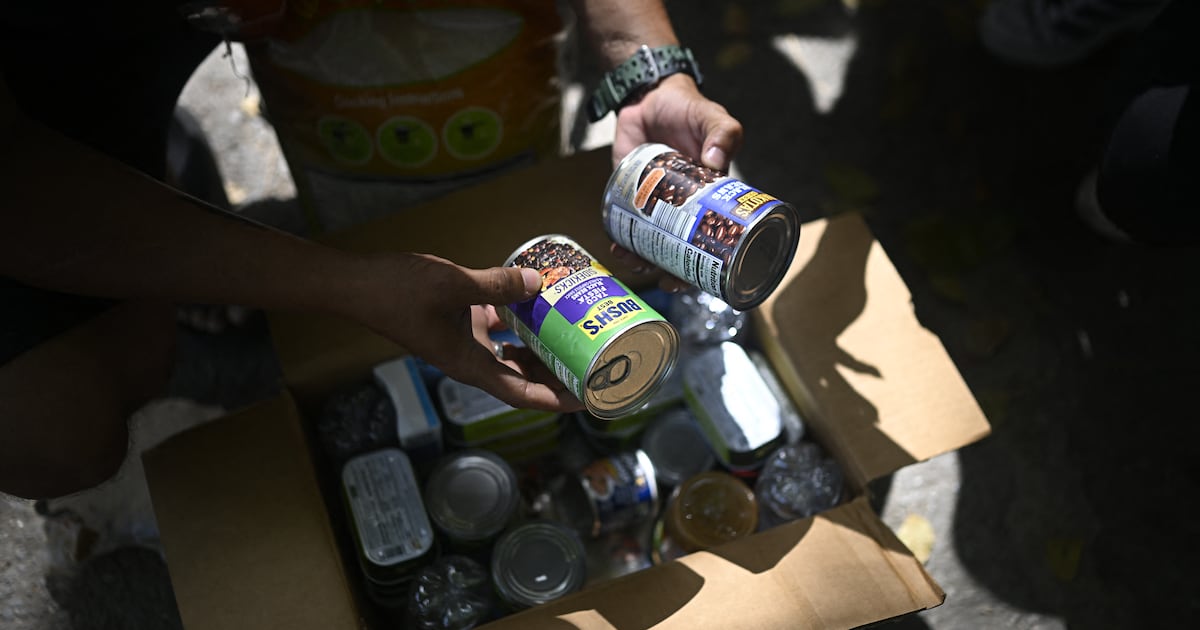
Survivalism Goes Mainstream in Europe After Cyberattacks and Crises
“It does just feel like we’re entering a phase of uncertainty where you don’t properly know what’s going to happen,” said Daniel Monger, 24, of the English Midlands.
Sales of canned goods, shelf-stable milk and paper maps are rising across Europe as governments and retailers respond to a cluster of cyberattacks, infrastructure failures and extreme weather.
The British government published an updated “Be Ready” checklist in late October, coinciding with a cyberattack on supermarket refrigeration systems in eight European countries, hoax bomb threats that grounded flights and evacuated schools in Italy, Ireland and Poland, and a global Microsoft outage that disrupted hospitals and government agencies.
The Office for National Statistics said the resulting rush for tinned food and long-life milk lifted overall retail sales for the month, The Irish Times reported.
Ireland distributed “Be Emergency Ready” booklets to 2.2 million households in September and October, citing Storm Éowyn, which cut power to 768,000 homes in January 2025.
France updated its 72-hour emergency kit guidance in September to include spare keys, prescription glasses and games for children. Finland, which shares a border with Russia, and the European Union, which announced an annual Preparedness Day, have also stepped up public campaigns.
Retailers repackage readiness
Belgium’s Colruyt grocery chain now sells disaster food packages that include prepared meals, muesli, snacks, drinks, tissues, a spoon and a rudimentary heating system. An Italian manufacturer of the ER300 Pro — a shoe-sized device combining a flashlight, radio and solar- or dynamo-charged power bank — reported a boom in sales.
In Britain, Darren Rhodes, a longtime outdoorsman who runs a “Prepared. Not Panicked” newsletter, said nearly half his subscribers are now women, a shift from a traditionally male customer base. “With the release from the government, it’s just made me seem to other people like less of a nutter,” Rhodes told The Irish Times.
Eastern flank sees different urgency
In Poland, Katarzyna Milochna-Mikulska, 43, who teaches survival workshops, said convenience culture has eroded alertness despite missiles and drones occasionally crossing from Ukraine. Her grab bag includes her parents’ medication, a paper map of Poland, insurance documents, and vodka and cigarettes for bartering. “There’s a war just across the border,” she told The Irish Times.
Nordic countries updated crisis plans in 2024 over fears of Russian sabotage and hybrid warfare, and Sweden conducted mock burials this spring for the first time since the Cold War, according to military officials.

Long-time preppers welcome wider interest
Darren Rhodes, a lifelong outdoorsman who began stocking up in 2019 after moving to a village prone to power failures, said the government’s “Be Ready” release made him seem “less of a nutter” to others. Rhodes, who runs a “Prepared.”

Britain contacts 100,000 veterans for mobilization planning
Former personnel are being asked to update contact details, provide civilian occupation information and identify skills acquired since leaving the armed forces. Officials stressed there is no imminent call-up but acknowledged the security environment has deteriorated considerably.
Britain contacts 100,000 veterans
On Thursday, Britain’s Ministry of Defence confirmed it had contacted approximately 100,000 former military personnel to update contact details and civilian skills for potential wartime mobilization, The Telegraph reported. Officials stressed there is no imminent call-up but acknowledged the security environment has deteriorated considerably.