
Unexploded Nazi Bombs Found to Be Unexpected Marine Havens Off German coast
Kiel Bay, Germany – A remotely operated submersible exploring the seabed of kiel Bay, Germany, has revealed a surprising ecosystem thriving on and around hundreds of unexploded Nazi-era bombs, researchers announced this week. The finding highlights the resilience of marine life and its ability to colonize unexpected habitats, even those steeped in a history of conflict and pollution.
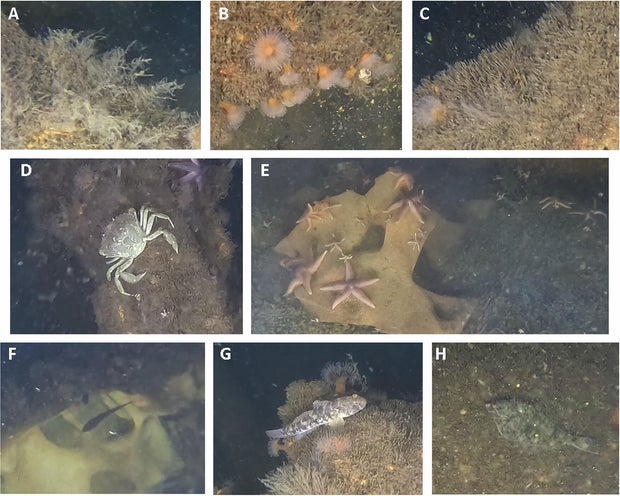
The team, led by researchers from the GEOMAR Helmholtz Center for Ocean Research Kiel, initially set out to map the seafloor and identify potential hazards. Instead, thay found a vibrant community of starfish, crabs, and other marine organisms congregating on the bombs – remnants of World War II ordnance. “It was rare but remarkable,” said Dr. Johannes Salge, a marine ecologist at GEOMAR. “The bombs are acting as artificial reefs, providing hard surfaces that are otherwise scarce in this part of the Baltic Sea.”
The Baltic Sea floor is largely composed of soft sediment, offering limited attachment points for many marine species. Historically, large boulders scattered across the seabed provided crucial habitat, but these were largely removed by humans in the early 20th century for construction materials like roads. The researchers drew a parallel to the thriving wildlife observed in the exclusion zone around the Chernobyl nuclear disaster site, where the absence of human activity has allowed nature to rebound.
“Hard surfaces on the seafloor are important for marine life that want more than mud and sand,” explained Dr.Salge. The team plans to return next month to deploy a time-lapse camera to further observe the behavior of the starfish and other creatures inhabiting the bomb sites.
The finding is part of a growing body of research demonstrating how wildlife flourishes in unexpected, often polluted, environments. Studies have shown shipwrecks and former weapons complexes becoming biodiversity hotspots. A 2023 paper published in BioScience found shipwrecks provide vital ecological resources for organisms ranging from microbes to large marine creatures, offering shelter and feeding grounds.NOAA research indicates small fish and crustaceans seek refuge in the crevices of sunken materials, while larger species utilize wrecks as rest stops during migration.
Efforts are already underway to actively restore marine habitats using artificial structures. Recently, a cargo ship off the Belgian coast was intentionally populated with rare flat oysters to revitalize the surrounding marine ecosystem.
Researchers involved in the Kiel Bay discovery are advocating for the strategic placement of additional stones or concrete structures when the unexploded bombs are eventually cleared, to ensure continued support for the established marine life. ”I think it’s a really cool testimony to the strength of life,” said Duke University marine conservation biologist David Johnston, who has mapped sunken World War I ships along the Potomac River that now serve as wildlife habitats.
