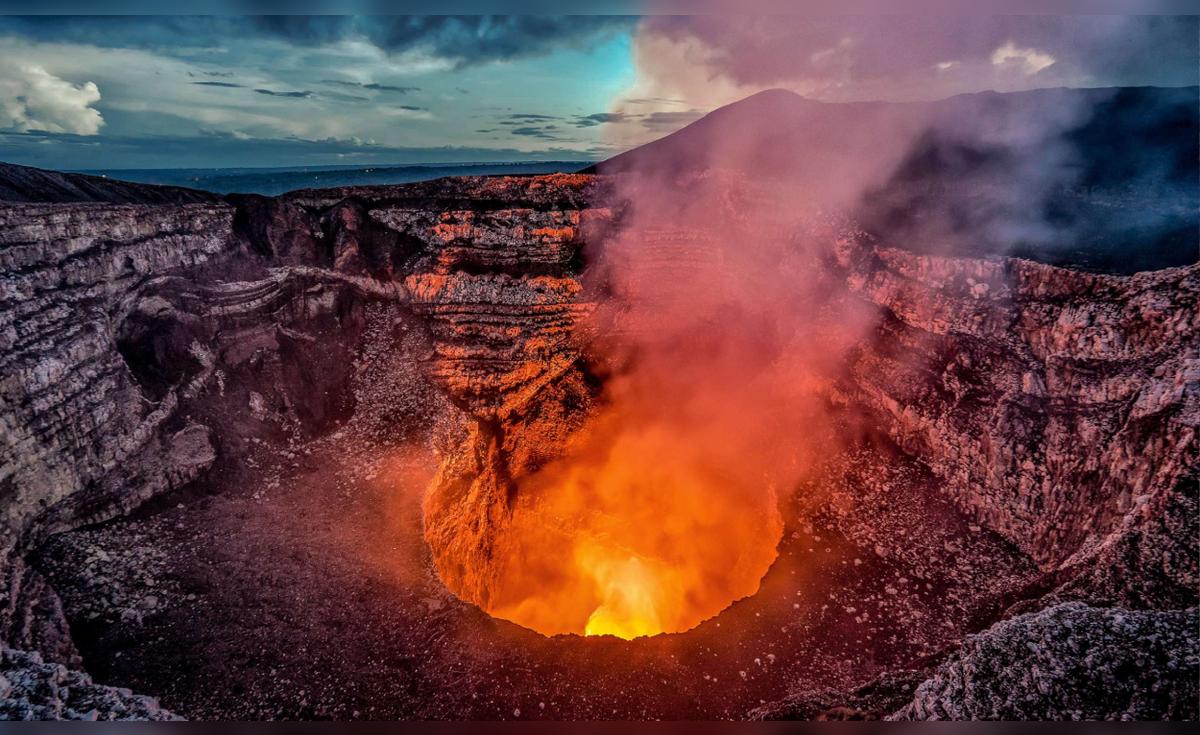
Study Reveals Complex Dual Magma System Under Nicaragua’s Masaya Volcano
Researchers from Penn State have detected signals pointing to two distinct magma sources beneath the Masaya volcano in Nicaragua, located about 21 kilometers from Managua, where approximately 2 million people live, larepublica.pe reported. The findings reveal a complex underground system that behaves differently across surface zones, though authors of the study emphasize there is no immediate danger to nearby communities.
Satellite Data Reveals Splitting Ground Movements
The discovery emerged from an analysis of satellite data gathered between January 2018 and February 2024. The main caldera first subsided and then began to elevate, a variation researchers interpret as a sign of new magma feeding the primary reservoir. Meanwhile, the Santiago crater—housing the volcano’s active lava lake—displayed a continuous downward trend in its surface throughout the entire six-year window.
Outlets Report Different Reservoir Depths and Sources
The two outlets reporting on the study detail different structural measurements for the subsurface chambers. According to larepublica.pe, the surface data demonstrates a clear separation between the main caldera and the crater zone, pointing to more than one source. Expanding on those mechanics, cbnicaragua.org reported that the primary reservoir sits approximately 3,200 meters deep beneath the central caldera, while the secondary deposit lies roughly 200 meters below the Santiago crater. While cbnicaragua.org noted that continued inflation of the deep reservoir could potentially encourage more effusive lava activity, the primary source material maintains that the researchers detected no immediate threat.

Gas Emissions Necessitate Constant Monitoring of Masaya
Although Masaya’s last major lava flow occurred in 1772, the volcano maintains a persistent emission of gases, most notably sulfur dioxide at potentially dangerous concentrations. Lizzie Johnson, lead author of the study, explained that comprehensive knowledge of the volcano’s activity remains critical given the dense population nearby and the site’s status as a national park and tourist destination. Co-author Young Cheol Kim stated that constant monitoring allows scientists to establish normal behavioral baselines and catch variations requiring timely responses. Long-term tracking, geodetic surveys, and updated modeling will determine how these dual reservoirs connect to the surface.
What Remains Unknown About the Underground System
Despite the satellite observations mapping surface elevation shifts from 2018 to 2024, the exact mechanics of how magma circulates through Masaya’s multi-crater caldera structure are still not fully understood.