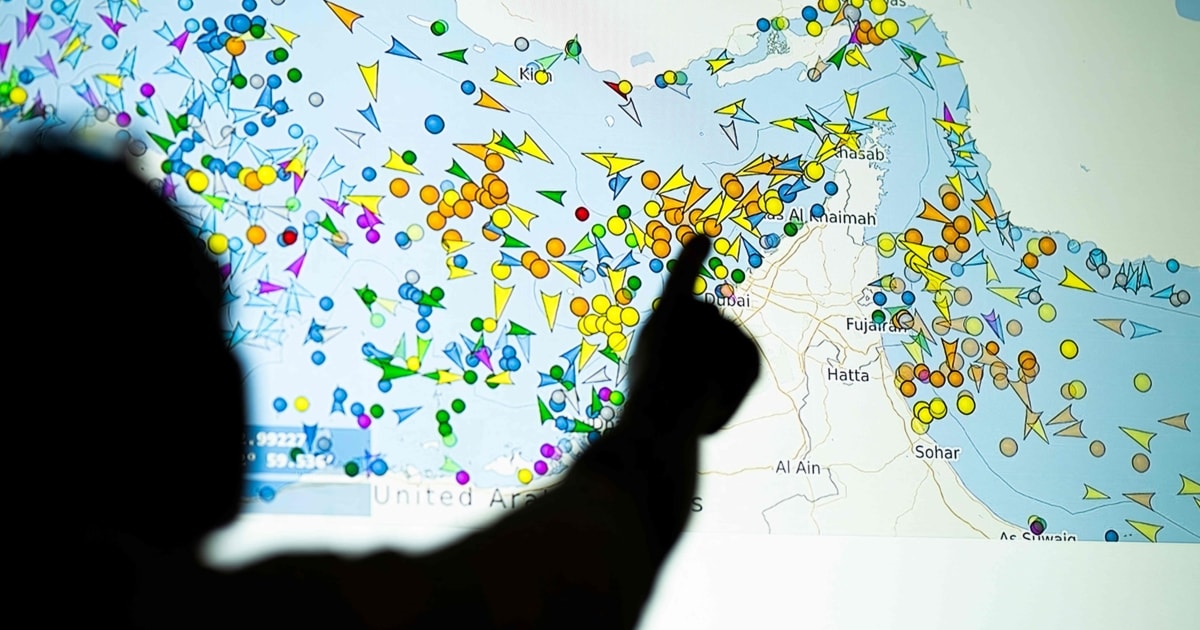
Strait of Hormuz: The Global Economy’s Critical Bottleneck
The closure of the Strait of Hormuz following military escalation involving Iran has triggered a systemic energy shock, disrupting global oil and gas flows. This bottleneck threatens global GDP by spiking energy costs and freezing maritime trade, forcing enterprises to seek urgent alternatives for energy procurement and logistics to avoid total operational paralysis.
This is not merely a geopolitical skirmish; We see a balance-sheet crisis. When the world’s primary energy artery narrows, the ripple effect hits everything from EBITDA margins in heavy manufacturing to the cost of capital for emerging markets. The immediate fiscal problem is a liquidity crunch in energy markets, as spot prices decouple from long-term contracts. Forward-thinking firms are already pivoting, consulting with enterprise risk management firms to hedge against a volatility regime that has now become the new baseline.
The market is currently operating on a knife’s edge. The concept of a “lucky hit”—a single, catastrophic strike on critical infrastructure or a major tanker—represents a tipping point that could shift the global economy from a state of managed disruption to a full-scale collapse of energy supply chains. For the C-suite, the question is no longer if the disruption will persist, but how much compression their margins can withstand before the business model breaks.
The Anatomy of a Systemic Energy Shock
The financial implications of the Hormuz closure extend far beyond the price per barrel. We are seeing a contagion effect where energy costs act as a tax on every single node of the global supply chain. When fuel prices spike, the cost of producing and moving goods rises proportionally, leading to rapid inflationary pressure that central banks are struggling to contain without triggering a deeper recession.
Maritime insurance is the first domino to fall. As the risk of shipwrecks or seizures increases, “war risk” premiums have surged, making traditional shipping routes economically unviable for many operators. This creates a vacuum where only the most capitalized firms can afford to move cargo, effectively squeezing out mid-market competitors.
“The current volatility in the Strait of Hormuz isn’t a temporary spike; it’s a fundamental repricing of geopolitical risk. Firms that relied on ‘just-in-time’ delivery from the Gulf are discovering that their supply chains were built on a foundation of stability that no longer exists.”
To navigate this, corporations are increasingly relying on specialized maritime legal counsel to renegotiate shipping contracts and invoke force majeure clauses to mitigate losses from non-delivery.
How the Hormuz Bottleneck Redefines Global Trade
The current crisis is forcing a rapid evolution in how global business is conducted. The era of cheap, frictionless energy transit is over. We are entering a period of “fragmented logistics,” where trade routes are dictated by security guarantees rather than geographic efficiency.

- Energy Arbitrage and Spot Market Volatility: With a meaningful share of global oil and gas supplies effectively frozen, the market has shifted violently toward spot pricing. This exposes companies without robust hedging strategies to extreme price swings, erasing quarterly profits in a matter of trading sessions. Firms are now seeking sophisticated energy derivatives to lock in costs.
- The Logistics Decoupling: The collapse in ship transits has forced a pivot toward alternative corridors. This includes an accelerated investment in land-based pipelines and the exploration of costly air-cargo alternatives for critical components. The result is a permanent increase in the baseline cost of goods sold (COGS).
- Credit Rating Pressure: Energy-import-dependent nations and corporations are seeing their credit profiles deteriorate. As energy costs eat into cash flows, debt-service coverage ratios (DSCR) are tightening, leading to higher borrowing costs and a potential wave of downgrades across the industrial sector.
The operational reality is stark: if you cannot move your product, your valuation is irrelevant.
The Margin Compression Trap
For the manufacturing sector, the crisis manifests as a brutal squeeze on EBITDA. When energy inputs rise while consumer demand softens due to inflation, the ability to pass costs onto the end-user vanishes. This is where we see the most significant risk of corporate insolvency among mid-cap industrial players.
To survive, these firms are turning to supply chain optimization experts to diversify their sourcing and reduce reliance on single-point-of-failure corridors. The goal is no longer maximum efficiency, but maximum resilience.
The “lucky hit” scenario remains the primary fear for institutional investors. A total cessation of exports from the Gulf region would remove a massive portion of global oil supplies from the market, likely triggering a parabolic move in energy prices that would dwarf previous shocks. In such a scenario, the global economy wouldn’t just slow down; it would seize.

We are witnessing the death of the “globalized” energy market and the birth of a “fortress” economy, where energy security is treated as a national security priority rather than a procurement task. The winners of this transition will be the firms that can decouple their growth from the volatility of the Persian Gulf.
As the fiscal landscape continues to shift, the ability to find vetted, high-capacity partners is the only real hedge. Whether you are seeking to restructure your logistics, hedge your energy exposure, or secure your legal flank against shipping defaults, the World Today News Directory remains the definitive resource for connecting with the B2B firms capable of solving these systemic failures.