
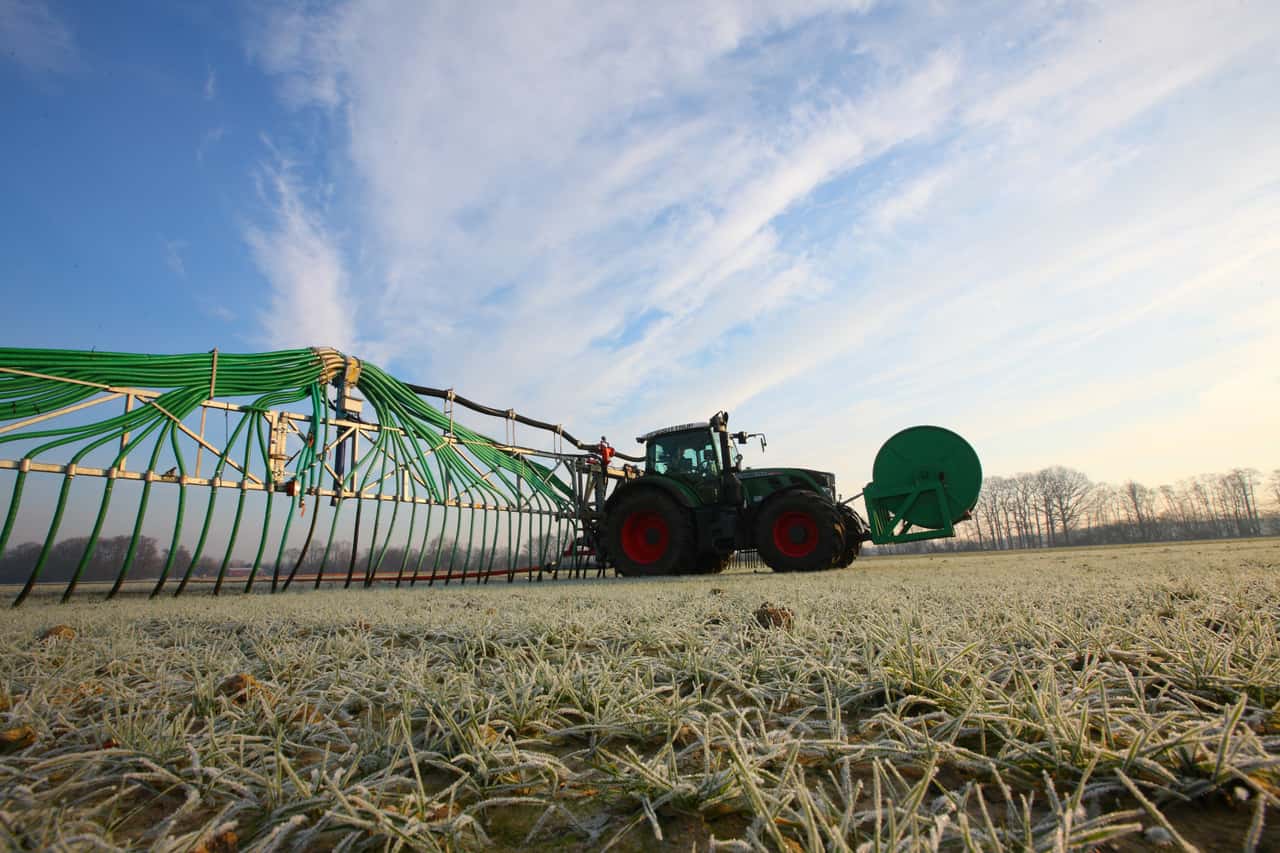
A German startup, Nunos GmbH, is receiving €125,000 in funding from the Deutsche Bundesstiftung Umwelt (DBU) to refine a process that converts manure into odorless, more efficient fertilizer. The technology, originally developed at the German Aerospace Center (DLR), aims to reduce greenhouse gas emissions from agriculture and improve nutrient delivery to plants.
The process addresses a significant environmental challenge: while manure is a crucial component of circular agriculture, it also releases harmful gases like ammonia and methane. According to figures cited by the DBU, two-thirds of greenhouse gas emissions from German agriculture stem from livestock farming, accounting for 5.3 percent of all greenhouse gases produced in Germany. Nunos’s technology seeks to mitigate this impact.
“On the path to a sustainable agriculture, innovative solutions for the reduction of greenhouse gases will play an crucial role for both conventional and organic farms,” stated DBU General Secretary Alexander Bonde. The DBU’s “Green Startup” funding supports founders developing innovative and economically viable solutions for environmental sustainability.
Nunos’s system, co-founded by Tim Paulke, utilizes a biological process within a 24-hour cycle to transform manure into a fertilizer with enhanced nutrient efficiency and significantly lower greenhouse gas emissions. The underlying system was initially designed for processing human urine as fertilizer for soil-free plant cultivation in space station greenhouses, according to Paulke.
The resulting fertilizer is formulated to deliver nutrients to plants more rapidly than traditional manure application, reducing nutrient runoff into the soil. Initial planting trials suggest a potential yield increase of up to 20 percent, which Nunos plans to validate through field trials on two farms in 2026.
Beyond large-scale agricultural applications, Nunos also produces smaller quantities of the fertilizer for home use, marketing it as a “multivitamin drink” for plants like tomatoes and houseplants through online sales. The conversion process is patented through the DLR and exclusively licensed to Nunos.
Paulke stated that the DBU funding will enable a more comprehensive assessment of the environmental impacts of the process, moving beyond purely economic considerations. The company currently works primarily with cattle manure and digestate from biogas plants. Further field trials are planned to verify the additional yields from the fertilizer and identify optimization opportunities.
