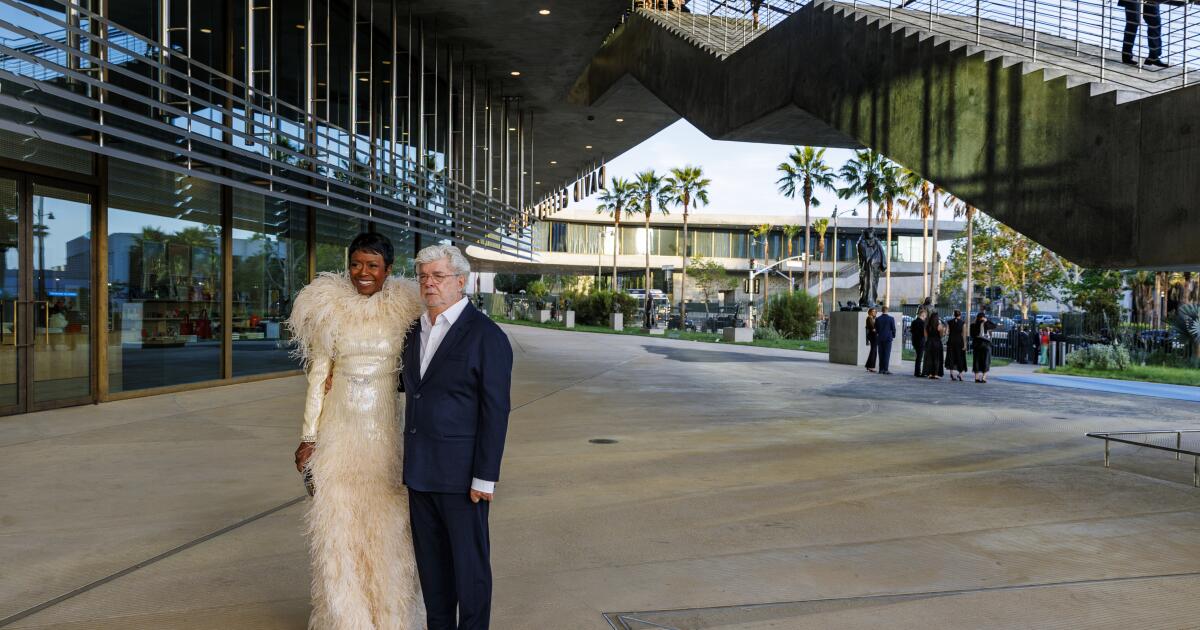
Stars Gather for LACMA’s David Geffen Galleries Opening Gala
On April 17, 2026, the Los Angeles County Museum of Art unveiled its $724 million David Geffen Galleries at a star-studded gala attended by George Lucas, Jeff Koons, Ed Ruscha, and civic leaders, marking a transformative moment for Southern California’s cultural infrastructure and raising urgent questions about public access, arts funding equity, and the long-term stewardship of landmark institutions in a post-pandemic economy.
The David Geffen Galleries represent more than an architectural milestone. they signal a renewed concentration of private philanthropy in shaping public cultural spaces, a trend that has accelerated since 2020 as municipal budgets tightened and endowments faced volatility. While LACMA’s expansion promises to elevate Los Angeles’ global standing in the art world, it also intensifies scrutiny over how such investments align with broader community needs—particularly in neighboring neighborhoods where access to arts education remains uneven and public transit connections to cultural hubs remain underfunded.
“We must ensure that monuments to private generosity do not become islands of exclusion in a city that thrives on cultural democracy.”
— Dr. Elena Ruiz, Director of Urban Cultural Planning, USC Sol Price School of Public Policy, speaking at a public forum hosted by the Los Angeles Department of Cultural Affairs on April 10, 2026. The project’s scale—funded largely through a $600 million lead gift from David Geffen supplemented by contributions from Hollywood executives, tech entrepreneurs, and art collectors—reflects a growing reliance on private capital to fill gaps left by declining state arts appropriations. According to the California Arts Council, state funding for the arts dropped 18% between 2020 and 2025, pushing institutions like LACMA to pursue ambitious capital campaigns that often prioritize iconic architecture and name recognition over operational sustainability or community outreach. This dynamic creates tangible challenges for local governance. The Miracle Mile corridor, where LACMA resides, has seen increased traffic congestion during major events, straining existing infrastructure and prompting calls for updated mobility plans. In response, the City of Los Angeles has begun evaluating transit-oriented development incentives along the Wilshire Boulevard corridor, including potential expansions of the D Line subway and improved pedestrian access to museum entrances—initiatives that require coordination between the Los Angeles Department of Transportation, Metro, and private stakeholders.
“When cultural institutions grow vertically without corresponding investment in horizontal access—sidewalks, transit, affordable programming—they risk deepening the very divides they claim to bridge.”
— Maria Gonzalez, Senior Policy Advisor, Office of Los Angeles Mayor Karen Bass, interviewed by KCET’s “Artbound” on April 12, 2026. These concerns are not abstract. Data from the Los Angeles County Arts Ed Collective shows that while 68% of K–12 students in affluent districts receive weekly arts instruction, that figure drops to 29% in South Los Angeles and East LA—communities that surround LACMA but often lack the resources to benefit from its programs without targeted outreach. Bridging this gap demands more than symbolic gestures; it requires sustained investment in community arts partnerships, mobile education units, and subsidized transit passes—services typically managed by local arts nonprofits and youth outreach providers working under municipal contracts. Financially, the Geffen Galleries’ opening arrives amid a broader recalibration of nonprofit sustainability models. A 2025 report by the Urban Institute found that 41% of major U.S. Museums now derive over half of their operating revenue from endowments and gifts—up from 29% in 2010—making them increasingly sensitive to shifts in donor priorities and economic downturns. This dependence underscores the need for resilient financial planning, a role often filled by nonprofit financial consultants who help institutions balance capital growth with long-term operational resilience. Beyond economics, the gala itself highlighted evolving relationships between Hollywood, Silicon Valley, and the art world. The presence of figures like Bob Iger (former Disney CEO), Will Ferrell, and Ava DuVernay underscores how entertainment leaders are using cultural patronage to shape legacy narratives—paralleling similar trends seen in Silicon Valley’s growing involvement in museum boards and digital art initiatives. Yet this convergence also raises questions about influence: when major donors come from industries with significant stakes in intellectual property, content distribution, and media regulation, how do institutions safeguard curatorial independence? Historically, LACMA has navigated such tensions with care. Its 2008 Broad Contemporary Art Museum expansion, also fueled by private gifts, included binding agreements on curatorial autonomy and public access commitments. The Geffen project appears to follow a similar framework, with LACMA leadership affirming that naming rights do not extend to programmatic control—a reassurance echoed in the museum’s 2024 governance charter, publicly available via the LACMA Board of Trustees page. Still, vigilance remains essential. As public-private partnerships in cultural infrastructure grow more complex, so too does the need for transparent accountability mechanisms. Municipal arts commissions, independent auditors, and community advisory boards play critical roles in ensuring that private investment serves the public interest—a function supported by local civic oversight committees and municipal law firms specializing in nonprofit compliance and public contract law. The David Geffen Galleries will undoubtedly become a defining feature of Los Angeles’ 21st-century cultural landscape—a beacon for innovation, design, and international acclaim. But their true legacy will be measured not in square footage or star power, but in how effectively they expand access, deepen community roots, and model a sustainable balance between private generosity and public responsibility. In a city where art has long mirrored social change, the challenge now is to ensure that the galleries reflect not just the wealth of their benefactors, but the diversity of the people they aim to serve. For those seeking to engage with or support equitable cultural development—whether as donors, administrators, or community advocates—the World Today News Directory offers verified connections to the institutions and experts shaping this vital conversation.