
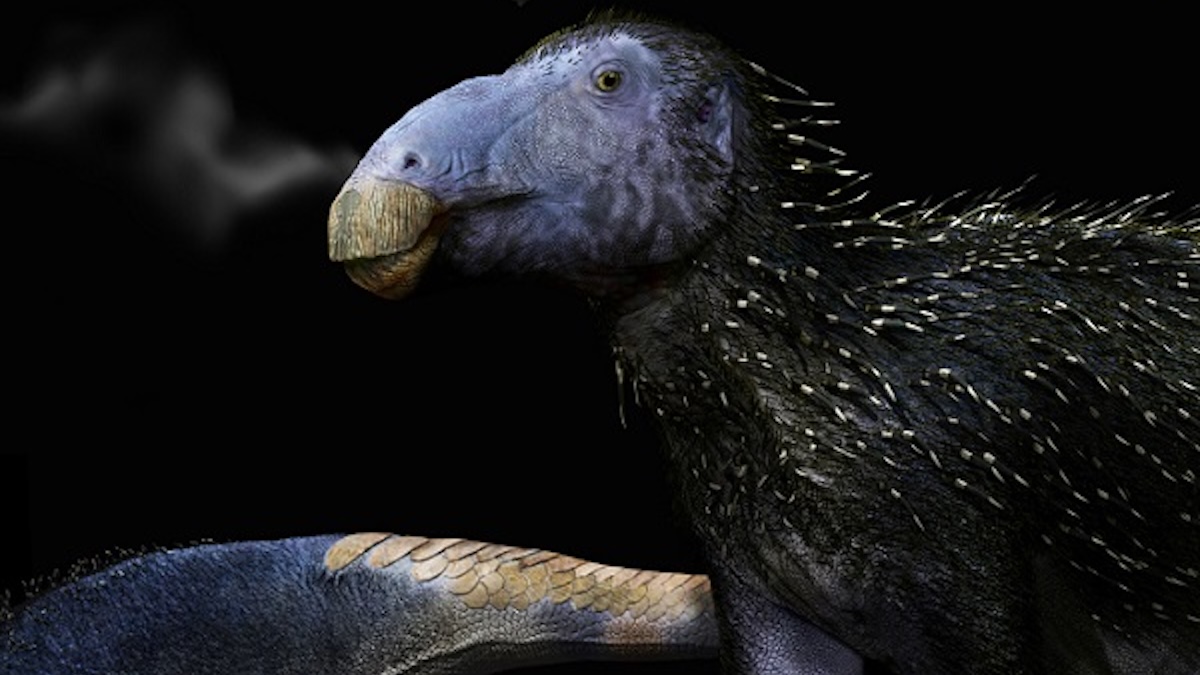
Paleontologists in China have announced the discovery of a new dinosaur species, Haolong dongi, distinguished by a unique covering of hollow, quill-like spikes – a skin structure previously unknown in dinosaurs. The remarkably well-preserved fossil, unearthed in northeastern China, dates back approximately 125 million years to the Early Cretaceous period.
The dinosaur, named “spiny dragon” in Mandarin, was a juvenile at the time of its death, measuring 2.45 meters (8 feet) in length. Unlike its iguanodontian relatives, which typically possessed scales, Haolong dongi appears to have been adorned with a coat of these unusual spikes. The spikes are concentrated along the neck, back, and sides of the animal, running parallel to each other and pointing towards the rear. They vary in size, ranging from 2 to 3 millimeters for most, with some reaching over 44 millimeters in length.
Researchers publishing their findings in the journal Nature Ecology & Evolution are exploring the potential functions of these spikes. Whereas superficially resembling protofeathers found in other dinosaur species, the team notes that protofeathers had already evolved prior to Haolong dongi’s existence. The possibility of thermoregulation is being considered, as the dinosaur lived in a relatively cool climate, similar to that inhabited by the feathered Yutyrannus. However, the density of the spikes may have been insufficient for effective insulation.
Visual display or camouflage are other potential explanations, but the absence of pigment cells in the fossil makes it difficult to assess these hypotheses. The spikes could also have served a sensory function, akin to the spinules found on some modern lizards and snakes, but their size and connection to the scales suggest this is unlikely. The prevailing theory among the researchers is that the spikes functioned as a defense mechanism against predators.
The environment inhabited by Haolong dongi contained a number of smaller carnivorous dinosaurs. The spikes, while unlikely to inflict serious harm, may have made the juvenile dinosaur a less appealing target by increasing the difficulty and time required for a predator to successfully attack and consume it. “These defences did not necessarily provide impenetrable protection against theropod teeth and claws, but they made the prey more difficult and time-consuming to kill and ingest and consequently reduced the likelihood of successful ingestion,” the researchers wrote in their published study.
The discovery highlights the continuing potential for new and unexpected finds in the field of paleontology. The single, exceptionally preserved specimen of Haolong dongi offers a unique glimpse into the diverse and often surprising adaptations that characterized dinosaurs.
