
Interstellar Comet 3I/ATLAS Under Intense Scrutiny by NASA Observatories
An interstellar object, designated 3I/ATLAS, originating from beyond our solar system, is currently being studied by multiple NASA space telescopes due to its unusual characteristics. Observations are providing valuable data about its composition and behavior.
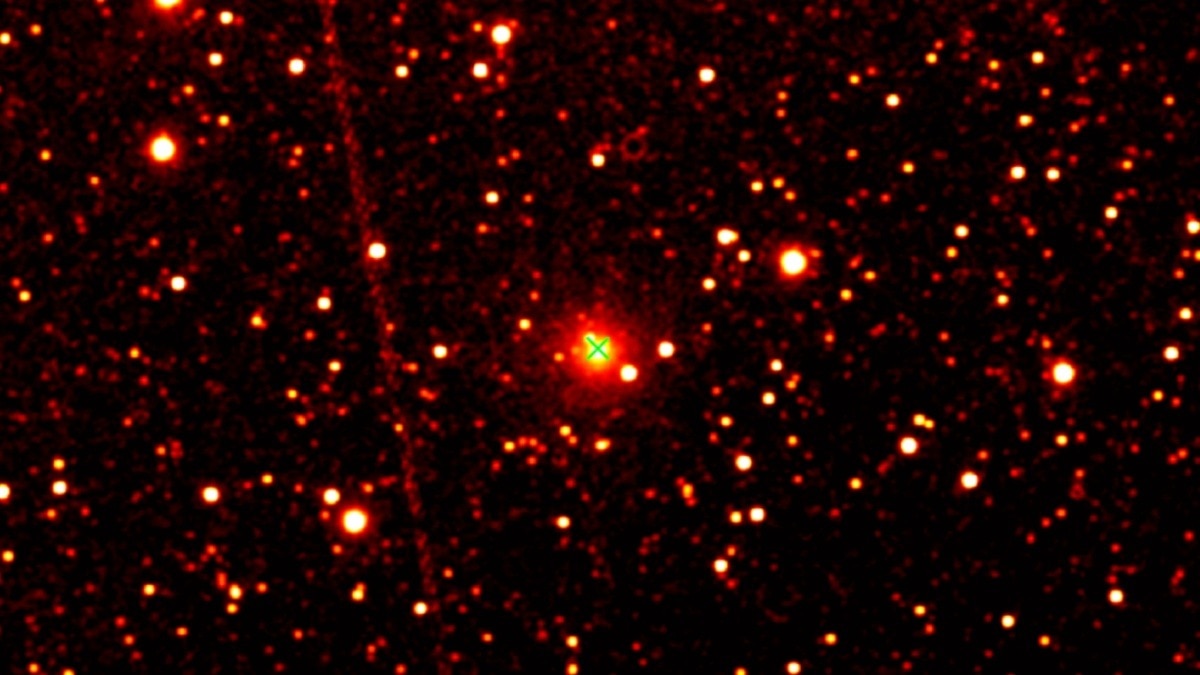
The Spectro-Photometer for the History of the Universe, Epoch of Reionisation and Ices Explorer (SPHEREx) is conducting a full-sky survey in infrared wavelengths, and its observations of 3I/ATLAS are yielding crucial insights into the comet’s size, composition, and chemical makeup. A detailed research note detailing these observations has been released and is prompting discussion within the scientific community.
NASA’s James Webb Space Telescope and the Hubble Space Telescope are also contributing to the investigation. Webb is utilizing its infrared capabilities to analyze the comet’s surface chemistry, while Hubble’s high-resolution optics are being used to refine estimates of its size.
These combined observations are creating some of the clearest images yet obtained of an object not formed within our solar system. Comets like 3I/ATLAS are of particular interest to scientists as they are believed to act as “time capsules” from distant star systems, potentially revealing details about planetary system evolution elsewhere in the galaxy.Unlike comets originating from our solar system’s Kuiper Belt or Oort Cloud, interstellar comets offer direct material evidence of processes occurring around other stars.
NASA has confirmed that 3I/ATLAS poses no threat to Earth. instead, it presents a rare opportunity to enhance our understanding of the broader cosmic environment. Each interstellar visitor provides crucial data for comparing our solar system to others, aiding in the understanding of planetary origins.
Researchers anticipate further results from ongoing observations by NASA’s fleet of observatories in the coming months. As of now, the comet serves as a reminder of the dynamic nature of our solar system’s boundaries and the potential for interstellar visitors.
The article was published on August 26,2025,by Sibu Kumar Tripathi.
