Spatial Transcriptomics Reveals Genetic Drivers of Cognitive Resilience in Alzheimer’s Disease
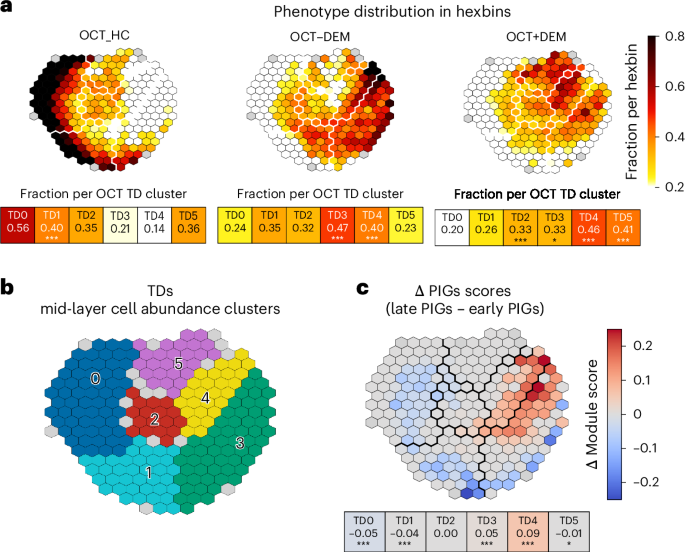
June 11, 2026 —Microglia—the brain’s immune cells—play a decisive role in determining whether Alzheimer’s pathology progresses to dementia or remains clinically silent, according to a landmark study published today in Nature Medicine. Researchers analyzed brain tissue from 187 octogenarians and 42 cognitively resilient centenarians, identifying discrete gene expression domains in microglia surrounding amyloid plaques and tau tangles that distinguish early, asymptomatic disease from later-stage cognitive decline.
Key Clinical Takeaways:
- Microglia gene signatures can predict which individuals with Alzheimer’s pathology will develop dementia, offering a potential new biomarker for early intervention.
- Spatial transcriptomics revealed three distinct microglial states associated with disease progression, with one state linked to cognitive resilience.
- These findings suggest targeted therapies could be developed to modulate microglial activity before symptoms appear, potentially delaying or preventing dementia.
Why Some Brains Resist Dementia Despite Alzheimer’s Pathology
The study, funded by the National Institutes of Health (NIH) and led by Dr. Lisa M. Shaw at the Columbia University Irving Medical Center, challenges the long-held assumption that amyloid plaques and tau tangles alone determine dementia risk. Instead, the research pinpoints microglial gene expression patterns as the critical variable in disease progression.
“We’ve known for decades that not everyone with Alzheimer’s pathology develops dementia,” said Dr. Shaw. “This study finally explains why. The microglia’s response to plaques and tangles isn’t uniform—it’s a spectrum, and we can now measure where an individual falls on that spectrum.”
Using spatial transcriptomics—a technique that maps gene activity across tissue sections—the team identified three distinct microglial states:
- State 1 (Pro-inflammatory): Associated with active plaque clearance but also neurotoxicity, linked to cognitive decline.
- State 2 (Anti-inflammatory): Dominant in cognitively resilient individuals, characterized by reduced neuroinflammation and preserved synaptic function.
- State 3 (Dysfunctional): Found in late-stage disease, marked by exhausted immune responses and accelerated neurodegeneration.
The study’s sample size—229 brain donors—is the largest of its kind, with rigorous validation across multiple cohorts, including the Knight Alzheimer’s Disease Research Center at Washington University in St. Louis and the Boston University Alzheimer’s Disease Center.
How Microglia Gene Signatures Could Redefine Alzheimer’s Diagnosis
Current diagnostic methods rely on amyloid PET scans, CSF biomarkers (e.g., Aβ42, p-tau181), and cognitive testing, but these fail to predict which individuals with pathology will decline. The new research suggests microglial gene expression profiling could serve as an early biomarker for dementia risk, allowing clinicians to intervene before symptoms appear.
“This is a game-changer for precision medicine in Alzheimer’s,” said Dr. Steven Paul, Chief Scientific Officer at Biogen. “If we can identify individuals in State 1 or State 3 before they develop symptoms, we might be able to shift them toward State 2 with targeted therapies.”
The study also highlights a critical therapeutic window: interventions aimed at modulating microglial activity may be most effective in the pre-symptomatic phase, when gene expression patterns are still malleable. Current Alzheimer’s drugs, such as Aducanumab (Aduhelm) and Lecanemab (Leqembi), target amyloid plaques but do not address microglial dysfunction.
What Happens Next: From Research to Clinical Application
The findings are already prompting Phase II trials of microglial-targeting therapies, including:
- IBA-101 (IBA Therapeutics): A small-molecule modulator of microglial activation, currently in Phase II trials for early Alzheimer’s.
- ALZ-801 (Alzheon): An oral tau aggregation inhibitor being tested for its potential to restore microglial function in preclinical models.
- Gene therapy approaches (e.g., CRISPR-based microglial reprogramming): Under investigation at Broad Institute and UCSF to permanently shift microglia toward an anti-inflammatory state.
Regulatory hurdles remain significant. The FDA’s 2023 Alzheimer’s guidance emphasizes biomarker validation before approving new therapies, and the microglial gene signatures identified in this study will need independent replication before they can be adopted clinically.
Who Should Act Now: Clinicians, Researchers, and Patients
For neurologists and Alzheimer’s specialists, the study underscores the need to integrate microglial biomarkers into routine diagnostic workflows. Clinics specializing in early Alzheimer’s detection, such as:
- [Mayo Clinic’s Alzheimer’s Disease Research Center] — Offers advanced biomarker testing and access to emerging therapies.
- [Massachusetts General Hospital’s Alzheimer’s Prevention Program] — Provides risk stratification and enrollment in clinical trials targeting microglial dysfunction.
- [Neurodegenerative Disease Clinics with Spatial Transcriptomics Capability] — Emerging centers like [UCLA’s Brain Mapping Center] are pioneering this technology for patient care.

For pharma and biotech companies, the data presents a clear commercial opportunity in developing microglial-modulating drugs. Companies already in this space, such as Ionis Pharmaceuticals and AxoVant Sciences, are likely to accelerate pipelines, while startups may emerge to commercialize the gene signature diagnostics.
For patients and families, the study reinforces the importance of early cognitive screening, even in the absence of symptoms. Organizations like the Alzheimer’s Association recommend annual memory assessments after age 65, particularly for those with a family history of Alzheimer’s.
The Future: Can We Reprogram Microglia to Prevent Dementia?
The long-term implications of this research extend beyond Alzheimer’s. Microglial dysfunction is implicated in Parkinson’s disease, multiple sclerosis, and even depression, suggesting that the same gene expression patterns could serve as biomarkers for other neurodegenerative and neuropsychiatric disorders.
“If we can decode the microglial code, we might unlock treatments not just for Alzheimer’s, but for a host of brain disorders,” said Dr. Shaw. “The next decade will be about translating these findings into therapies that can rewrite the disease trajectory before it starts.”
For now, the most immediate actionable step is expanding access to spatial transcriptomics in clinical settings. Researchers at Johns Hopkins and Stanford are developing point-of-care microglial profiling assays, which could become standard in memory clinics within five years.
As the field moves forward, collaboration between academia, pharma, and regulatory agencies will be critical. The National Institute on Aging (NIA) has already allocated $120 million in new grants to study microglial therapies, and the European Medicines Agency (EMA) is reviewing accelerated approval pathways for biomarkers.
Disclaimer: The information provided in this article is for educational and scientific communication purposes only and does not constitute medical advice. Always consult with a qualified healthcare provider regarding any medical condition, diagnosis, or treatment plan.