
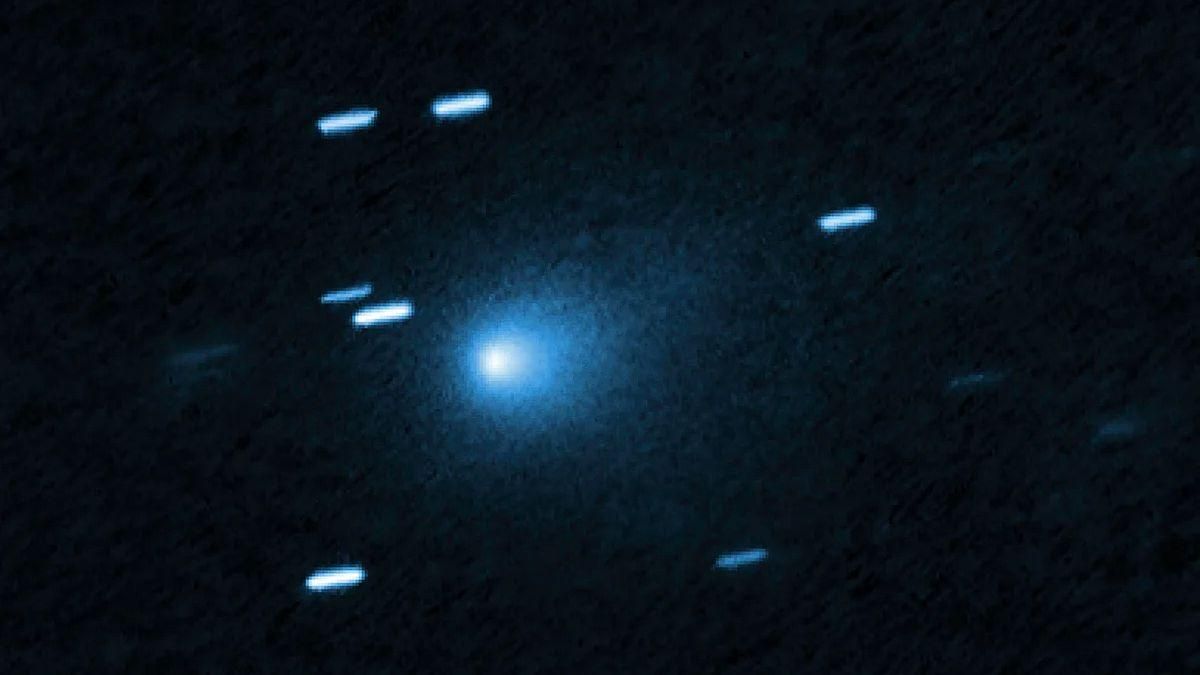
Newly Discovered interstellar Comet Offers Unprecedented glimpse into Solar System Origins
MADRID – Astronomers have confirmed the existence of 3I/ATLAS, the third interstellar object detected passing through our solar system, offering a unique possibility to study building blocks from planetary systems around other stars. The comet, detected thanks to the Asteroid Terrestrial-impact Last Alert System (ATLAS) telescopes, is being hailed as a “primordial time capsule” by researchers, providing insights into the composition and conditions of the interstellar medium.
following the groundbreaking discoveries of ’Oumuamua (1I/2017 U1) and 2I/Borisov (2I/2019 Q4), 3I/ATLAS distinguishes itself by being identified and analyzed without requiring a close approach to Earth. This remote observation capability suggests a far greater population of these “exocomets” exists in interstellar space than previously understood, perhaps revolutionizing our understanding of planetary formation. The work, spearheaded by a Spanish team, also refines techniques for identifying and studying these distant visitors, paving the way for a new field: interstellar archaeology.
‘oumuamua initially puzzled scientists with its unusual elongated shape and anomalous behaviour, while Borisov exhibited characteristics more akin to comets within our own solar system. 3I/ATLAS, however, allows for a different kind of examination – one focused on remote analysis and statistical understanding.
The increasing power of survey systems like ATLAS, coupled with forthcoming observatories such as the Vera C. rubin Observatory, promises a surge in detections in the coming years. These “cosmic messengers,” each carrying a unique history of its origin, will be cataloged and studied, offering clues to the environments in which they formed. This emerging field of interstellar archaeology could fundamentally alter our understanding of how planetary systems, including our own, come into being.
