
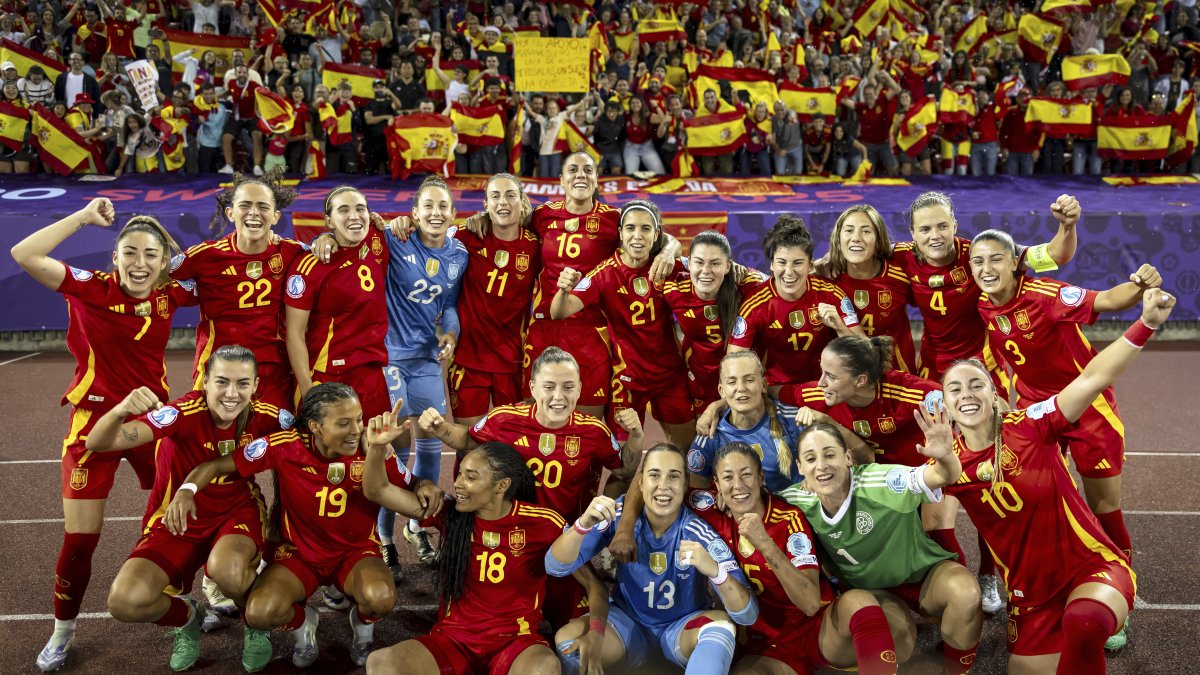
Spain’s women’s national football team is experiencing a golden era, fueled by the success of its clubs, particularly Barcelona, and a societal shift towards gender equality.
Alexia Putellas, a key figure in this resurgence, highlighted the importance of both club achievements and national team performance in a recent statement from Spain’s training camp in Lausanne, Switzerland. She also pointed to the professionalization of Spain’s women’s league in 2021 as a pivotal moment, enabling players to fully commit to the sport.
The current Spanish squad boasts 11 Barcelona players, including Putellas and Aitana Bonmatí, who have dominated the Ballon d’or awards in recent years. This strong Barcelona contingent reflects the club’s significant investment in its women’s program.
Xavier Vilajoana, who managed barcelona’s women’s team and training academy between 2015 and 2020, spearheaded a considerable increase in funding and the development of a thorough girls’ training program. A key strategic decision during his tenure was implementing the same coaching beliefs for both boys’ and girls’ teams. This ensured that the distinctive Barcelona style of play, characterized by ball possession, short passing, and high pressing, became ingrained in the development of all young players, including those in the women’s program.
Vilajoana attributed the progress not only to strategic club decisions but also to a broader societal evolution. “Let’s not fool ourselves, we spent many years in a vrey sexist society and that was reflected in women’s soccer,” he told the AP.”So clearly the change in the mentality of society has helped. But I also believe that Barça’s style of play has helped us see women players in the same way (as men).”
The influence of Spain’s robust feminist movement has also played a crucial role, garnering public support for the players’ pursuit of equality and success on the field. Former player Vero Boquete echoed this sentiment, stating, “There where many of us players who gave it our all for the national team but weren’t able to get this far. The one thing we knew is that we had talent. We just needed more support.”
