Spain Approves Decree on Wind Repowering, Industrial Self-Consumption and Storage
Spain approved an emergency decree on Nov. 20, 2026, to accelerate renewable energy grid integration, open reserved grid access points, and shorten permitting procedures amid Middle East supply pressures.
Spain’s Council of Ministers approved the decree following a request from the Ministry for Ecological Transition and the Demographic Challenge (MITECO), 2news.co.kr reported.
The regulations stem from provisions in the comprehensive Middle East crisis response plan enacted under Real Decreto-ley 7/2026. These measures align with prior regulations designed to reinforce the nation’s electrical system under Real Decreto 997/2025, according to 2News.
The new framework opens reserved grid access capacity nodes to encourage renewable output and secure equipment replacements at aging wind farms.
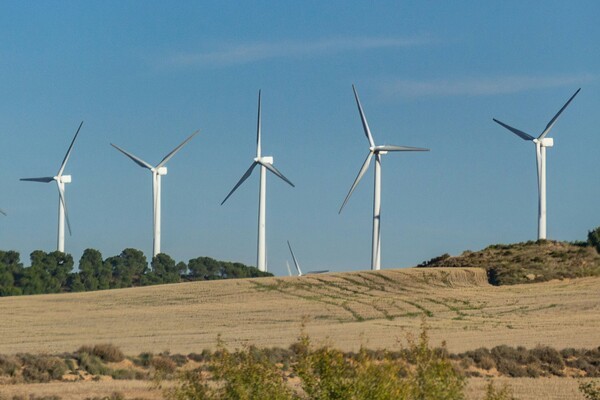
Wind farms operating for more than 15 years can now apply for up to 25% additional grid access capacity beyond their originally approved limits when undertaking repowering projects, according to 2news.co.kr.
Reserved grid node capacity is also allocated to new self-consumption installations tied to manufacturing projects, hydrogen production, and renewable gas production.
These provisions aim to cut industrial energy costs and encourage electrification over fossil fuels across domestic manufacturing sectors.
Technical constraints on pumped storage power plants and solar thermal installations are eased to expand energy storage and support flexible grid operations.
Pumped storage facilities can now integrate the latest technical improvements in power electronics. Solar thermal plants gain authorization to expand their concentration areas and incorporate additional thermal energy storage systems.
Gas utility bills will soon feature information detailing the origin of supplied gas, the proportion of renewable gas, and the associated environmental impact.
The bills will also incorporate QR codes linking to the energy price comparison website run by the National Commission on Markets and Competition (CNMC). The CNMC will establish the technical specifications, parameters, and format required to ensure compatibility with its comparison portal.
Developers whose technical, legal, and economic solvency has already been verified through alternative supervisory mechanisms are exempt from duplicating those proofs before the CNMC.
Dynamic Line Rating systems that utilize sensors and environmental monitoring equipment will be promoted to increase transmission capacity on existing grids.
The Ministry for Ecological Transition and the Demographic Challenge traces its origins to the Directorate-General for Forests created in 1833, the first Spanish administration dedicated to nature conservation.
A unified Ministry of the Environment was established in 1996 under Prime Minister José María Aznar, consolidating responsibilities from public works, agriculture, and industry. The department assumed its current name and expanded mandate, adding demographic challenges such as territorial depopulation to its climate and energy portfolios, in a later restructuring.
The technical decrees also incorporate new rules for voltage control, ramp adjustments necessary for grid operation rules, and specific baseline provisions for non-peninsular territories including island regions.