
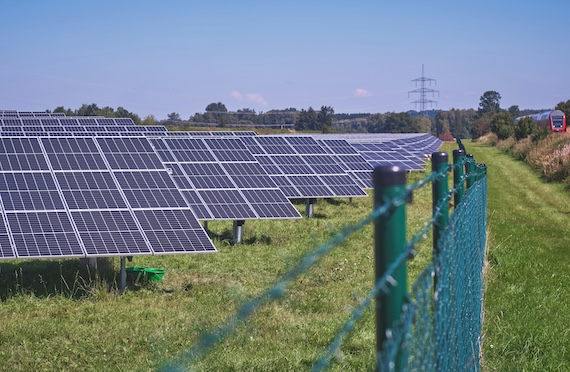
Solar Energy Surges, Becoming EU’s Top Power Source
In a significant shift, solar energy has surpassed all other sources to become the leading electricity generator in the European Union this June. This milestone highlights Europe’s commitment to renewable energy, even as the U.S. contemplates hindering its own progress in the sector.
Record Solar Production Across Europe
Across the EU, solar installations generated 22.1% of Europe’s electricity during June, marking a 22% increase from June 2024. Thirteen EU countries, including **Poland**, **Estonia**, and **Germany**, achieved record levels of solar power production.
Coal Use Plummets
The rise of solar power comes with another benefit: coal usage significantly declined, accounting for only 6% of the EU’s electricity generation. This shift is particularly noteworthy considering some European nations, like **Poland**, once heavily relied on coal.
Europe’s Solar Powerhouses
Currently, the Witznitz Solar Farm near Leipzig, **Germany**, stands as Europe’s largest solar installation with a 650-megawatt capacity. Entirely privately funded, the facility powers over 200,000 households and prevents 250,000 tons of carbon dioxide emissions annually.
The second-largest solar installation resides in Badajoz, Extremadura, **Spain**. Operated by a Spanish subsidiary of the Iberdrola Group, it boasts a 500-megawatt capacity and also provides power to more than 200,000 homes, utilizing 1.4 million solar panels.
Other Renewable Sources
Nuclear energy followed solar closely, accounting for 21.8% of the EU’s electricity, although some French nuclear plants experienced shutdowns because of high river temperatures affecting their cooling systems. Wind power was the third largest electricity source at 15.8%, followed by fossil gas at 14.4%, and hydro at 12.8%.
Battery Storage Bolsters Renewables
The EU now possesses 61.1 GWh in installed battery capacity, a 33% increase from last year. These mega-batteries are crucial for grid stabilization, storing solar energy for use during twilight and at night. By 2029, the EU aims to reach 334 GWh in battery capacity, which is projected to significantly enhance the reliability of wind and solar power.
To put it in perspective, the U.S. had an estimated 17 GWh of utility-scale battery storage capacity at the end of 2023, with projections exceeding 30 GWh by the end of 2024 (U.S. Energy Information Administration).
A Decade of Transformation
The progress in renewable energy over the past decade is remarkable. Just ten years ago, in 2015, coal generated approximately a quarter of Europe’s electricity, and renewables combined contributed about the same amount.
