
Unprecedented Solar Observations Reveal Secrets of Powerful Space Weather
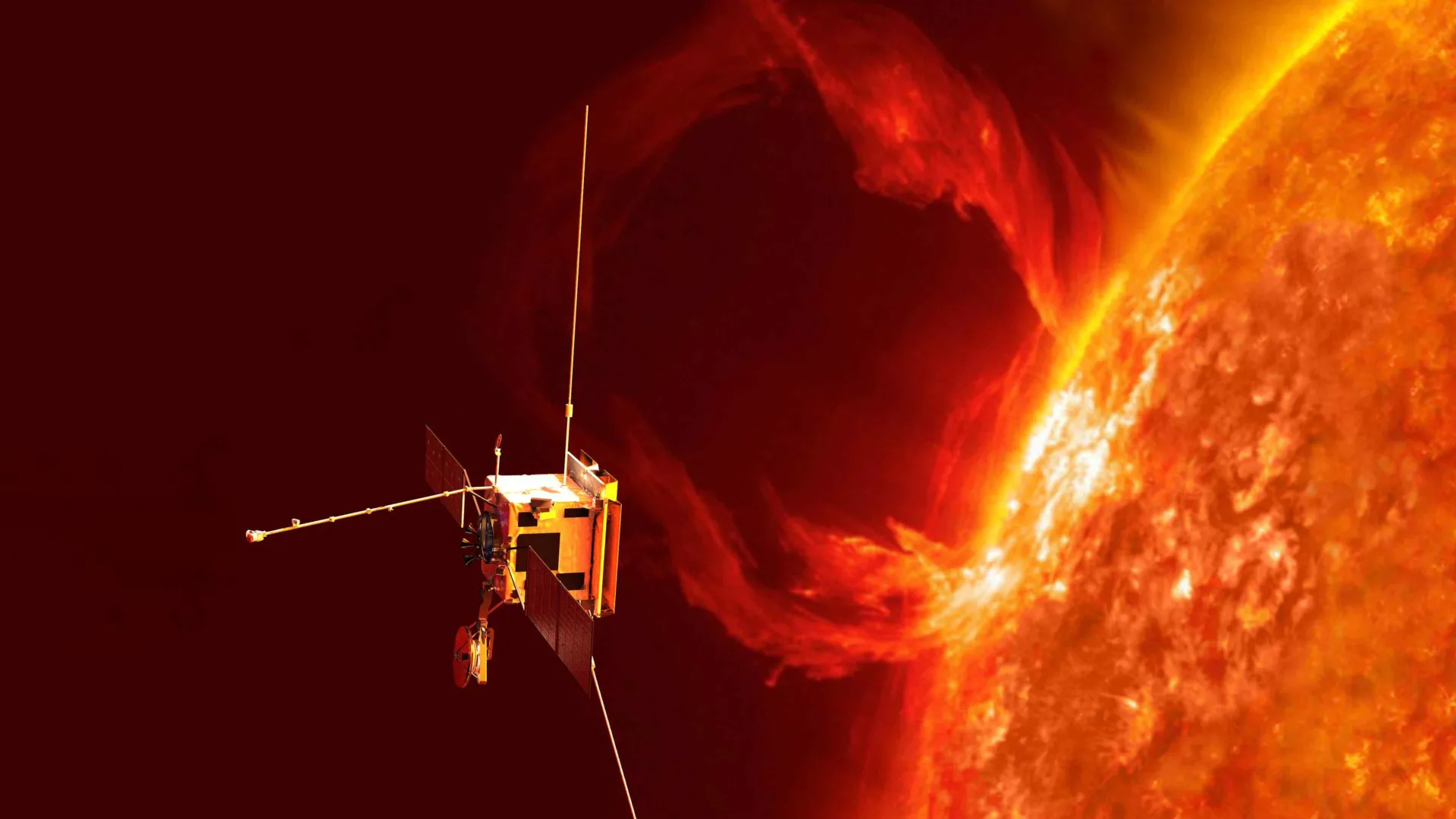
Our Sun, a seemingly constant presence in our sky, is a dynamic and often volatile star. Its activity directly impacts life on Earth, from the mesmerizing aurora borealis to possibly devastating disruptions of our technological infrastructure. Recent observations, spearheaded by the European Space Agency’s Solar Orbiter mission and NASA’s Solar Dynamics Observatory, have provided an unprecedented look at a notably intense solar region, offering crucial insights into the origins of space weather and paving the way for improved forecasting capabilities.
The Sun’s Hidden Side Revealed
The Sun doesn’t spin like a solid object. It completes a full rotation approximately every 28 days. This slow rotation means that any given active region on the solar surface is only visible from Earth for about two weeks before rotating out of view for another two weeks. Traditionally, this limited our ability to continuously study these regions and understand their evolution.
“Fortunately, the Solar Orbiter mission, launched in 2020, has broadened our outlook,” explains Ioannis Kontogiannis, a solar physicist at ETH Zurich and the Istituto ricerche solari Aldo e Cele Daccò (IRSOL) in Locarno. Unlike Earth-based observatories, Solar Orbiter follows a unique orbit, circling the Sun once every six months. This trajectory allows it to observe areas normally hidden from our view, including the Sun’s far side – a game-changer in solar research.
NOAA 13664: A Region of Exceptional Intensity
Between April and July 2024, Solar Orbiter focused its instruments on one of the most active regions observed in the past two decades: NOAA 13664.This region quickly made its presence known when it rotated into Earth’s view in May 2024,triggering the strongest geomagnetic storms as 2003. These storms manifested as extraordinary auroras, visible as far south as Switzerland, according to Louise Harra, professor at ETH Zurich and director of the Davos Physical Meteorological Observatory.
A Combined View: Solar Orbiter and the solar Dynamics Observatory
To gain a comprehensive understanding of NOAA 13664, an international team led by Harra and Kontogiannis combined data from Solar Orbiter with continuous observations from NASA’s Solar Dynamics Observatory (SDO).SDO, positioned between the Earth and the Sun, constantly monitors the side of the Sun facing our planet.
This collaborative approach allowed researchers to follow NOAA 13664 almost uninterrupted for 94 days, providing an unprecedented timeline of its development. “This is the longest continuous series of images ever created for a single active region: its a milestone in solar physics,” states Kontogiannis.
Unraveling the Mysteries of Solar Storms
Active regions on the Sun are hotspots of intense magnetic activity. These regions form when magnetized plasma rises from the Sun’s interior, breaking through the surface. When these magnetic fields become tangled and unstable, they release tremendous energy in the form of solar flares and coronal mass ejections (CMEs). Solar flares are bursts of electromagnetic radiation, while CMEs are massive expulsions of plasma and high-energy particles.
These eruptions are the drivers of space weather, and their impact on Earth can be notable. While auroras are a beautiful byproduct, severe space weather can disrupt power grids, interfere with dialog systems, and pose risks to aircraft and satellites. In February 2022, a prime example of this vulnerability occurred when 38 of 49 Starlink satellites were lost shortly after launch due to heightened solar activity Space.com.
Beyond the Skies: Real-World Disruptions
The effects of solar storms aren’t limited to space-based technology. Harra points out that even ground-based systems can be affected. “Even signals on railway lines can be affected and switch from red to green or vice versa,” she warns, highlighting a potentially dangerous scenario.
The disruptions caused by NOAA 13664 in May 2024 extended to the agricultural sector. Disrupted signals from satellites,drones,and sensors led to lost working days and crop failures,resulting in significant economic losses. This underscores the pervasive influence of the Sun on modern life.
A Three-Rotation View and the power of Prediction
For the first time, researchers were able to observe a single active region – NOAA 13664 – through three complete solar rotations. This allowed them to track the evolution of its magnetic structure, observing how it grew increasingly complex over time. Eventually, the magnetic fields intertwined, culminating in the most powerful solar flare in the last twenty years, erupting on the far side of the Sun on May 20, 2024.
The ultimate goal of this research is to improve our ability to predict space weather events. “When we see a region on the sun with an extremely complex magnetic field, we can assume that there is a large amount of energy there that will have to be released as solar storms,” explains Harra. However, accurately predicting *when* and *how* these eruptions will occur remains a significant challenge.
Looking Ahead: The Vigil Mission
Scientists are actively working to address these challenges. ESA is developing Vigil, a dedicated space weather probe planned for launch in 2031. This mission will be specifically designed to enhance our understanding of space weather and improve forecasting accuracy.
As Kontogiannis emphasizes, “It’s a good reminder that the sun is the only star that influences our activities.We live with this star, so it’s really important we observe it and try to understand how it works and how it affects our habitat.” Continued investment in solar research and advanced monitoring systems is crucial to protecting our increasingly technology-dependent society from the potentially disruptive forces of space weather.
