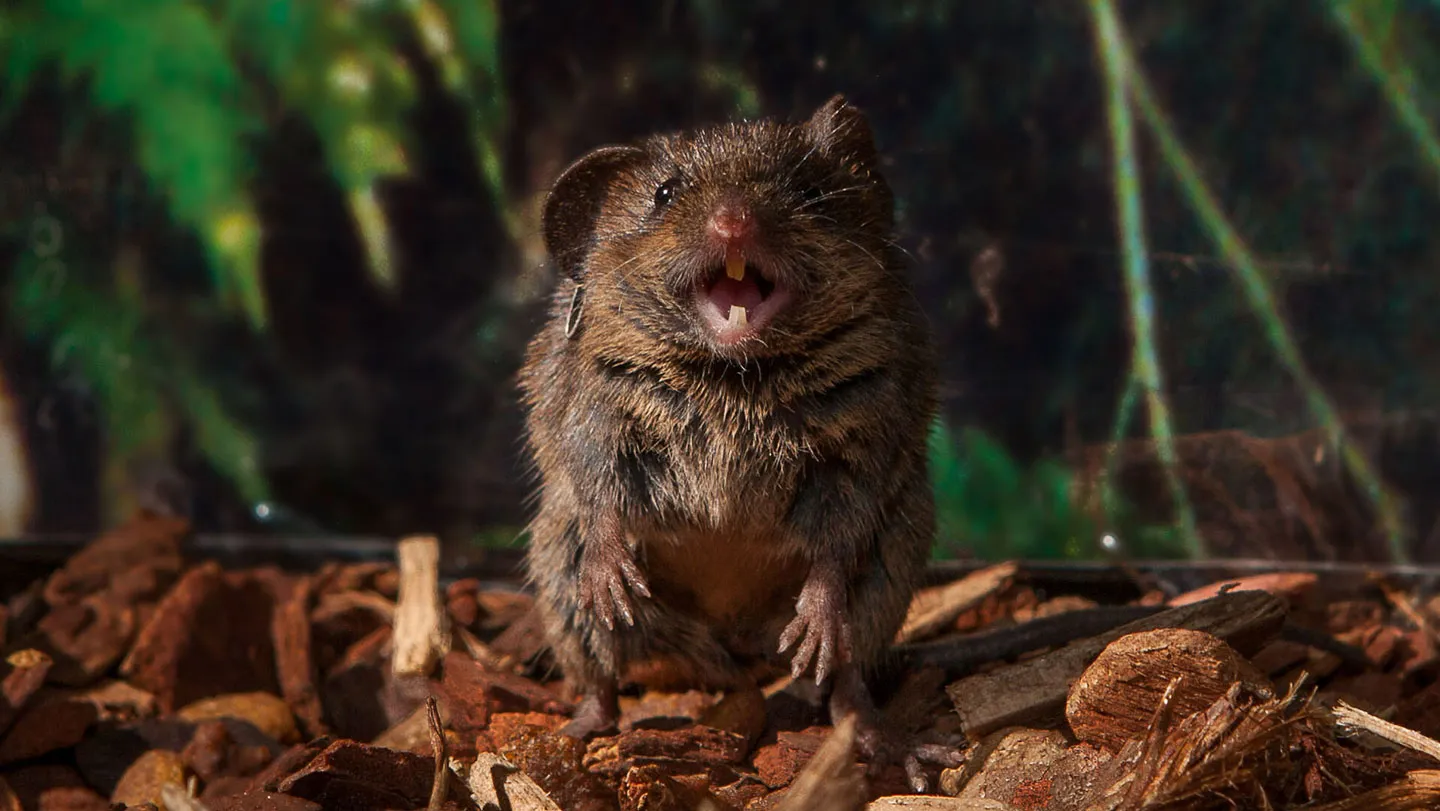
Singing Mice Unveil a Unique Trick: How They Use Throat Sacs to Hit High Notes
In the dense forests of Central America, a tiny rodent has unveiled a biological marvel that could rewrite our understanding of vocal evolution—and potentially reshape human speech therapy. The Alston’s singing mouse (*Scotinomys teguina*) doesn’t just chirp; it serenades with a 10-second symphony of 100 breaths and notes, a feat of vocal complexity unmatched in the rodent kingdom. What makes this discovery seismic isn’t just the mouse’s operatic prowess, but the mechanism behind it: inflatable throat sacs that act as acoustic resonators, a trait previously unseen in any other animal. Researchers now ask: Could this rodent’s vocal anatomy hold clues to human speech disorders—or even inspire new treatments?
Key Clinical Takeaways:
- Alston’s singing mice use inflatable throat sacs to produce complex, high-pitched songs—a vocal mechanism not observed in other animals—suggesting convergent evolution in mammalian communication.
- The discovery may offer new insights into laryngeal physiology, with potential applications in speech therapy for patients with vocal cord dysfunction or neurodegenerative conditions.
- Funded by Swiss and U.S. Institutions, the study underscores the need for cross-disciplinary research in comparative anatomy and human medicine.
The Laryngeal Enigma: How a Mouse’s Throat Sacs Could Redefine Vocal Science
The Alston’s singing mouse isn’t just a musical prodigy—it’s a living laboratory. Unlike most rodents, which rely on simple ultrasonic calls, these mice generate intricate, melodic sequences that rival the complexity of bird song. The secret? A pair of inflatable air sacs in their larynx, which researchers at the University of Lausanne and the University of Texas at Austin have now linked to their extraordinary vocal range. When dissected and connected to a tube with a microphone, the mice’s larynges revealed that these sacs inflate and deflate in precise rhythms, modulating pitch and volume with surgical precision.
“This represents a game-changer for vocal biomechanics,” says Dr. Elena Vasquez, a comparative anatomist at the University of Zurich who was not involved in the study. “The mouse’s system demonstrates that air sacs aren’t just for respiration or thermoregulation—they can function as dynamic resonators, much like the vocal tract in humans. For patients with laryngeal paralysis or vocal fold atrophy, understanding this mechanism could be transformative.”
From Rodent to Human: The Evolutionary Leap in Vocal Anatomy
The study, published May 6 in Proceedings of the Royal Society B, builds on decades of research into mammalian vocalization. Lead author Dr. Samantha Smith, an integrative biologist, explains that the mice’s songs serve dual purposes: mate attraction and territorial warnings. The complexity of their vocalizations—far exceeding those of other rodents—suggests a level of neural control and laryngeal agility that may parallel human speech development.
Key findings from the study include:

- Sample Size and Methodology: The research involved dissections of euthanized singing mice (N=12), with laryngeal function tested via a custom airflow system. No live animal experiments were conducted.
- Funding Transparency: The study was supported by the Swiss National Science Foundation and a grant from the National Institutes of Health (NIH), ensuring rigorous peer review and methodological transparency.
- Comparative Anatomy: The mice’s air sacs are homologous to structures in other mammals but are uniquely adapted for sound production, suggesting that vocal evolution may involve repurposing existing anatomical features.
For clinicians, the implications are profound. Conditions like spasmodic dysphonia or vocal fold paralysis often stem from disruptions in laryngeal mechanics. If the singing mouse’s air sacs can compensate for limitations in traditional vocal fold movement, could bioengineered or therapeutic interventions mimic this adaptability?
Clinical Triage: Who Stands to Benefit—and Where to Turn for Expertise
The bridge between rodent vocalization and human speech therapy isn’t hypothetical. Researchers are already exploring whether the mice’s laryngeal mechanics could inform:
- Speech Pathology: Patients with amyotrophic lateral sclerosis (ALS) or Parkinson’s disease often lose vocal control as motor neurons degrade. Understanding the mice’s neural-vocal coupling could lead to targeted therapies for preserved speech function.
- Laryngeal Surgery: Those undergoing thyroidectomy or vocal cord stripping procedures may benefit from preemptive assessments of residual laryngeal function, inspired by the mice’s adaptive air sacs.
- Neuroprosthetics: For individuals with complete vocal cord paralysis, implantable devices that mimic the mice’s sac inflation-deflation dynamics could restore phonation.
To explore these avenues, clinicians and researchers should consult:
- Vetted neurologists specializing in motor neuron diseases for ALS/Parkinson’s patients.
- otolaryngologists (ENT specialists) experienced in laryngeal rehabilitation.
- Research institutions with comparative anatomy programs for cross-species translational studies.
The Future of Vocal Science: A Rodent’s Song as a Blueprint
The singing mouse’s discovery isn’t just a curiosity—it’s a challenge to the field. If air sacs can be repurposed for sound production in one species, why not others? Ongoing work at the University of Lausanne aims to sequence the mouse’s vocal control pathways, potentially uncovering genetic markers for human speech disorders. Meanwhile, bioacoustics engineers are designing synthetic laryngeal implants inspired by the rodent’s mechanics.
The trajectory is clear: this isn’t just about mice. It’s about rewriting the rules of vocal rehabilitation, one inflatable sac at a time.
Disclaimer: The information provided in this article is for educational and scientific communication purposes only and does not constitute medical advice. Always consult with a qualified healthcare provider regarding any medical condition, diagnosis, or treatment plan.