
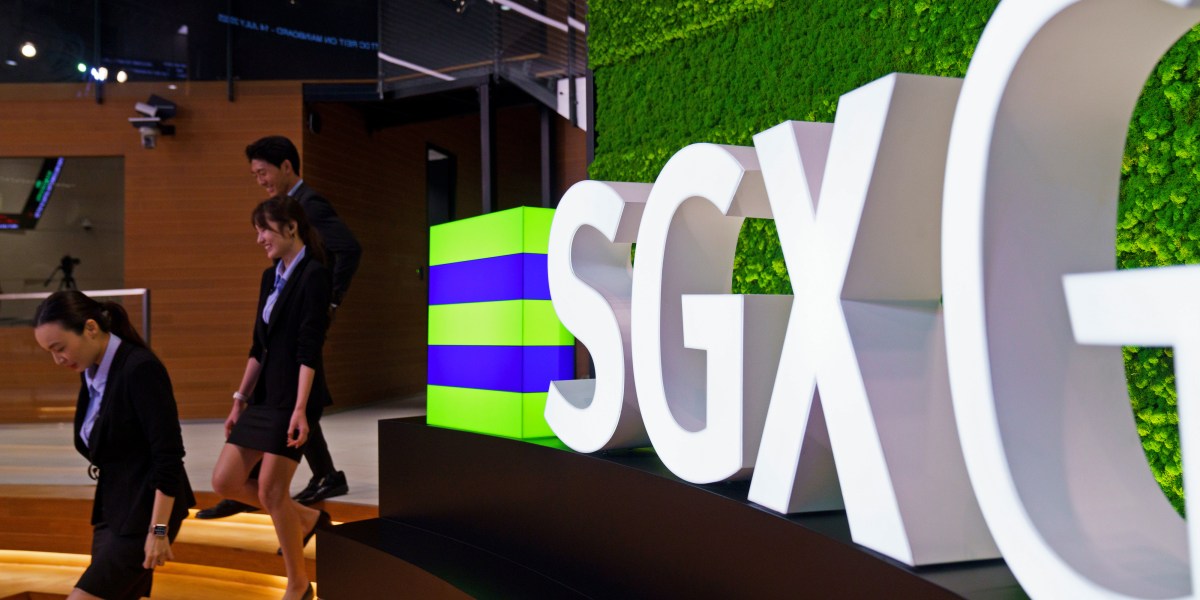
Firms will soon get the opportunity to list in both the U.S. and Singapore in a first-of-its-kind partnership. The SGX-NASDAQ dual listing bridge, commencing later this year, is part of Singapore’s drive to revitalize its stock exchange, which has consistently lagged other regional bourses like the Hong Kong Stock Exchange in attracting IPOs and deals.
The bridge will likely appeal to Southeast Asian companies wanting to tap into the U.S.’s deep capital market while maintaining strong brand recognition in Southeast Asia, says Chan Yew Kiang, the ASEAN IPO leader at EY.
Tay Hwee Ling, capital service markets leader of deloitte Southeast asia, adds that U.S. firms might also extend their trading hours beyond U.S.market close and strengthen their presence in Southeast Asia.
The partnership broadens investment options for Asian investors seeking diversification amid geopolitical uncertainty,says Clifford Lee,global head of banking at DBS.
“With the Global Listing Board, companies can access the best of both worlds—U.S. market depth and Asian growth in a streamlined pathway,” an SGX spokesperson said.
A Boost to Singapore?
Singapore’s stock exchange has long suffered from low liquidity. Average daily turnover on the SGX is just $1.4 billion,compared to $29 billion on the HKEX.
“China and Hong Kong have massive populations of active retail speculators who drive high daily turnover, while Singapore’s retail base is smaller, more conservative and prefers dividends and bonds,” says Glenn Thum, a research manager at Philips Securities. “the higher liquidity and volumes in HKEX attract high-frequency traders, creating a cycle that boosts valuations and attracts more IPOs.”
Hong Kong also benefits from a steady pipeline of Chinese companies seeking global investors. Exchanges in mainland China “benefit from the depth and breadth of the local investor base and market size,” says Chan of EY.
The U.S. offers deeper pools of capital than other Asian exchanges. This has led several Southeast Asian companies, like Grab and Sea, to list in the U.S. instead of their home base. Recently, Jollibee Foods Corporation announced it would list its international business in the U.S. by 2027.
Singapore’s market is improving. In 2025, the SGX’s IPO proceeds surged to their highest level as 2019, topping Southeast Asia’s IPO market. The turnover value of securities traded on the SGX in December climbed by 29% year-on-year.
Though, Singapore’s IPOs remain smaller than Hong Kong’s. Singapore’s largest IPO, NTT DC REIT, raised $773 million; CATL’s secondary listing in Hong Kong raised over $5 billion.
Not a ‘Silver Bullet’
Thum of Philips Securities warns that the bridge isn’t a “silver bullet,” as companies will still face a local liquidity crunch unless U.S.investors actively trade during Singapore hours.
Only companies with a market capitalization greater than 2 billion Singapore dollars ($1.6 billion) qualify for the dual listing bridge, limiting the number of eligible Southeast Asian businesses. For example, QAF Limited, a Singaporean food conglomerate, has a market capitalization of approximately $546 million and would not qualify.
By comparison,the HKEX’s threshold for a secondary listing is just $385 million in market capitalization.
