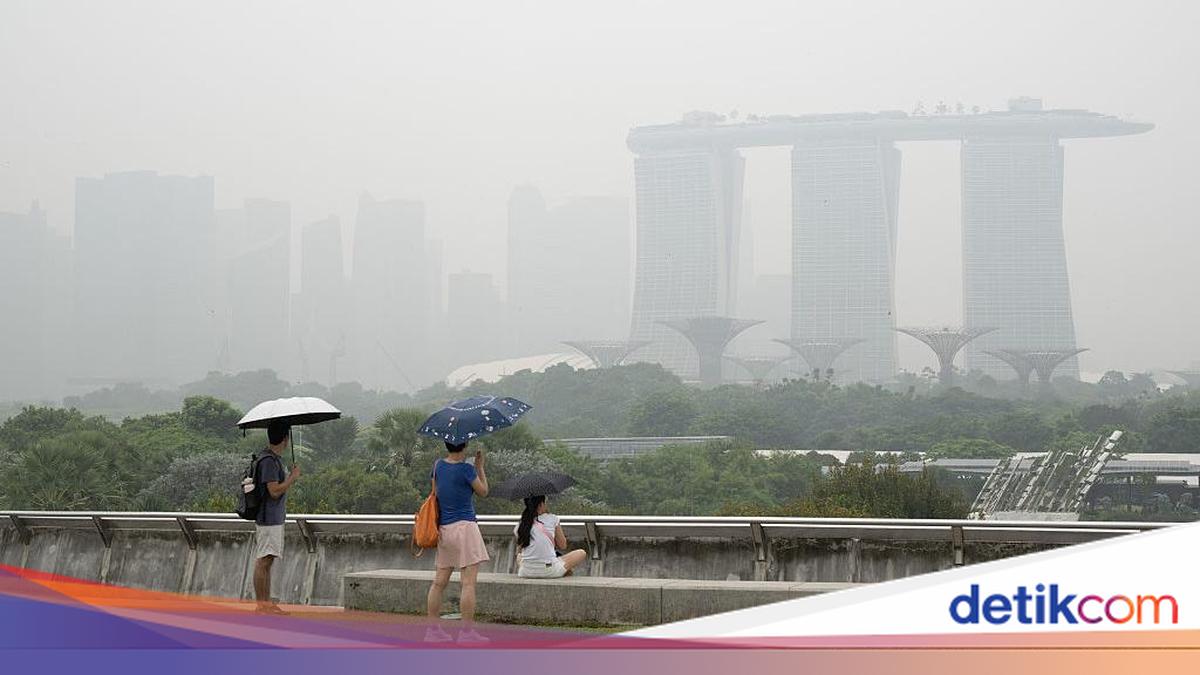
Singapore Summons Ten Company Executives Over Indonesia Forest Fires
Singaporean officials summoned the senior executives of ten companies on October 28, 2026, over forest and land fires in Indonesia that have triggered a diplomatic strain between the two neighboring countries. Wakil Perdana Menteri Gan Kim Yong led the meeting at The Treasury building in Singapore alongside senior ministers and legal advisors, targeting firms allegedly linked to transboundary haze.
Singapore Summons Ten Palm Oil Executives Over Transboundary Haze
The summoned executives met with Singaporean officials on a Wednesday afternoon. CNN Indonesia identified the companies present as Bumitama Agri, First Resources, Golden Agri-Resources, Indofood Agri Resources, Kencana Agri, TSH Resources, Wilmar International, and Sinar Mas Group. Franky Oesman Widjaja, Chairman and CEO of Golden Agri Resources, attended the session both for his own firm and to represent Asia Pulp & Paper Company and Asia Pulp & Paper Company (China).
The delegations faced a high-level ministerial panel from Singapore. Alongside Gan Kim Yong sat Senior Minister K Shanmugam and Minister for Sustainability and the Environment Grace Fu. Davinder Singh, a senior advisor, joined them alongside high-level officials from the Attorney-General’s Chambers, the National Environment Agency, and the Ministry of Law. Shanmugam, who leads the ministerial committee for domestic crisis management, told the corporate representatives that the regional smoke is a direct consequence of business operations rather than natural phenomena. “Haze is caused by fires,” Shanmugam said during the meeting. “Fires are caused by irresponsible business practices. This is not a natural phenomenon.”
Parliamentary Amendments to Target Non-Cooperative Corporations
Singaporean authorities announced plans to introduce strict legal frameworks during the next parliamentary sitting. Grace Fu stated that the government will pursue amendments to the Transboundary Haze Pollution Act to give legal teeth to ongoing investigations. Under the proposed changes, any firm that refuses to appoint an independent investigator or fails to cooperate fully with inquiries will be considered to have committed a criminal act. “I will table amendments to the Transboundary Haze Pollution Act at the next parliamentary sitting so this framework has legal force,” Fu told reporters after the meeting at The Treasury. “Companies that do not comply will commit an offense. We will use our powers to protect the health of Singaporeans.”
The enforcement mechanism requires targeted entities to fund independent panels and law firms designated by the National Environment Agency. These independent audits will examine corporate operations, supply chains, and corporate structures to determine whether their activities contributed to fires. Shanmugam noted that the independent review process will assist corporations with clean supply chains in clearing their names. Following the meetings, Asia Pulp & Paper and Golden Agri Resources issued separate statements confirming their willingness to cooperate with Singaporean authorities.
Bilateral Friction Over Gas Exports and Haze Investigations
The corporate summons unfolds against a backdrop of wider diplomatic friction between Jakarta and Singapore. The Indonesian government cut natural gas exports to Singapore by 31 billion British thermal units per day starting October 24, 2026. While the policy move sparked polemics, political analysts point to recent remarks by Prabowo Subianto concerning nations that like to insult the Indonesian nation as a driver of regional tension. Arrmanatha Nasir met with Vivian Balakrishnan in Jakarta, followed by a separate closed-door meeting between President Prabowo and Balakrishnan at Hambalang in West Java.

During these bilateral talks, foreign ministry officials agreed to form a joint task force to address forest fires and haze through intelligence sharing and cross-border evidence gathering. The joint task force will coordinate asset recovery and joint investigations into corporate responsibility. Meanwhile, Indonesian police have initiated investigations into 98 reports of corporate involvement in fires, securing suspect status against three foreign companies without publicly disclosing their identities. Former Indonesian Ambassador to Singapore Suryopratomo welcomed the bilateral dialogue as a necessary step to resolve misunderstandings.
Joint Task Force Finalizes Cross-Border Enforcement Mechanics
Questions remain over how the newly proposed amendments to Singapore’s Transboundary Haze Pollution Act will apply to corporate entities operating across multiple legal jurisdictions. While major palm oil groups have pledged cooperation with the National Environment Agency’s designated panels, the exact mechanics of cross-border asset recovery and enforcement between Indonesian police investigations and Singaporean regulatory probes are still being finalized by the newly established joint task force.