Scientists Who Discovered Altermagnetism Win 2026 Europhysics Prize
Physicists Win 2026 Europhysics Prize For Third Form Of Magnetism
Scientists who discovered altermagnetism—a third fundamental category of collinear magnetism that upends a century-old physical paradigm—have been named recipients of the 2026 Europhysics Prize. The honor recognizes the theoretical and experimental breakthroughs establishing the new magnetic phase alongside ferromagnetism and antiferromagnetism.
-
The Tech TL;DR:
- Altermagnetism challenges a 100-year-old physics model by combining zero net magnetization with strongly polarized electron spins.
- Researchers from Mainz University and the Czech Academy of Sciences secured the 2026 Europhysics Prize for the discovery.
- The breakthrough opens new pathways for high-speed spintronic devices and quantum computing applications.
Overturning A Century Of Magnetic Theory
For more than 100 years, physicists divided collinear magnets strictly into ferromagnets and antiferromagnets. Ferromagnets align to produce net magnetization, driving current magnetic memory hardware. Conventional antiferromagnets cancel opposing magnetic moments entirely, showing no net magnetization.
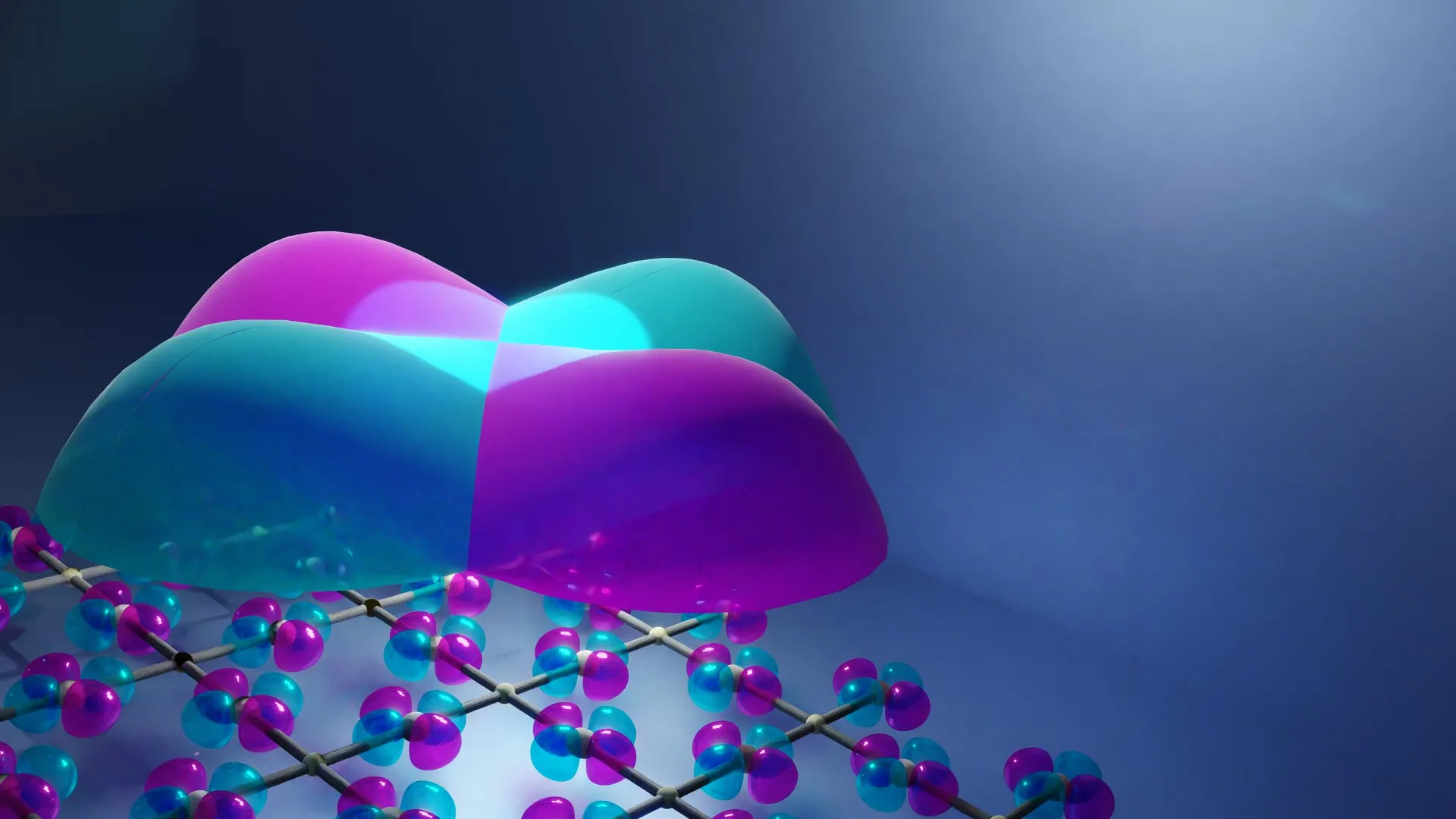
Altermagnetism introduces a distinct third classification where magnetic moments cancel out, yet electrons exhibit properties previously restricted to ferromagnets. This unique symmetry class supports electrical currents with strongly polarized electron spins and rapid magnetic dynamics. Professor Jairo Sinova of Johannes Gutenberg University Mainz noted that discovering an entirely new magnetic phase hidden for over a century proves mature fields still hold fundamental surprises.
Collaboration Yields Symmetry Classification
Dr. Libor Šmejkal spent eight years at Mainz between 2016 and 2024, playing a leading role in the theoretical framework. By combining advanced mathematical symmetry approaches with spintronics, the researchers identified the unrecognized pattern.
In 2022, the team published a comprehensive symmetry classification of altermagnetism and identified hundreds of candidate materials. Experimental physics teams subsequently tested these predictions using angle-resolved photoemission spectroscopy and electrical transport measurements, confirming the behavior across multiple materials.
Award Ceremony Scheduled In Austria
Established in 1975, the Europhysics Prize honors discoveries advancing condensed matter physics in Europe. The European Physical Society Condensed Matter Division selected Sinova, Šmejkal, and Jungwirth for the 2026 honor. The award ceremony was scheduled for September 2026 at the 32nd General Conference of the European Physical Society Condensed Matter Division in Graz, Austria.