
Scientists Pinpoint Magma Movement as Cause of 2025 Santorini Earthquake Swarm
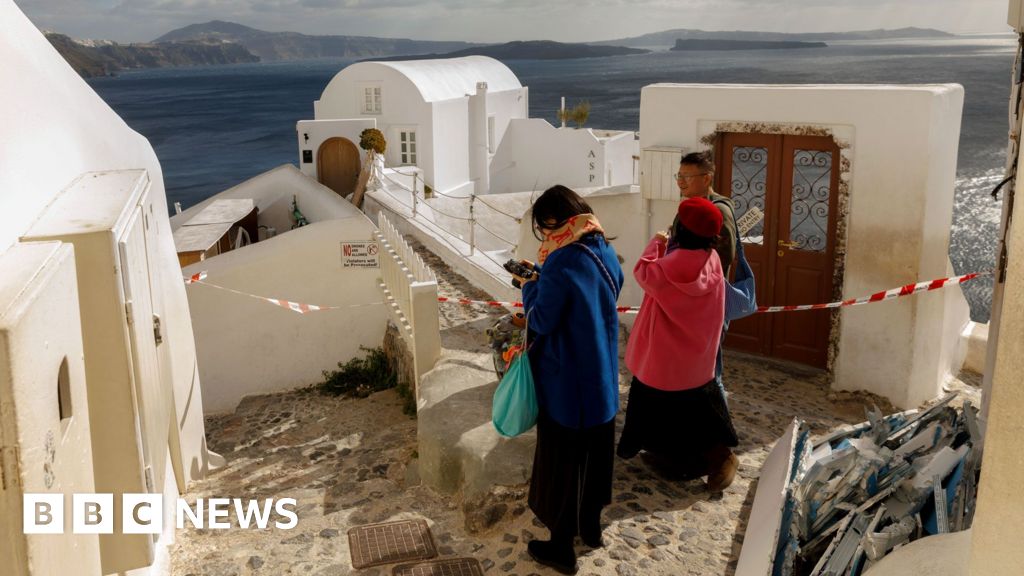
SANTORINI,GREECE – An international team of scientists has revealed the cause of the intense seismic activity that rattled the Greek islands of Santorini,Amorgos,and Anafi begining in January 2025: the horizontal movement of a massive volume of magma beneath the region. The findings, published in the journal Science, offer a new understanding of earthquake swarms and could revolutionize volcanic eruption forecasting.
The islands experienced tens of thousands of earthquakes, many exceeding magnitude 5.0, prompting fears of an eruption from the nearby underwater volcano, Kolumbo, or a major earthquake reminiscent of the devastating 7.7 magnitude quake that struck the area in 1956.
Researchers utilized a novel approach, treating each tremor as a “virtual sensor” and employing artificial intelligence to analyze patterns within the seismic data. This allowed them to construct a detailed 3D map of the Earth’s crust around Santorini and track the evolving seismic activity.
The analysis revealed that magma was moving horizontally through a 30km channel, located more than 10km beneath the seafloor between Santorini and Anafi. The estimated volume of magma involved was immense – enough to fill 200,000 Olympic-sized swimming pools.These “magma intrusions” fractured layers of rock, triggering the widespread tremors.
“The tremors act as if we had instruments deep in the Earth, and they’re telling us something,” explained Anthony Lomax, a research geophysicist and lead author of the study. “[When we analyze] the pattern those earthquakes make in our 3D model of the Earth, it matches vrey, very well what we expect for magma moving horizontally.”
Currently, the activity appears to have subsided. Dr.Stephen Hicks from UCL explained that the magma remained deep within the crust – at a depth of more than 8km – and “eventually got stuck and cooled down.” Though,he cautioned that volcanoes can experience prolonged periods of unrest,as demonstrated by recent activity in Iceland.
The researchers emphasize the potential of combining physics-based modeling with artificial intelligence to improve volcanic monitoring and forecasting. “Ultimately, this could be used as a forecasting tool,” Dr. Hicks stated. ”Whenever we see a cluster of earthquakes, that is data that can be used to work out the most likely cause.” This innovative approach promises to enhance safety for communities living in seismically active regions worldwide.
