
Astronomers Raise Alarm Over Startup’s Plan to Illuminate Earth with Space-Based Sunlight
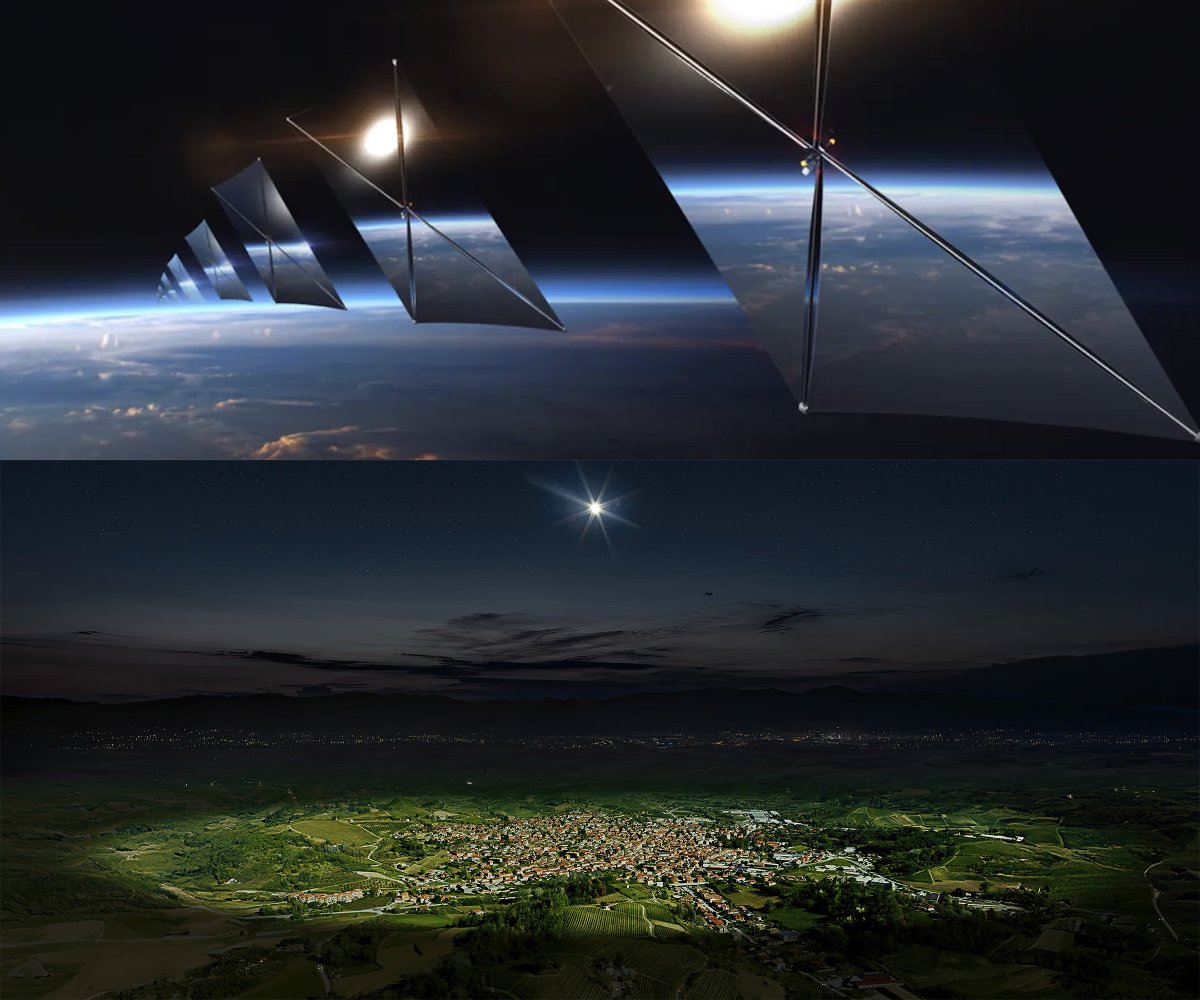
WASHINGTON D.C. – A burgeoning space technology company, Reflect Orbital, is facing mounting criticism from the astronomical community over its ambitious plan to deploy an array of satellites designed to reflect sunlight onto Earth, effectively creating artificial daylight. The company, which recently secured a $1.25 million contract from the US Air Force and a $20 million Series A funding round, aims to offer “sunlight on demand” to a diverse clientele, including national defence, civil infrastructure, industrial agriculture, and commercial brands.
reflect Orbital has already garnered over 260,000 applications from 157 countries for reservations of the satellite-reflected sunlight, according to the company. Though, astronomers warn the project poses a significant threat to both wildlife and astronomical observation.
“The reflectors will be directing their light [even after they pass their target] because obviously they can’t shut that off,” explained John Berentine, an astronomer at the Silverado Hills Observatory, in a report by Space.com. “The beam reflected by these satellites is very intense, four times brighter than the full moon, and they will be flying multiple satellites in a formation. That will have an effect on wildlife in the directly illuminated area, but also, through atmospheric scattering, on the surrounding areas as well.”
Robert Massey, deputy executive director at the Royal Astronomical Society of the UK, expressed even stronger concerns, stating, “The central goal of this project is to light up the sky and extend daylight and obviously, from an astronomical outlook, that’s pretty catastrophic.” He emphasized that the entire astronomical community is “seriously concerned about the growth.”
Reflect Orbital maintains that the reflections will be “highly localized” to a 5-kilometer (3.1 mile) area for a limited time, describing the illuminated ground area as a “soft, moonlike glow” during a planned 2026 presentation. The company intends to establish its orbital mirror array in a Sun-synchronous orbit, circling the planet from pole to pole.
This global reach raises basic questions about the right to deploy such technology over the entire planet, with no clear international regulatory framework currently in place.
