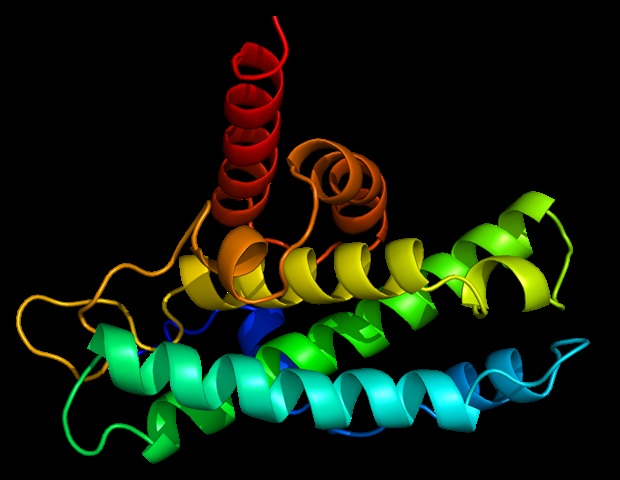
Scientists Call for Explainable AI in Protein Language Models
The biotech sector is currently hitting a wall that isn’t biological, but architectural. We’ve spent the last few years treating Protein Language Models (PLMs) as magic black boxes—feeding in amino acid sequences and praying the output doesn’t result in a non-folding mess. But as we push toward production-grade synthetic biology, “it just works” is no longer a viable engineering strategy.
The Tech TL;DR:
- The Problem: PLMs can design novel proteins, but the lack of “explainability” (XAI) creates a massive validation bottleneck in drug discovery.
- The Risk: Without understanding the latent space logic, researchers risk deploying proteins with unforeseen off-target effects or structural instabilities.
- The Shift: A move toward interpretable architectures that map AI attention weights to actual biochemical properties.
For those of us who have spent time in the trenches of LLM deployment, the pattern is familiar. We’ve scaled the parameters, optimized the weights, and achieved impressive benchmarks, but we’ve completely ignored the “why.” In the context of protein engineering, this is a dangerous gamble. When you’re designing a catalyst or a therapeutic protein, a hallucination isn’t just a weird sentence in a chatbot—it’s a failed clinical trial or a toxic compound. The recent call for explainable AI in protein language models is essentially a demand for a debugger for the biological latent space.
The Black Box Bottleneck in Protein Latent Spaces
Most current PLMs leverage Transformer architectures, treating protein sequences like a language where amino acids are tokens. While these models are exceptional at predicting the next token in a sequence or folding a structure, they operate in high-dimensional spaces that are functionally opaque to human researchers. We can see the output, but the path from input sequence to functional property is a series of matrix multiplications that defy intuitive biological reasoning.
This opacity creates a critical IT and R&D bottleneck. To validate a single AI-generated protein, firms often have to revert to sluggish, expensive wet-lab verification. The lack of transparency means we cannot perform “in-silico” auditing of the model’s reasoning. For enterprise-scale biotech, this inefficiency is unsustainable. To solve this, companies are increasingly relying on specialized AI development agencies to implement custom interpretability layers that can translate tensor weights into something a biochemist can actually use.
“The industry is moving past the ‘discovery’ phase of PLMs and into the ‘engineering’ phase. In engineering, if you can’t explain the failure mode, you can’t guarantee the safety of the product.”
Comparing the Protein Design Tech Stack
To understand where the industry is heading, we have to look at the transition from traditional physics-based modeling to the current AI-driven paradigm and the proposed XAI future.
| Metric | Physics-Based (Rosetta) | Standard PLMs (Black Box) | XAI-Enhanced PLMs |
|---|---|---|---|
| Computational Cost | Extremely High (CPU intensive) | High (GPU/NPU intensive) | Moderate to High |
| Design Speed | Weeks/Months | Seconds/Minutes | Minutes/Hours |
| Interpretability | High (Based on Thermodynamics) | Near Zero (Latent Space) | High (Attention Mapping) |
| Novelty Potential | Low (Conservative) | Very High (Generative) | High (Guided Generation) |
The Architecture of Interpretability
The push for explainability isn’t about making the model simpler; it’s about adding a diagnostic layer. This involves techniques like saliency mapping—identifying which specific residues in a sequence triggered a particular functional prediction—and probing the attention heads to see if the model has “learned” actual biological constraints like hydrophobicity or steric hindrance.
From a deployment perspective, this requires a shift in the MLOps pipeline. We aren’t just shipping a model; we’re shipping a model plus an explanation engine. This often necessitates containerization via Kubernetes to handle the bursty workloads of both the generative model and the interpretability analysis tools. For firms lacking the internal DevOps maturity to manage these clusters, bringing in managed service providers (MSPs) has become the standard move to ensure SOC 2 compliance and uptime for their bio-compute pipelines.
Implementation: Visualizing Attention Weights
For the developers looking to implement a basic interpretability check, the goal is to extract the attention tensors from the Transformer layers. Below is a conceptual PyTorch implementation for extracting attention weights to identify “hotspots” in a protein sequence.
import torch from transformers import AutoModel, AutoTokenizer # Load a pre-trained Protein Language Model (e.g., ESM-2) model_name = "facebook/esm2_t6_8M_UR50D" tokenizer = AutoTokenizer.from_pretrained(model_name) model = AutoModel.from_pretrained(model_name, output_attentions=True) sequence = "MKVLWAALLVTFLAGCQAKVEQAV" inputs = tokenizer(sequence, return_tensors="pt") with torch.no_grad(): outputs = model(**inputs) # Extract attention tensors: (layer, batch, head, seq_len, seq_len) attentions = outputs.attentions # Average attention across all heads for the final layer final_layer_attn = attentions[-1].mean(dim=1).squeeze(0) # Identify residues with the highest aggregate attention importance_scores = final_layer_attn.sum(dim=0) print(f"Residue Importance Scores: {importance_scores}") While this snippet provides a raw look at the attention, the “Explainable AI” movement is pushing for these scores to be mapped directly to biological properties—essentially turning a heatmap into a chemical formula.
The Road to Production-Grade Bio-AI
The transition to explainable PLMs is a prerequisite for the next leap in synthetic biology. We are moving away from the “lottery” method of protein design—where we generate 10,000 candidates and hope one works—toward a deterministic engineering approach. This will likely involve a hybrid architecture: a generative PLM for novelty, constrained by a symbolic AI layer that enforces known biochemical laws.

As these systems scale, the security surface area expands. A model that can explain *why* a protein is toxic is a model that can be inverted to *design* a toxin. This elevates the need for rigorous cybersecurity auditors and penetration testers to secure the weights and API endpoints of these models. The intersection of XAI and biosecurity is the next great friction point for the industry.
the “black box” era of AI in biology was a necessary first step, but it’s a luxury we can no longer afford. The future belongs to the models that can not only solve the problem but can show their work. For the CTOs and lead engineers in this space, the mandate is clear: stop optimizing for accuracy alone and start optimizing for transparency.
*Disclaimer: The technical analyses and security protocols detailed in this article are for informational purposes only. Always consult with certified IT and cybersecurity professionals before altering enterprise networks or handling sensitive data.*