
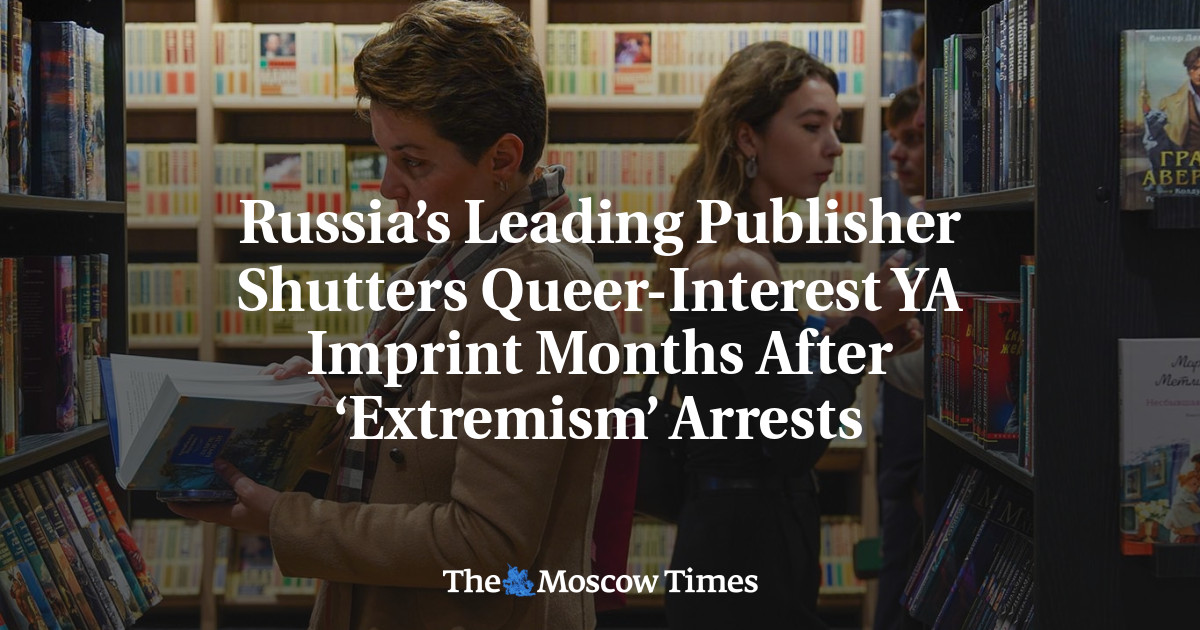
Russia Shuts Down Young Adult Publisher popcorn Books Amidst Crackdown on “LGBT Extremism”
Moscow, Russia – January 17, 2026 – Russia’s largest book publisher, Eksmo, has officially shuttered its young adult (YA) literature subsidiary, Popcorn Books, effectively succumbing to mounting pressure from the Kremlin’s increasingly restrictive policies targeting the LGBTQ+ community. The closure marks a significant escalation in the crackdown on perceived “LGBT extremism” and raises concerns about the future of free expression within Russia’s publishing industry.
The Downfall of Popcorn Books: A Timeline of Events
Eksmo announced the decision on Tuesday, stating that the Popcorn Books brand had become “associated with a broader context than the publication of books.”1 This carefully worded statement alludes to the events of May 2025,when several Eksmo employees were raided and arrested2 on suspicion of violating Russia’s controversial anti-LGBTQ+ “propaganda” and “extremism” laws.
Currently, three top managers from Popcorn Books, along with colleagues from another Eksmo imprint, Individuum, remain under house arrest. They face the severe charge of organizing the activities of an “extremist institution,” a label that carries a potential prison sentence of up to ten years.2
The Legal Landscape: “LGBT Extremism” Defined
The closure of Popcorn Books follows a pivotal decision by Russia’s Supreme Court in late 2023, which officially designated the “international LGBT movement” as an extremist organization.2 This ruling effectively criminalizes public expressions of LGBTQ+ identities and advocacy efforts, creating a climate of fear and censorship. The broad language of the law has opened the door to arbitrary enforcement and persecution, impacting not only activists and organizations but also cultural expressions like literature.
Popcorn Books’ rise and Fall: A Case Study in Censorship
Popcorn Books gained prominence in 2021 with the release of “Summer in a Pioneer Tie,” a groundbreaking queer-themed novel set in a Soviet summer camp.3 The book’s success challenged societal norms and resonated with a young readership, leading Eksmo to acquire a majority stake in the imprint in 2023. However, this success also attracted unwanted attention from authorities increasingly antagonistic to LGBTQ+ portrayal.
Following the May 2025 arrests, Eksmo appeared to distance itself from Popcorn Books.3 This move, coupled with the increasingly restrictive legal habitat, ultimately led to the imprint’s demise.
In a poignant farewell message posted on Telegram, Popcorn Books expressed gratitude to its readers, stating, “You are our foundation: humane, sincere and open to different voices and experiences.”3 The publisher also voiced concern for the well-being of its arrested managers, highlighting the human cost of the crackdown.
Broader Implications for Russian Publishing
The closure of Popcorn books is not an isolated incident. It is indeed part of a wider trend of increasing censorship and repression within Russia’s cultural sphere. Just recently, another Russian publisher was raided for selling books by a renowned writer accused of supporting extremist ideologies4, signalling a worrying escalation in the government’s control over content.
This crackdown poses a significant threat to literary diversity and intellectual freedom, forcing publishers to self-censor and avoid controversial themes.The chilling effect extends beyond LGBTQ+ literature, impacting any work that challenges the official narrative or deviates from conservative values.
Key Takeaways
- The closure of Popcorn Books demonstrates the intensifying crackdown on LGBTQ+ expression in Russia.
- The legal definition of “extremism” is being broadly applied to silence dissent and suppress diverse voices.
- The publishing industry is experiencing increased censorship and self-censorship, threatening literary freedom.
- The arrests of publishing staff highlight the personal risks faced by those who challenge the authorities.
The future of publishing in Russia remains uncertain. As the Kremlin tightens its grip on information and expression, the space for independent voices grows increasingly constricted. The fate of Popcorn Books serves as a stark warning about the fragility of artistic freedom in an authoritarian environment.
A Message from The Moscow Times:
Dear readers,
We are facing unprecedented challenges. Russia’s Prosecutor General’s Office has designated The Moscow Times as an “undesirable” organization, criminalizing our work and putting our staff at risk of prosecution. This follows our earlier unjust labeling as a “foreign agent.”
These actions are direct attempts to silence independent journalism in Russia.The authorities claim our work “discredits the decisions of the Russian leadership.” We see things differently: we strive to provide accurate, unbiased reporting on Russia.
We, the journalists of The Moscow Times, refuse to be silenced.but to continue our work, we need your help.
Your support, no matter how small, makes a world of difference. If you can, please support us monthly starting from just $2. It’s swift to set up,and every contribution makes a significant impact.
By supporting The Moscow Times, you’re defending open, independent journalism in the face of repression. Thank you for standing with us.
Continue
Not ready to support today?
Remind me later.
×
Remind me next month
Thank you! Your reminder is set.
We will send you one reminder email a month from now.For details on the personal data we collect and how it is used, please see our Privacy Policy.
