
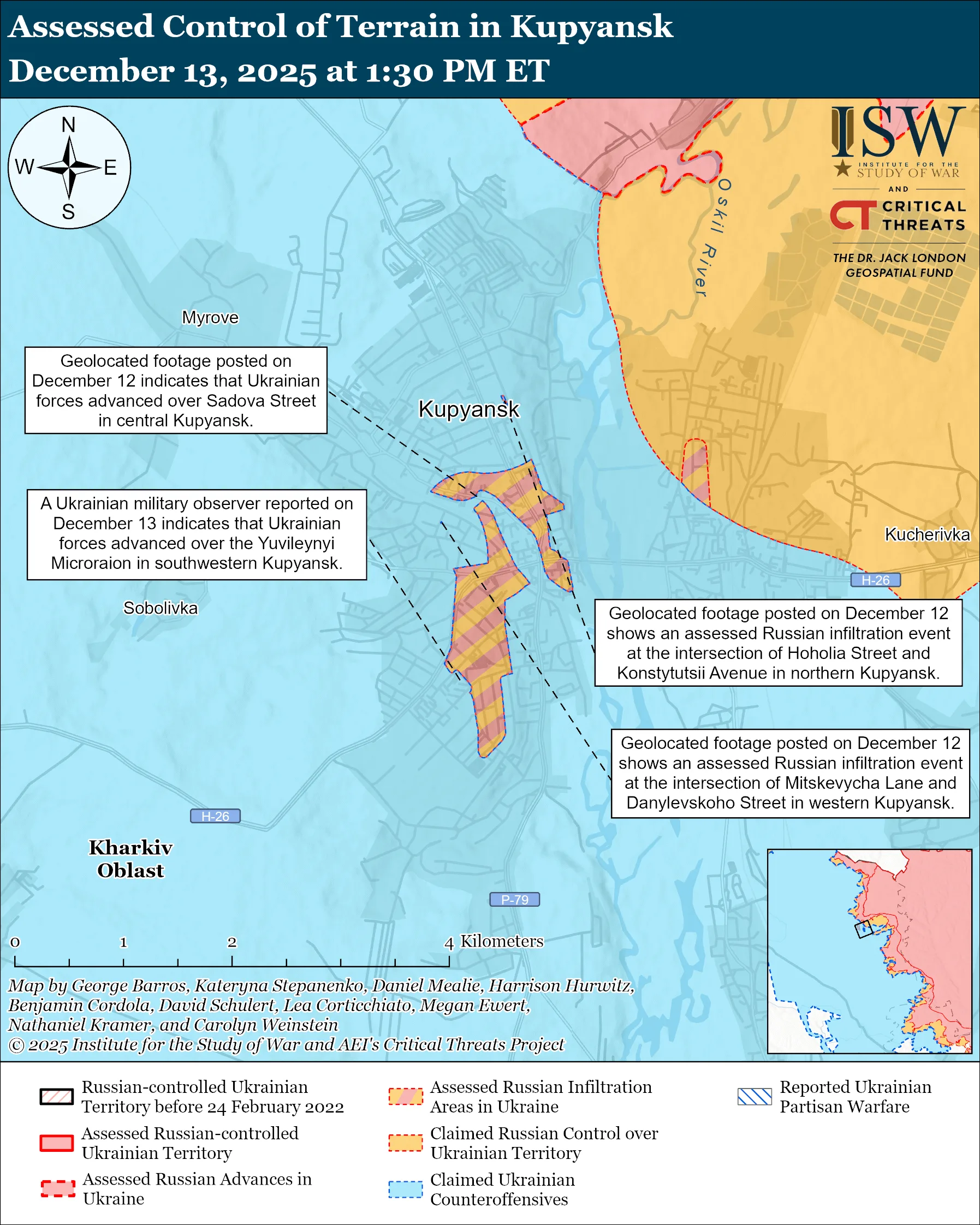
Ukrainian forces and the Zelensky‑initiated peace process are now at the center of a structural shift involving battlefield momentum and diplomatic overtures.The immediate implication is a heightened leverage calculus for both Kyiv and Moscow that could reshape negotiation dynamics and regional security postures.
The Strategic Context
Since the summer of 2025, Russian offensives in the Kupyansk axis accelerated, threatening the city and prompting Moscow to publicize infiltration successes as a sign of imminent victory. kyiv responded in September with a counteroffensive that leveraged overextended Russian units, reclaimed key towns, and severed supply lines to Kupyansk.The fighting has evolved into a series of localized advances and attritional engagements across eastern Ukraine, while Russia has intensified strategic missile and drone strikes against Ukrainian energy and civilian infrastructure to erode morale and impose economic costs. Concurrently, diplomatic activity has risen, highlighted by President Zelensky’s proclamation of forthcoming peace talks in Berlin with U.S. and European delegations, and U.S. signals of support for a Ukrainian‑run territorial referendum. These developments occur against a backdrop of a multipolar security surroundings, where NATO’s eastern flank, Russian domestic constraints, and Western political fatigue intersect.
Core Analysis: Incentives & Constraints
Source Signals: ukrainian forces have seized Yuvileynyi Microraion in Kupyansk, continue clearing operations, and report remaining Russian infiltration groups in the city’s north and west. Russian units have attempted foot penetrations and maintain pressure near Myrove and Radkivka. Russian missile and drone attacks on 12‑13 December targeted energy infrastructure across multiple oblasts, causing widespread outages and civilian casualties.Zelensky announced imminent Berlin talks with U.S. and European officials, and the United States expressed willingness to back a Ukrainian territorial referendum.
WTN Interpretation: The Ukrainian advance in Kupyansk demonstrates a tactical advantage that translates into strategic bargaining power; control of the city’s southwestern district threatens Russian defensive cohesion and limits their ability to sustain positions in the south. Russia’s continued aerial bombardment serves a dual purpose: inflicting material damage to pressure the Ukrainian government domestically and signaling to its domestic audience that the war effort persists despite battlefield setbacks. Zelensky’s push for Berlin talks reflects a calculated timing-leveraging recent battlefield gains to extract concessions while pre‑empting further Russian escalation. The U.S. endorsement of a referendum signals an attempt to provide Kyiv with a political tool that could legitimize any future territorial adjustments, but also binds Washington to a process that may be constrained by Russian acceptance and internal Ukrainian politics. Both sides are constrained: Ukraine must balance offensive operations with the risk of overextension and civilian infrastructure damage; Russia faces manpower attrition, logistical strain, and limited strategic depth, while also needing to maintain a credible narrative of progress for domestic and allied audiences.
WTN Strategic Insight
Tactical gains on the ground are increasingly being weaponized as diplomatic capital; the side that can translate battlefield momentum into credible negotiation leverage will dictate the post‑conflict settlement architecture.
Future Outlook: Scenario Paths & Key Indicators
Baseline Path: Ukrainian forces consolidate gains around Kupyansk, continue limited offensives in Lyman and other fronts, while diplomatic talks in Berlin progress toward a framework that includes a Ukrainian‑run referendum on contested territories. russian aerial strikes persist but fail to achieve decisive strategic effects, leading Moscow to seek a negotiated pause that preserves its territorial holdings in the east.
Risk Path: Russian forces regroup and launch a concentrated counter‑offensive aimed at recapturing Kupyansk, coupled with an escalation of missile and drone attacks on critical Ukrainian infrastructure to force a political concession. Simultaneously,Western political fatigue or divergent EU positions stall the Berlin talks,reducing Kyiv’s diplomatic leverage and potentially prompting a return to high‑intensity fighting.
- Indicator 1: Satellite or open‑source reports of Russian troop movements or artillery redeployments toward the Kupyansk sector within the next 4‑6 weeks.
- Indicator 2: Official statements or diplomatic communiqués from the U.S., EU, or Germany confirming the agenda, timeline, or pre‑conditions for the Berlin peace talks, especially any mention of the referendum framework.
