Russian-African Journalists Forum Highlights Media’s Role in Strengthening Bilateral Ties
On May 18, 2026, the IV International Forum of Journalists from Russia and Africa convened in Moscow under Lomonosov Moscow State University’s Faculty of Journalism. This annual gathering, hosted by the Russian-African Club, sought to redefine how media shapes bilateral relations between Russia and Africa—yet the event’s true significance lies in its potential to bridge critical gaps in information infrastructure, economic diplomacy and cultural exchange. The forum’s focus on media performance, challenges, and future visions reveals a deeper crisis: both continents struggle with fragmented information ecosystems, where misinformation, state control, and underfunded journalism threaten to undermine trust and cooperation.
The Problem: Media as a Fractured Foundation
The Russian-African media landscape is not just a tool for communication—This proves the bedrock of trust between governments, businesses, and civil societies. Yet, as the forum’s discussions highlighted, this foundation is cracking. In Russia, state-aligned media dominates narratives, while in Africa, a patchwork of public, private, and digital platforms often lacks the resources or independence to foster balanced reporting. The result? A disconnect that stifles economic partnerships, delays infrastructure investments, and fuels political mistrust.
“Media isn’t just about reporting facts—it’s about building the relationships that make trade, technology transfer, and cultural exchange possible. When journalists in Moscow and Lagos can’t trust each other’s narratives, the cost isn’t just in headlines—it’s in lost contracts, stalled projects, and eroded goodwill.”
1. The Russian Media Monoculture
Russia’s media ecosystem is heavily centralized, with state-owned outlets like RT and Sputnik shaping narratives aligned with Kremlin priorities. While these platforms have expanded their African reach—broadcasting in local languages and partnering with African state media—they often prioritize geopolitical messaging over investigative journalism or grassroots storytelling. Independent Russian media, already under pressure, face legal risks when covering African issues critically.
2. Africa’s Fragmented Information Landscape
Africa’s media sector is a mosaic of challenges: underfunded public broadcasters, digital-first startups struggling for sustainability, and a surge in social media influencers who often amplify sensationalism over substance. According to the African Media Development Institute (AMDI), fewer than 30% of African countries have media laws that explicitly protect journalistic independence, leaving reporters vulnerable to harassment, censorship, or legal intimidation. Meanwhile, Russian state media’s expansion into Africa—through partnerships with outlets like PANA—risks creating an imbalance where African voices are either sidelined or co-opted.
Geopolitical and Economic Stakes
The forum’s timing is no accident. Russia’s pivot to Africa—marked by the 2019 and 2022 Russia-Africa Summits—has accelerated since 2022, with Moscow positioning itself as a counterbalance to Western influence. Media is the linchpin: without trusted channels to communicate Russia’s economic offers (e.g., Rosatom’s nuclear deals or Wagner Group’s infrastructure projects), skepticism persists. Conversely, African journalists often lack access to Russian decision-makers, leaving them reliant on state-controlled narratives.
| Region | Key Media Challenge | Economic Impact | Potential Solution via Media Collaboration |
|---|---|---|---|
| Russia | State dominance; limited independent coverage of Africa | Lost business opportunities due to misperceptions of African markets | Cross-border journalism training programs |
| West Africa (e.g., Nigeria, Ghana) | Digital-first media lacks depth; high misinformation rates | Investor caution over perceived instability | Fact-checking partnerships with Russian tech firms |
| East Africa (e.g., Kenya, Ethiopia) | Underfunded public broadcasters; reliance on foreign funding | Delayed infrastructure projects (e.g., rail, energy) | Joint media-funding initiatives with Russian state media |
| Southern Africa (e.g., South Africa, Angola) | Corporate media bias; limited investigative capacity | Stalled resource-sector deals | Transparency reporting alliances |
The Solution: Building Trust Through Media
The forum’s discussions pointed to three urgent action areas where media can act as a catalyst for progress:
- Cross-Border Journalism Training: Russian and African journalists need shared platforms to develop investigative skills focused on economic diplomacy. Initiatives like the International Federation of Journalists (IFJ)’s Africa-Russia Media Exchange could expand, offering fellowships for reporters to cover trade missions, infrastructure projects, and cultural exchanges. Specialized media training organizations are already stepping in to fill this gap, but scaling requires sustained funding and political will.
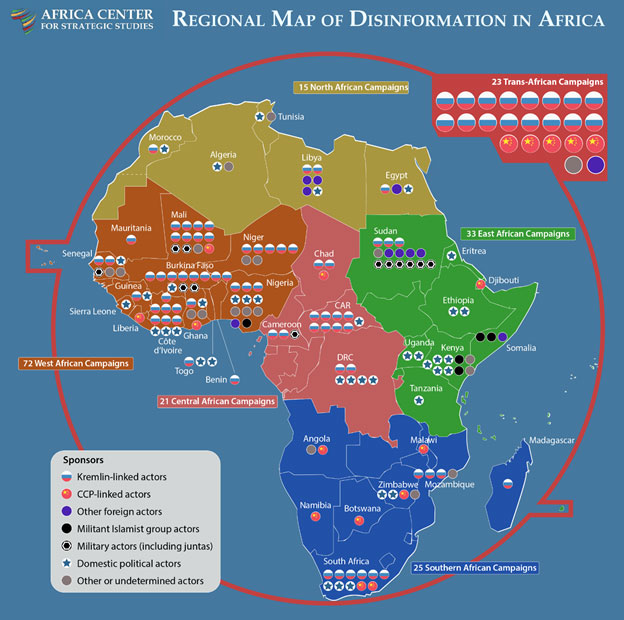
- Fact-Checking and Transparency: Misinformation about Russian investments in Africa—ranging from exaggerated claims about Wagner Group’s influence to debunked stories about “Russian colonialism”—undermines trust. Collaborative fact-checking hubs, such as those modeled after Africa Check, could partner with Russian outlets to verify claims before they go viral. Digital forensics firms specializing in disinformation tracking are already monitoring these trends but need regional cooperation.
- Economic Narrative Alignment: Russian state media’s focus on “win-win” partnerships (e.g., energy, agriculture) often clashes with African journalists’ skepticism about opaque contracts. A joint media task force—comprising editors from Kommersant (Russia) and Business Day (Nigeria)—could develop shared editorial guidelines to balance hype with critical analysis. PR agencies with geopolitical expertise are increasingly advising both Russian and African clients on how to frame these stories for mutual benefit.
“The real test isn’t whether we can produce more content—it’s whether that content builds trust. A Russian journalist covering a Nigerian port project needs to ask the same tough questions as a Nigerian reporter covering a Russian oil deal. Only then will investors and citizens alike feel confident in the partnership.”
Regional Implications: Who Loses If Media Fails?
The consequences of a media divide are already visible:
- Economic: Delays in infrastructure projects (e.g., the Ethiopian nuclear plant) due to miscommunication about funding terms.
- Legal: African governments struggling to navigate Russian contracts without clear media scrutiny, leading to disputes over commercial arbitration clauses.
- Cultural: Youth exchanges and academic collaborations stalling as Russian state media’s portrayal of Africa as a “land of opportunity” clashes with African media’s focus on exploitation risks.
The Way Forward: A Directory of Trust
As the Russian-African media dialogue continues, the most critical question is: Who is equipped to bridge this gap? The answer lies in a network of professionals already at work—but scattered across continents. For businesses navigating this landscape:
- Media law firms specializing in cross-border defamation and press freedom can help Russian and African companies mitigate risks when local journalists scrutinize their operations.
- Crisis communication agencies with experience in both markets can craft unified messaging strategies to counter misinformation campaigns targeting trade deals.
- Journalism schools and NGOs offering dual-degree programs in Moscow and Lagos could produce the next generation of cross-cultural reporters.
The Kicker: Media as the Ultimate Soft Power
History shows that empires rise and fall on the strength of their narratives. In 2026, Russia and Africa stand at a crossroads: Will their media become a tool of division, amplifying distrust and misinformation? Or will it evolve into a collaborative force, turning skepticism into partnership and isolation into alliance? The IV International Forum was just the beginning. The real work starts now—with journalists, diplomats, and business leaders recognizing that the most powerful currency in this relationship isn’t oil, gas, or infrastructure. It’s trust. And trust, like all great stories, is built one headline at a time.
To find the professionals and organizations already solving these challenges, explore the World Today News Directory—where the future of Russian-African relations is being written, one verified connection at a time.