Russia Shoots Down 81 Drones Targeting Moscow
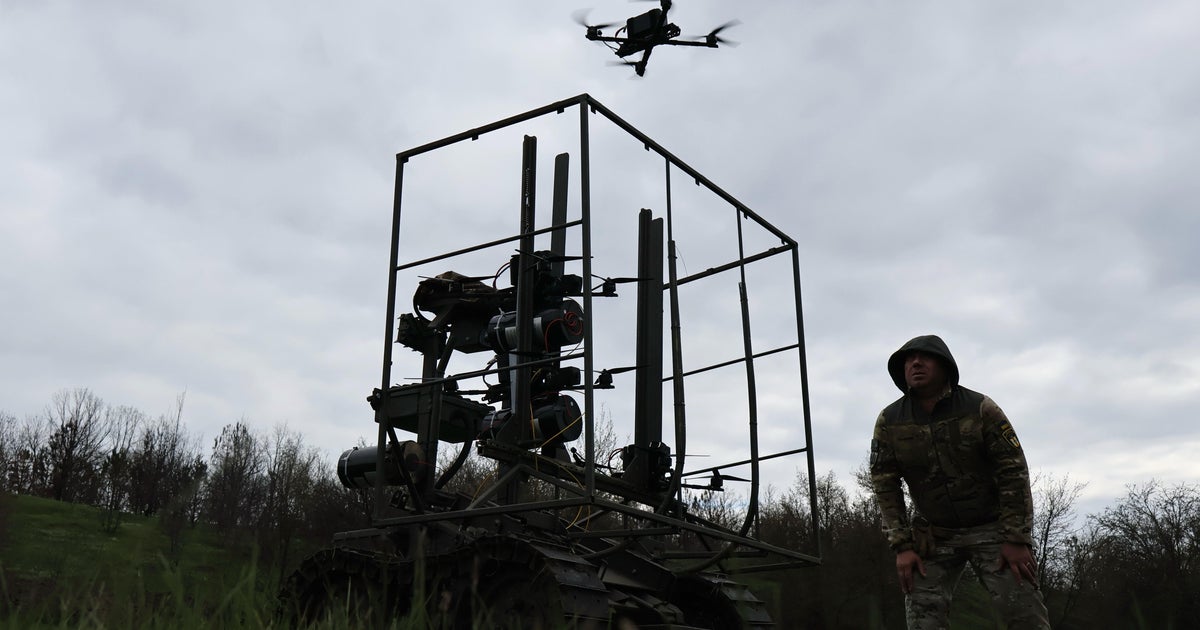
Ukrainian drone strikes on Russian territory on May 17, 2026, resulted in at least four deaths. Russian air defenses intercepted 81 drones over Moscow overnight, according to Tass citing Mayor Sergey Sobyanin, marking a significant escalation in aerial incursions into the Russian capital’s airspace.
For years, the residents of Moscow lived under the assumption that the conflict was a distant reality, confined to the border regions and the Donbas. That illusion vanished overnight. When the sirens wail in the heart of a global capital, the psychological geography of war shifts. The “front line” is no longer a line on a map; We see now a permeable membrane that extends to the very doorsteps of the Kremlin.
The scale of this breach is staggering.
The interception of 81 drones in a single night suggests a coordinated saturation attack. This is a known tactical evolution in modern electronic warfare: launching a volume of low-cost assets that exceeds the processing capacity of air defense batteries. Even the most advanced systems, such as the S-400, can be overwhelmed by sheer numbers, creating “leakage” where a few drones slip through the net. In this instance, that leakage proved fatal.
The immediate problem is not just the loss of life, but the sudden, acute vulnerability of urban infrastructure. When drones penetrate deep into a metropolitan area, they threaten more than just military targets. They jeopardize power grids, transport hubs, and residential complexes. This creates a chaotic environment where the distinction between a combat zone and a civilian center disappears.
“The transition from strategic bombing to swarm-drone incursions represents a fundamental shift in urban risk. We are seeing the democratization of precision strike capabilities, where the cost of the attack is a fraction of the cost of the defense.”
This systemic vulnerability leaves municipal governments scrambling. The aftermath of such strikes often involves complex structural damage that requires more than just standard repair crews. To ensure the long-term viability of affected buildings, cities are increasingly relying on structural forensic engineers to assess the integrity of reinforced concrete and steel after high-velocity impacts.
The Mechanics of Saturation and Air Defense
To understand why 81 drones were targeted, one must look at the current state of aerial warfare. Ukraine has shifted toward a strategy of “deep strikes,” utilizing long-range UAVs to force Russia to redeploy its air defense assets from the front lines to the interior. This creates a strategic vacuum in the south and east, potentially opening windows for ground offensives.
The logistical strain of this is immense. Every drone intercepted is a victory for the defense, but it is also a costly one. The cost-exchange ratio is heavily skewed; a drone costing a few thousand dollars can force the expenditure of a missile costing hundreds of thousands.
This economic war of attrition extends to the legal realm. As strikes hit urban areas, the question of liability and insurance becomes a nightmare. Many commercial policies contain “War Exclusion” clauses that leave business owners stranded when their facades are shattered by shrapnel. Navigating these loopholes requires the expertise of international litigation specialists who can argue the nuances of “act of war” versus “civilian collateral damage.”
The impact is felt most acutely in the regional economy of Moscow. Airspace restrictions and the activation of defense systems disrupt commercial aviation and logistics, creating a ripple effect through the supply chain.
For more context on the evolving nature of this conflict, the Associated Press and Reuters have provided extensive coverage on the proliferation of long-range UAV technology.
The Human Cost of the ‘New Normal’
Beyond the statistics provided by Tass and Sobyanin, there is the human wreckage. Four lives lost in a city of millions might seem like a small number in the context of a multi-year war, but the impact is magnified by the location. The shock of death in the capital serves as a potent reminder that no one is truly insulated from the conflict.
This creates a secondary crisis: a mental health epidemic of chronic anxiety. When the sky becomes a source of threat, the social fabric of a city begins to fray. We are seeing a surge in demand for crisis intervention specialists and trauma counselors who can handle the specific stressors of urban warfare.
The international community continues to monitor these developments closely, as any escalation in the heart of Russia could trigger unpredictable responses. The United Nations has repeatedly called for the protection of civilian infrastructure, though such pleas often fall on deaf ears in the heat of a saturation campaign.

It is a grim cycle. The drones fly, the defenses fire, and the civilians caught in the middle pay the price in blood and anxiety.
The reality is that the technology of destruction is currently evolving faster than the technology of protection. We are living through a period where the traditional sanctuary of the “rear” has been abolished. As the conflict enters this more volatile phase, the ability to find verified, expert help—whether for structural repair, legal protection, or psychological recovery—will be the only thing standing between total chaos and a semblance of stability.
The drones will likely return. The question is no longer if the capital is a target, but how the city will survive the transition from a metropolis to a fortress. For those navigating the fallout of these events, the World Today News Directory remains the essential gateway to the professionals equipped to handle the complexities of a world in fracture.