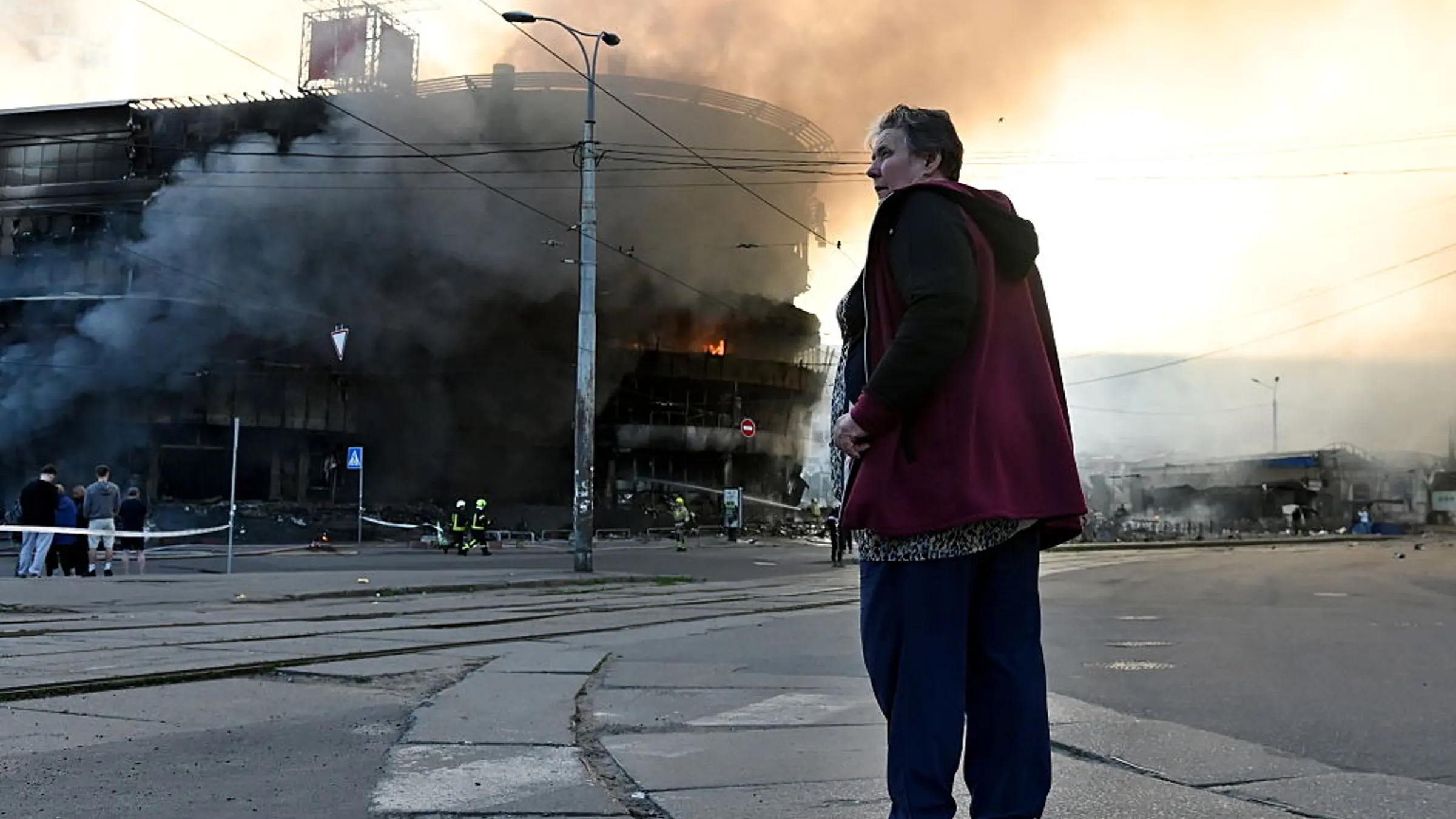
Russia Launches Massive Strike on Kyiv Using Nuclear-Capable Oreshnik Missile
On May 24, 2026, Russia launched one of its heaviest bombardments of Kyiv since the invasion began four years ago. The overnight barrage, involving hundreds of drones and missiles, killed at least four people, damaged critical infrastructure and utilized an advanced Oreshnik ballistic missile, signaling a dangerous escalation in regional conflict.
The strike marks a grim milestone in a conflict that has increasingly strained the limits of international humanitarian law and domestic resilience. As the wreckage in Kyiv is cleared, the strategic implications of this assault—specifically the deployment of the Oreshnik missile—have sent shockwaves through the European Union and the broader international community.
For the residents of Kyiv, the immediate reality is one of survival and reconstruction. The damage to schools, residential buildings, and water supply facilities necessitates an urgent mobilization of resources. In moments of such widespread structural devastation, the role of Emergency Restoration and Disaster Recovery Specialists becomes the backbone of municipal recovery, providing the essential technical expertise required to stabilize housing and public utility sectors before the next wave of instability.
The Escalation of Hypersonic Brinkmanship
The use of the Oreshnik ballistic missile, a nuclear-capable, intermediate-range hypersonic weapon, represents a significant departure from standard tactical operations. With the capacity to strike targets nearly 3,500 miles away, its deployment against Bila Tserkva—a city 50 miles south of Kyiv—is viewed by European Union foreign policy chief Kaja Kallas as a calculated political scare tactic and a reckless exercise in nuclear brinkmanship.
This incident is not an isolated event but the third recorded deployment of the Oreshnik system, following earlier strikes in Dnipro and the Lviv region. The Russian Defense Ministry has characterized the bombardment as a retaliatory measure for attacks on Russian-controlled territory, though Ukrainian officials maintain that their operations are strictly focused on dismantling the Russian war machine.
The geopolitical tension is mirrored by a deepening crisis in military logistics. The Ukrainian Air Force reported intercepting a significant portion of the 600 drones and 90 missiles launched, yet the current shortage of air defense systems, including the U.S.-made Patriot batteries, has left critical urban centers increasingly vulnerable. President Volodymyr Zelensky has noted that the current defense stockpiles are insufficient to counter the sheer speed of hypersonic weaponry, calling for Europe to accelerate its progress toward defense independence.
Navigating the Legal and Humanitarian Aftermath
Beyond the immediate physical destruction, the legal ramifications of these strikes are profound. As the international community debates the categorization of these bombardments, the documentation of damage to civilian infrastructure—such as the schools and residential sectors mentioned by President Zelensky—is a prerequisite for future international accountability.
For organizations operating in high-risk zones, the complexity of managing assets, insurance claims, and legal liability during a state of war requires specialized counsel. Navigating the intersection of international humanitarian law and local property rights is a logistical minefield. Many institutions are now engaging International Humanitarian and Commercial Litigation Attorneys to ensure that evidence of civil harm is documented with the precision required for future legal proceedings.
“They are waging war solely against our people – against our memory, our history, and everything that makes up normal human life,” stated President Zelensky in a message released on Sunday.
The necessity for precise documentation is echoed by local officials. As Kyiv Mayor Vitali Klitschko coordinates rescue efforts, the focus remains on the immediate human cost. However, the secondary impact on regional supply chains and local business continuity remains a silent crisis. Communities are increasingly turning to Business Continuity and Risk Management Consultants to navigate the operational disruptions caused by prolonged aerial bombardments.
The Sustainability of Defense and Infrastructure
The “evergreen” challenge for Ukraine and its allies is no longer just the immediate interception of incoming threats, but the creation of a self-sustaining defense and recovery ecosystem. When national infrastructure is repeatedly targeted, the burden of defense cannot rest solely on legacy military aid packages, which are currently being depleted to meet global security demands.

Ukraine’s shift toward building its own production capabilities for defense and infrastructure resilience is a direct response to the supply shortages felt across the continent. This transition requires not only political will but a robust integration of private sector engineering, local municipal governance, and international technical support.
As the international community watches these developments, the reality is clear: the architecture of global security is shifting. The ability to endure and rebuild is now as vital to the war effort as the ability to strike back. For those looking to support or engage with the recovery efforts, the path forward requires a disciplined approach, leveraging vetted professionals who understand the unique hazards of a conflict-affected environment.
The resilience of Kyiv is being tested at a scale rarely seen in the 21st century. Whether the international community can provide the necessary defensive infrastructure, or whether local efforts must shoulder the entirety of the reconstruction burden, remains the defining question of the coming months. The only certainty is that the cost of inaction, both in terms of humanitarian loss and infrastructure decay, continues to rise with every passing night.
Keep reading
- Student, labor, and civil groups schedule mass protest in Santiago for Saturday
- Cranberry Harvest Underway at A.D. Makepeace Company in Massachusetts
- La Selvaggia expelled from Vigo trade fair for using nude women in ads (newsy-today.com)
- Nasdaq Opens Higher After Trump Vows No Iran Strike Before Midterms (archyde.com)