
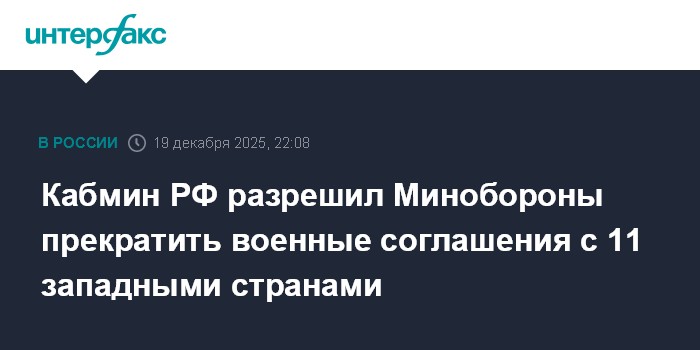
Russia’s ministry of Defense is now at the center of a structural shift involving the dissolution of bilateral military cooperation with Western europe. The immediate implication is a measurable decline in confidence‑building mechanisms that could accelerate security competition across the continent.
The Strategic Context
As the early 1990s, Russia and NATO‑aligned states have built a network of defense‑to‑defense agreements intended to reduce the risk of accidental escalation and to foster transparency. Over the past decade, that architecture has been strained by NATO enlargement, the 2022 conflict in Ukraine, and a cascade of sanctions that have limited joint activities.the broader multipolar environment-characterized by competing security blocs, heightened great‑power rivalry, and domestic political imperatives in Moscow-creates a context in which treaty disengagement becomes a calibrated tool for signaling resolve without resorting to direct military confrontation.
Core Analysis: Incentives & Constraints
source Signals: The decree signed by Prime Minister Mikhail Mishustin authorizes the Ministry of Defense to terminate cooperation agreements with eleven Western countries-Bulgaria, Germany, Poland, Romania, Denmark, Norway, the Netherlands, Croatia, Belgium, the czech Republic, and the United Kingdom.
WTN Interpretation:
- Incentives: Moscow seeks to demonstrate strategic autonomy and to extract political concessions by leveraging the threat of disengagement. The move reinforces a narrative of Western encirclement, bolstering domestic legitimacy for the leadership. It also creates bargaining chips for future negotiations on sanctions relief or security guarantees.
- Constraints: russia remains constrained by the economic impact of existing sanctions, limited access to Western defense technology, and the risk of reciprocal termination of other confidence‑building measures that could raise the probability of miscalculation. Additionally, the legal and bureaucratic processes required to unwind existing agreements impose a tempo limit on how quickly the policy can be operationalized.
WTN Strategic Insight
“Treaty withdrawal is the modern great‑power equivalent of a diplomatic ‘show of force’-a low‑cost lever that reshapes strategic balances while keeping the escalation ladder firmly in the political realm.”
Future Outlook: Scenario Paths & Key Indicators
Baseline path: If the decree proceeds without major pushback, Russia will formally terminate the listed agreements over the next few months. NATO and the affected states will issue diplomatic protests and may suspend parallel cooperation initiatives, but both sides will avoid direct military posturing. The security environment will settle into a new equilibrium with reduced transparency but limited immediate risk of armed confrontation.
Risk Path: Should NATO interpret the terminations as a hostile escalation, it could respond with heightened forward deployments, accelerated joint exercises, or reciprocal suspension of other confidence‑building mechanisms. This feedback loop could increase the probability of incidents at borders or in contested airspace, raising the overall tension level and potentially prompting Russia to expand disengagement to additional domains such as cyber or space cooperation.
- Indicator 1: Official statements from NATO foreign ministers or the NATO Secretary General within the next three months addressing the treaty terminations.
- Indicator 2: legislative activity in the Russian State Duma concerning the implementation or amendment of the decree.
- Indicator 3: Adjustments to scheduled joint military exercises or training programs involving Russia and any of the listed countries.
